Xiaomi’s Humanoid Robots Complete Full 8-Hour Shifts in EV Factory, Claiming Full Autonomy
Xiaomi showcases humanoid robots working 8-hour autonomous shifts in its EV factory, though critics note the lack of verifiable performance data.
S
··2 min readSciTech Editorial Team
Newsroom
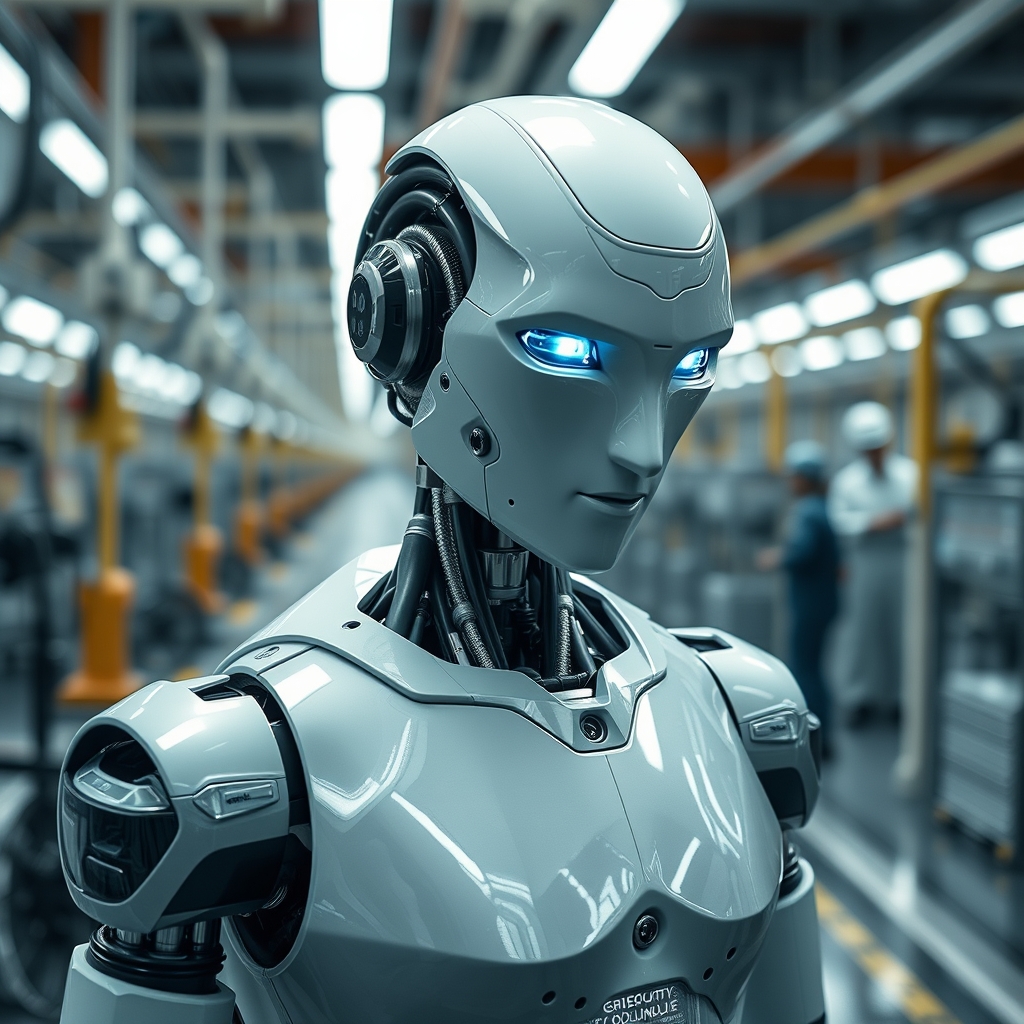
Xiaomi has unveiled compelling footage demonstrating its humanoid robots operating autonomously for a full eight-hour shift within its electric vehicle (EV) manufacturing facility. The primary task assigned to these advanced units involved the precise sorting of center console side covers for the company's automotive lineup. This development marks a significant milestone in industrial automation, suggesting that humanoid robotics are transitioning from laboratory prototypes to practical, long-duration industrial applications. The company asserts that the robots operated entirely on their own, possessing the cognitive capability to detect, catch, and rectify their own operational errors in real-time, a feat that, if verified, would be truly impressive for the sector.
However, the absence of granular performance metrics has raised questions among industry analysts. Xiaomi has not released specific data points, such as error rates, throughput efficiency, or the exact nature of the 'mistakes' corrected, which are essential for independent verification. This lack of transparency is a recurring theme in humanoid robot demonstrations, where visual spectacle often overshadows rigorous technical benchmarking. Critics argue that without these hard numbers, it is difficult to assess the true reliability and scalability of the technology in a high-stakes manufacturing environment.
The broader implications of this deployment are substantial for the global EV supply chain. If humanoid robots can reliably perform repetitive, precision-based tasks over standard work shifts, manufacturers could see significant reductions in labor costs and operational bottlenecks. This capability could accelerate the mass production of electric vehicles, addressing current capacity constraints. Furthermore, the ability of these units to self-correct suggests a leap in machine learning and computer vision integration, moving beyond simple programmed movements toward adaptive, intelligent behavior.
Looking ahead, the next milestones for Xiaomi and the broader robotics industry will likely involve expanding the scope of tasks these robots can perform, from simple sorting to more complex assembly and quality control. The challenge now lies in proving that this autonomy is consistent and safe across different production lines and environmental conditions. As competitors in the tech and automotive sectors watch closely, the coming months will be critical in determining whether this demonstration represents a genuine breakthrough or merely a well-staged proof of concept.