Nvidia Partners with Paradromics to Miniaturize Brain-Computer Interfaces for Real-Time Speech Decoding
Nvidia and Paradromics are collaborating to miniaturize brain-computer interfaces, enabling real-time, portable speech decoding for patients with motor neuron diseases.
S
··2 min readSciTech Editorial Team
Newsroom
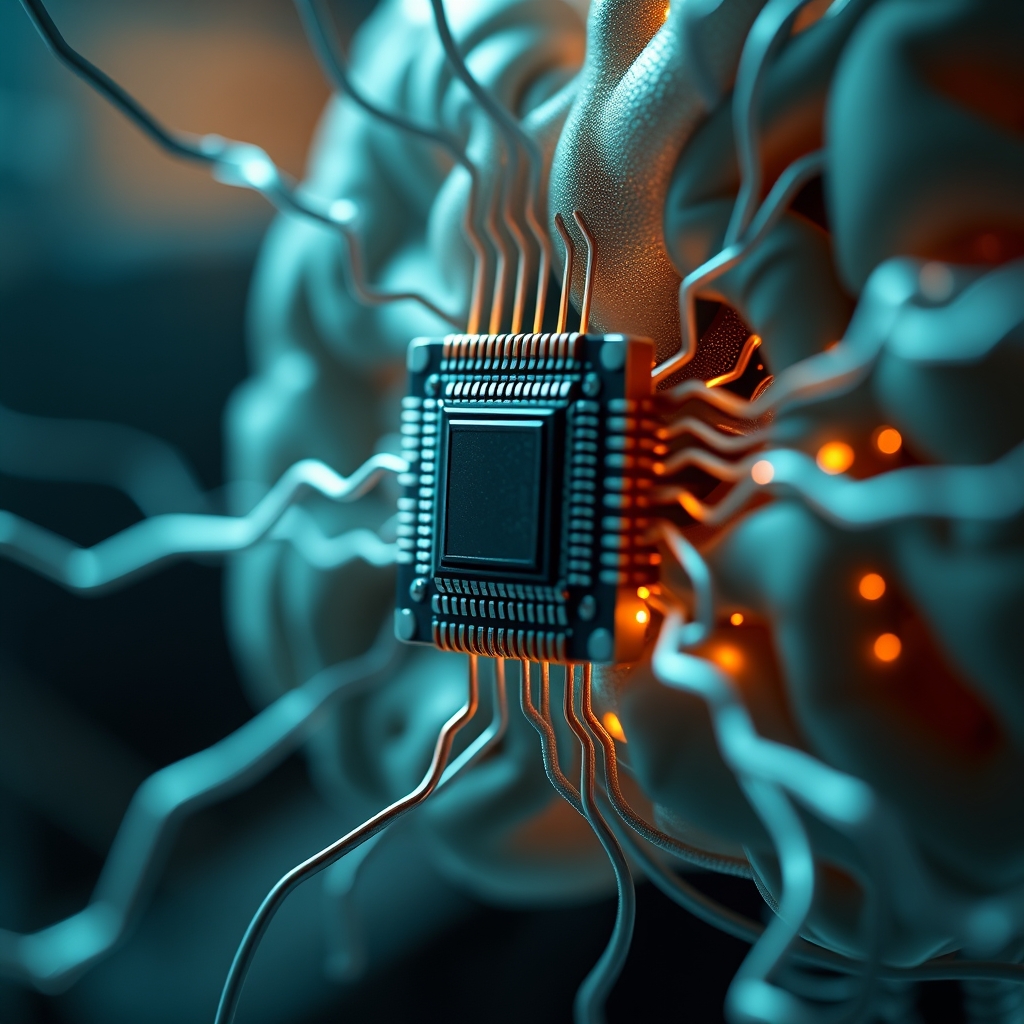
In a significant leap for neurotechnology, Austin-based Paradromics has announced a strategic partnership with Nvidia to revolutionize the portability and efficiency of brain-computer interfaces (BCIs). The collaboration aims to transform the cumbersome external hardware currently required for speech decoding into compact, low-power devices that can be integrated directly into a patient's mobility aids, such as wheelchairs. This development marks a critical milestone in making BCI technology accessible and practical for daily use outside of clinical settings.
The technology is already demonstrating life-changing results for patients like Mary, a Michigan woman suffering from motor neuron disease who relies on a dime-sized chip implanted in her brain. While the implant itself is invisible, the current system requires a cart of electronics to process the signals from over 400 embedded electrodes. By leveraging Nvidia’s Jetson low-powered computing modules and Holoscan AI sensor processing software, Paradromics plans to shrink this setup to the size of a smartphone, allowing for real-time speech synthesis with minimal latency.
Matt Angle, CEO and founder of Paradromics, emphasized that the core challenge lies in translating massive volumes of neural data into actionable applications without relying on distant cloud servers. He described BCIs as the ultimate case for edge computing, a model where data is processed locally on devices close to the source. This approach not only reduces the physical burden on patients but also ensures that sensitive neural data remains private and secure, as it does not need to be transmitted over the internet.
David Niewolny, Nvidia’s director of business development for health care, highlighted the importance of real-time processing. He noted that even small delays can make communication feel unnatural, necessitating AI models that can continuously adapt to the changing nature of neural signals. By integrating Nvidia’s foundation models locally, the system can produce more expressive and human-like synthesized voices, enhancing the quality of interaction for users.
This partnership positions Nvidia as a key enabler in the BCI ecosystem, working alongside other industry players like Synchron. The integration of advanced AI and efficient hardware promises to expand human capabilities, offering hope to individuals with severe motor impairments to regain their voice and independence through technology that is both powerful and portable.