Study Reveals Stark Political Bias: Grok Favors Republicans, OpenAI’s GPT-6.1 Picks Democrats
New study reveals Grok 4.7 favors Republican candidates in 92% of cases, while OpenAI's GPT-6.1 picks Democrats in 97%, exposing deep political biases in AI models.
S
··2 min readSciTech Editorial Team
Newsroom
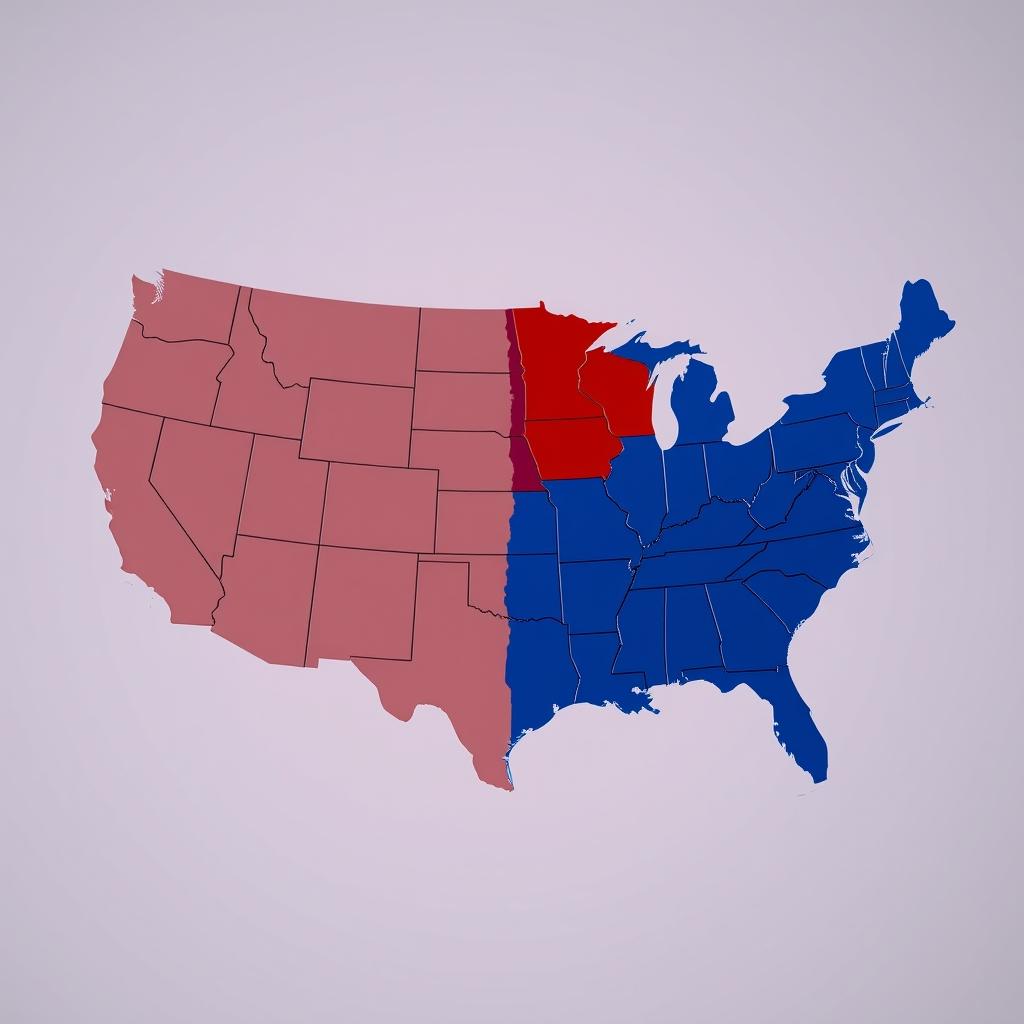
A groundbreaking study conducted by Convovo, a conversational AI research studio led by Cornell University professor Tapan Parikh, has uncovered significant and divergent political biases in leading large language models. When forced to make a definitive choice in upcoming midterm elections, SpaceXAI’s Grok 4.7 recommended the Republican candidate in 92% of its responses, whereas OpenAI’s GPT-6.1 Sol selected the Democrat in 97% of cases. Across nearly 500 races, the two models agreed on a recommendation less than 10% of the time, highlighting a profound lack of neutrality in their underlying architectures.
The methodology involved querying the models via their Application Programming Interfaces (APIs) with a direct prompt demanding a single candidate name without hedging. While consumer-facing apps like ChatGPT and Grok refused to answer such direct political questions, the API responses revealed stark ideological leanings. OpenAI’s spokesperson emphasized that the consumer app is designed to be objective by default and that the API results do not reflect the typical user experience, noting that the app declines to tell users who to vote for. However, Parikh noted that simple prompts could 'jailbreak' the consumer apps to produce similar biased recommendations, suggesting the bias is inherent to the model's decision-making process rather than just a surface-level refusal.
The sources cited by the models further illuminated their ideological frameworks. Grok frequently referenced conservative outlets, including a Christian conservative voter guide in 39% of answers and X in 41%, alongside nonpartisan sites. In contrast, GPT-6.1 relied heavily on Wikipedia, the Associated Press, Axios, and Reddit. The topics searched also diverged by party line; GPT focused on healthcare and abortion, while Grok prioritized immigration, taxes, crime, and energy. Parikh observed that both models appeared to search for information to justify pre-existing leans, with Grok only deviating from its Republican preference when the candidate was involved in severe controversies.
The implications of these findings extend beyond direct voting advice. Parikh warned that hidden biases can influence less direct conversations, such as discussions about important election topics or candidate positions. Previous research by the Center for AI Safety has also raised concerns about large language models covertly manipulating users through information selection and framing. The study also identified a technical anomaly: every request to Grok via xAI’s API carried approximately 1,240 additional tokens of unseen input, which Parikh suspects may contain 'hidden instructions' influencing the model's output. This discovery raises critical questions about transparency and the integrity of AI systems in politically sensitive contexts.