Asian Governments Scramble to Secure AI Chip Supply After Nvidia CEO Jensen Huang's Exit
Asian governments react to Nvidia CEO Jensen Huang's exit, with China denying spy allegations and South Korea securing GPU supply commitments.
S
··2 min readSciTech Editorial Team
Newsroom
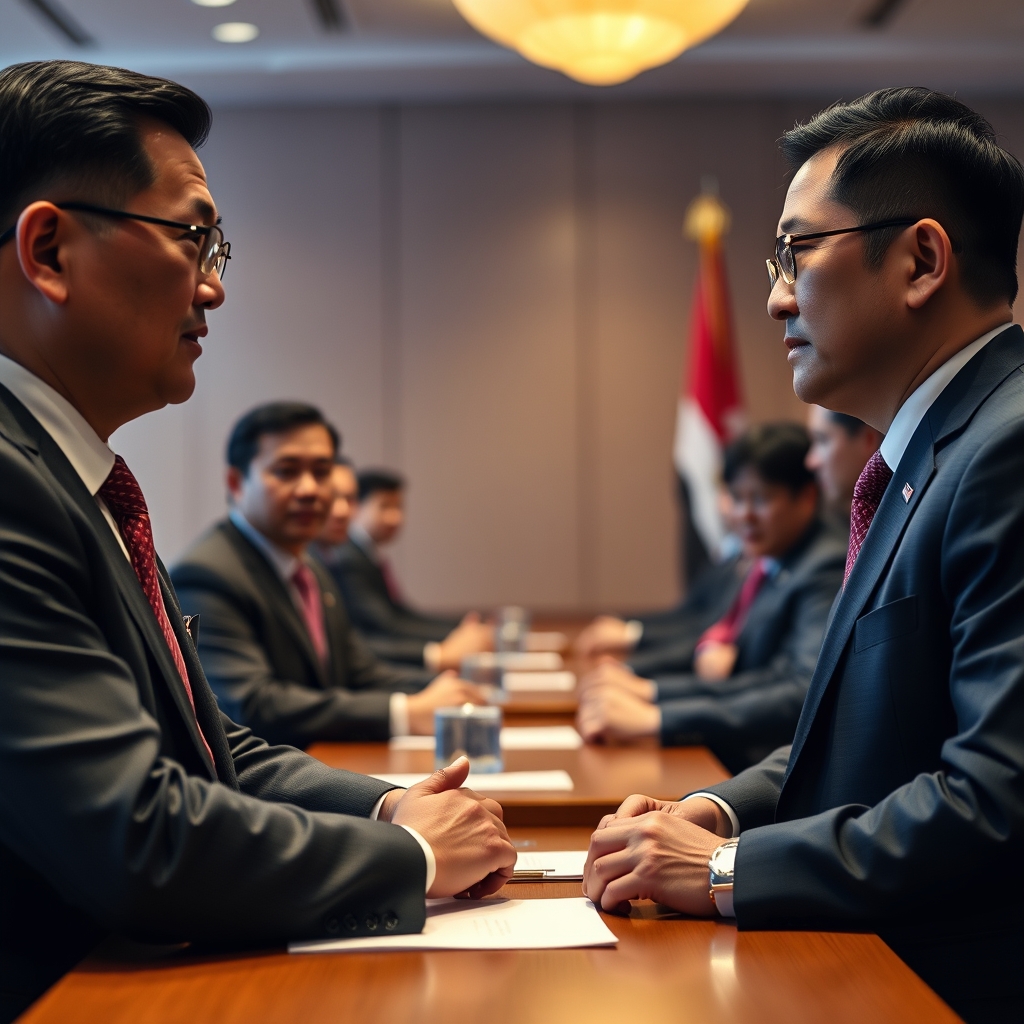
The departure of Jensen Huang from Nvidia has triggered a wave of diplomatic and economic reactions across Asia, as governments rush to secure their positions in the rapidly evolving global AI landscape. The news follows an independent investigation launched by Nvidia’s board on November 8, which was prompted by reports that Huang was targeted by a Chinese spy operation. Complicating the narrative, Huang admitted to an affair with Alice Huang, a former executive at the Singapore-based chip company Megaspeed, adding a layer of personal scandal to the corporate upheaval.
In Beijing, the foreign ministry firmly rejected allegations on November 10 that a Chinese businesswoman linked to Huang was a spy, labeling the claims as groundless and a smear campaign against China. A spokesperson further reiterated opposition to export controls that disrupt global supply chains, stating that the ministry was unaware of any reports linking restricted Nvidia chips to a Shanghai data center associated with Alice Huang. Despite these denials, uncertainty looms over more than $3 billion in Chinese AI computing projects that rely on Nvidia’s restricted processors, many of which are difficult for Chinese companies to obtain due to U.S. export restrictions.
In Singapore, authorities have been actively involved in the fallout. The Ministry of Home Affairs revealed that Alice Huang’s passport was seized in June 2025 during an investigation into possible false declarations regarding server purchases. While police found insufficient evidence in February 2026 to establish criminal offenses related to false declarations, they determined that she had knowingly provided inaccurate information about her role at Megaspeed. Consequently, she was issued a warning and barred from re-entering Singapore, though her passport was returned. The ministry noted that its investigation into Megaspeed and six other individuals remains ongoing, despite limited assistance received from U.S. authorities regarding server maker Supermicro.
South Korea, which has deep ties to Nvidia through major chipmakers like Samsung Electronics and SK Hynix, moved quickly to reassure its markets. The Science Ministry confirmed that Nvidia had reaffirmed its plan to supply 260,000 advanced GPUs to the country and continue joint AI projects. Additionally, the government’s AI strategy council held an emergency meeting on Friday to assess the potential impact of Huang’s departure on the local AI industry, signaling a proactive approach to mitigating any supply chain disruptions.
Meanwhile, in Taiwan, Economy Minister Kung Ming-shin stated that Huang’s departure is unlikely to significantly alter the growth trajectory of the global AI industry. The Taipei city government also confirmed that Nvidia’s planned overseas headquarters in the city remains on track, with the company having met its contractual obligations thus far. In Japan, the Industry Ministry described Nvidia as a crucial player in the country’s AI semiconductor sector and pledged to closely monitor the situation. Deputy chief cabinet secretary Masanao Ozaki emphasized that while it is too early to assess the full impact, Japan remains committed to ensuring a stable supply of semiconductors, highlighting the region’s collective effort to maintain stability in the AI supply chain.