ESA's Hera Probe Arrives at Didymos to Analyze NASA's DART Impact and Planetary Defense
ESA's Hera probe arrives at the Didymos-Dimorphos system to analyze the impact of NASA's DART mission, providing critical data for future planetary defense strategies.
S
··2 min readSciTech Editorial Team
Newsroom

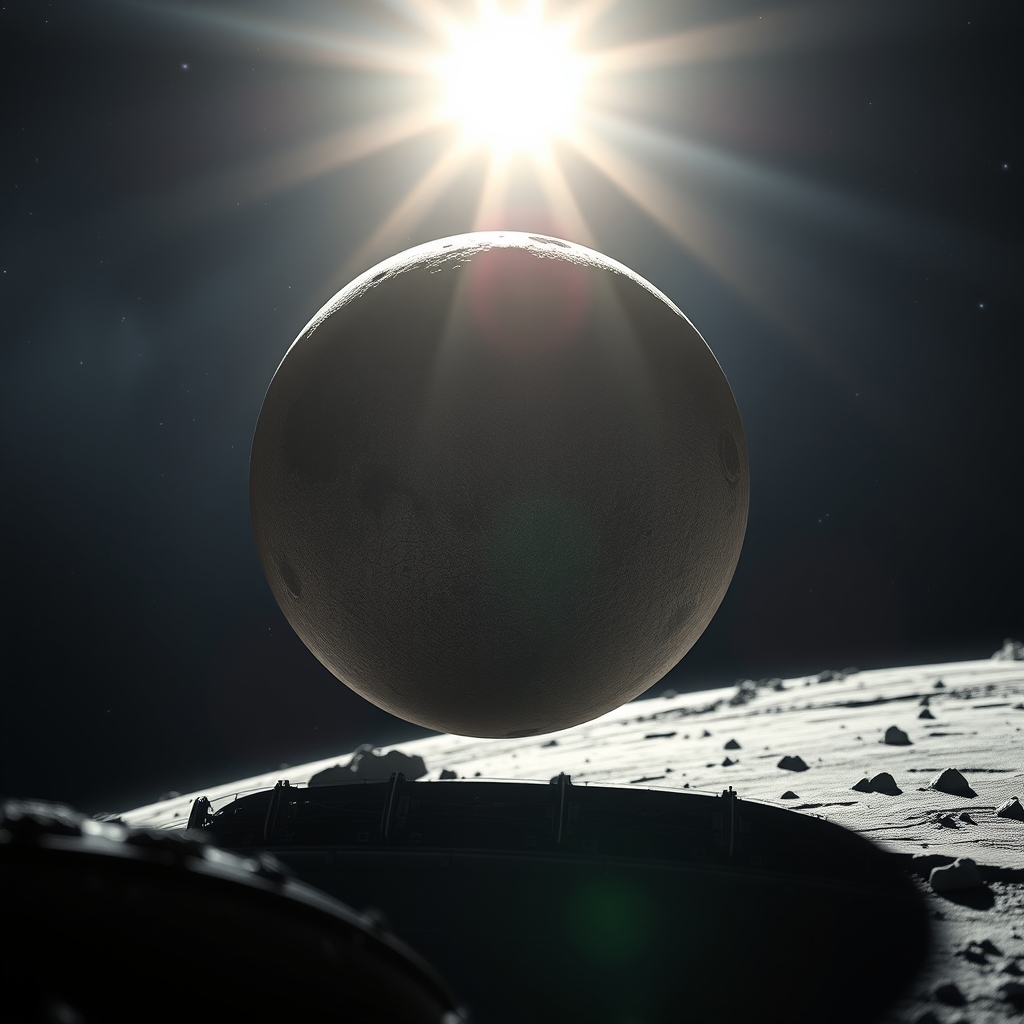
The European Space Agency’s Hera probe has successfully entered the vicinity of the binary asteroid system Didymos and Dimorphos, marking a critical milestone in humanity’s planetary defense capabilities. This mission serves as the follow-up to NASA’s Double Asteroid Redirection Test (DART), which intentionally crashed into Dimorphos in 2022 to alter its orbit. While DART proved that kinetic impactors can deflect asteroids, Hera is now tasked with quantifying the long-term effects of that collision and understanding the physical properties of these small bodies in unprecedented detail.
Upon arrival, Hera began its arrival phase in October, capturing its first images from a distance of approximately 800 miles. The probe will conduct a comprehensive survey of both asteroids, focusing on the impact crater left by DART. By analyzing the crater’s morphology and the ejected debris, scientists aim to determine whether the strength of the asteroid material or gravity played a more decisive role in crater formation. This data is vital for refining models of planetary defense, as it helps predict how different types of asteroids might react to deflection attempts.
A primary scientific objective is to measure the exact mass of Dimorphos. Previous estimates were based on orbital dynamics, but Hera’s instruments, including a lidar for topographic mapping and spectrometers for chemical analysis, will provide precise data. This mass measurement is crucial for assessing the effectiveness of the DART mission. Additionally, Hera will investigate how the binary system formed, noting that Didymos rotates rapidly once every 2.3 hours, placing it on the edge of structural stability.
In January 2027, Hera will deploy two CubeSats named Juventas and Milani. Juventas will attempt to land on Dimorphos, using radar to probe the subsurface structure up to 100 meters deep and a gravimeter to measure gravitational variations caused by Didymos. Milani will focus on surface composition, searching for dust and volatile substances. These landers will provide the first in-situ data from a binary asteroid system, offering insights that remote sensing alone cannot achieve.
The findings from Hera are timely, as astronomers track the asteroid Apophis, which will pass within 19,000 miles of Earth in April 2029. While Apophis is currently predicted to miss Earth, the close approach underscores the importance of robust planetary defense strategies. The knowledge gained from Hera will inform future missions and policies, ensuring that humanity is better prepared to respond to potential threats from near-Earth objects. This collaborative effort between NASA and ESA represents a significant step toward safeguarding our planet against cosmic hazards.