China Overhauls Medical PhDs: Practical Achievements Now Replace Traditional Theses
China allows clinical medicine PhDs to graduate with practical achievements like AI software or case analyses, replacing traditional theses to boost professional relevance.
S
··2 min readSciTech Editorial Team
Newsroom
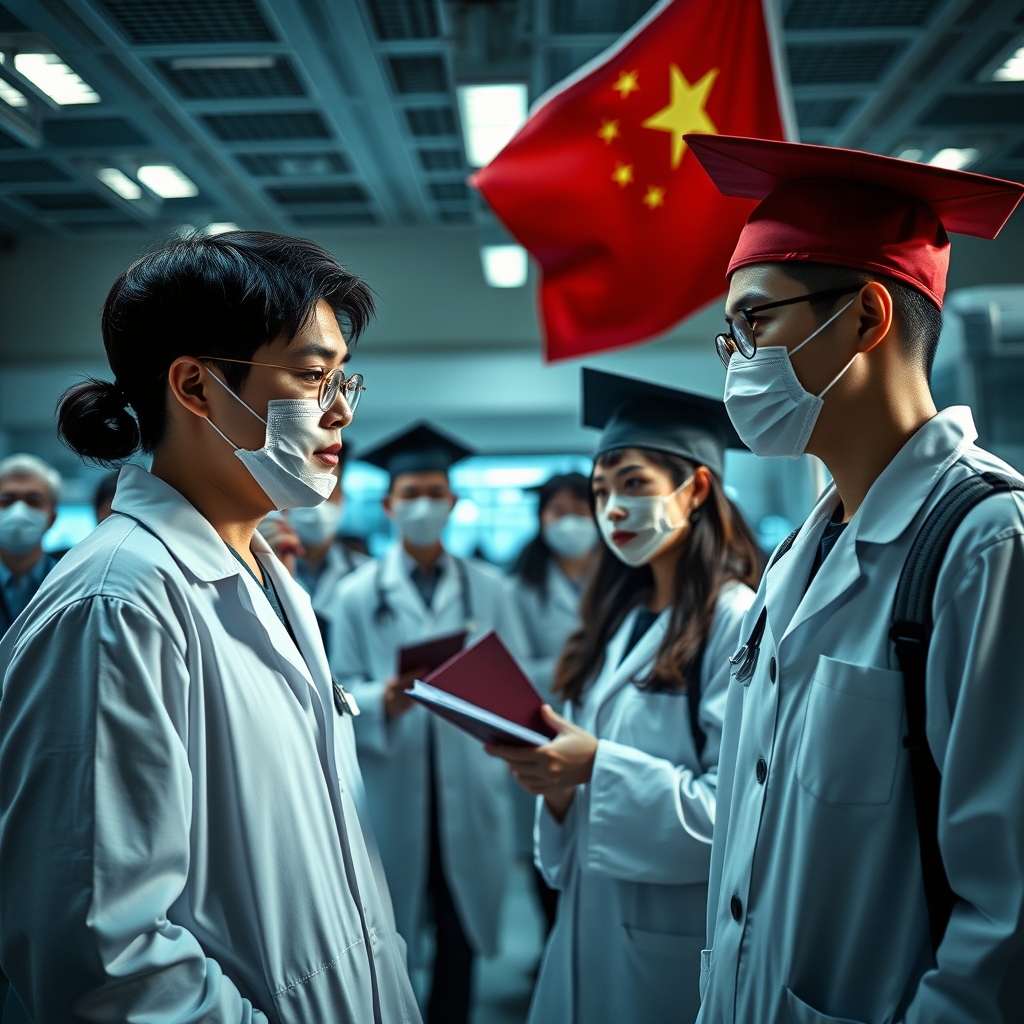
In a significant shift in higher education policy, China has authorized master’s and PhD candidates in clinical medicine to graduate with a 'practical achievement' rather than a traditional thesis. This development marks the second major field, following engineering, to adopt this alternative pathway. On October 22, a team of government-appointed education advisers released draft policy documents outlining the rules for this new graduation route for professional degrees, which are typically three-year courses taken by medical graduates and practising physicians. The initiative aims to align academic assessment with professional realities, allowing students to demonstrate competence through real-world solutions rather than purely theoretical research.
The new regulations permit students to submit practical achievements, such as an analysis of a special clinical case or an investigation into problems facing medical institutes. This approach reflects the nature of professional postgraduate courses in China, which focus on training students to solve specific workplace problems rather than developing broad research skills. According to China’s Academic Degrees Committee of the State Council, similar pathways are expected to be introduced for postgraduate courses in translation, agriculture, accounting, and arts. This expansion underscores a broader national strategy to make higher education more responsive to industry needs and practical application.
Experts view this reform as a positive step, provided that rigorous standards are established. Futao Huang, a researcher of higher-education policy at Hiroshima University in Japan, noted that while training students in ways that reflect their future careers is correct, the real challenge lies in developing credible, transparent, and profession-specific standards for assessing these practical achievements. Without such standards, there is a risk of compromising academic integrity. The shift requires a delicate balance between encouraging practical innovation and maintaining the high quality expected of doctoral and master’s degrees.
Zhou Feifei, a spinal surgeon at Peking University Third Hospital in Beijing, highlighted the potential benefits for patient care. He stated that the new pathway encourages students to identify real-life problems and address them using scientific methods, thereby assessing their contribution to patients and society directly. This perspective aligns with the goal of producing physicians who are not only academically sound but also practically effective in clinical settings. The reform seeks to bridge the gap between academic research and clinical practice, ensuring that graduates are better prepared for the demands of modern healthcare.
The first student to graduate with a 'practical PhD' in clinical medicine was Tie Dazhao, who completed his degree in June after being selected as a pilot case in 2023. Tie developed an artificial-intelligence-empowered software program that helps physicians classify a rare spine condition and recommend suitable treatment strategies. This example illustrates the type of innovative, applied work that the new policy encourages. However, challenges remain in standardizing assessment across different medical specialties. Liping Duan, a member of the national advisory committee, warned that what works for cardiology may not work for dermatology, emphasizing the need for uniform standards to control the quality of achievements and prevent the misconception that graduation has become easier.