Ukraine Deploys Pocket‑Sized D·Vision SDR to Hijack Russian Drone Video Feeds
Ukraine’s new D·Vision SDR lets soldiers watch Russian drone video feeds in real time, offering a low‑cost edge on the battlefield.
S
··1 min readSciTech Editorial Team
Newsroom
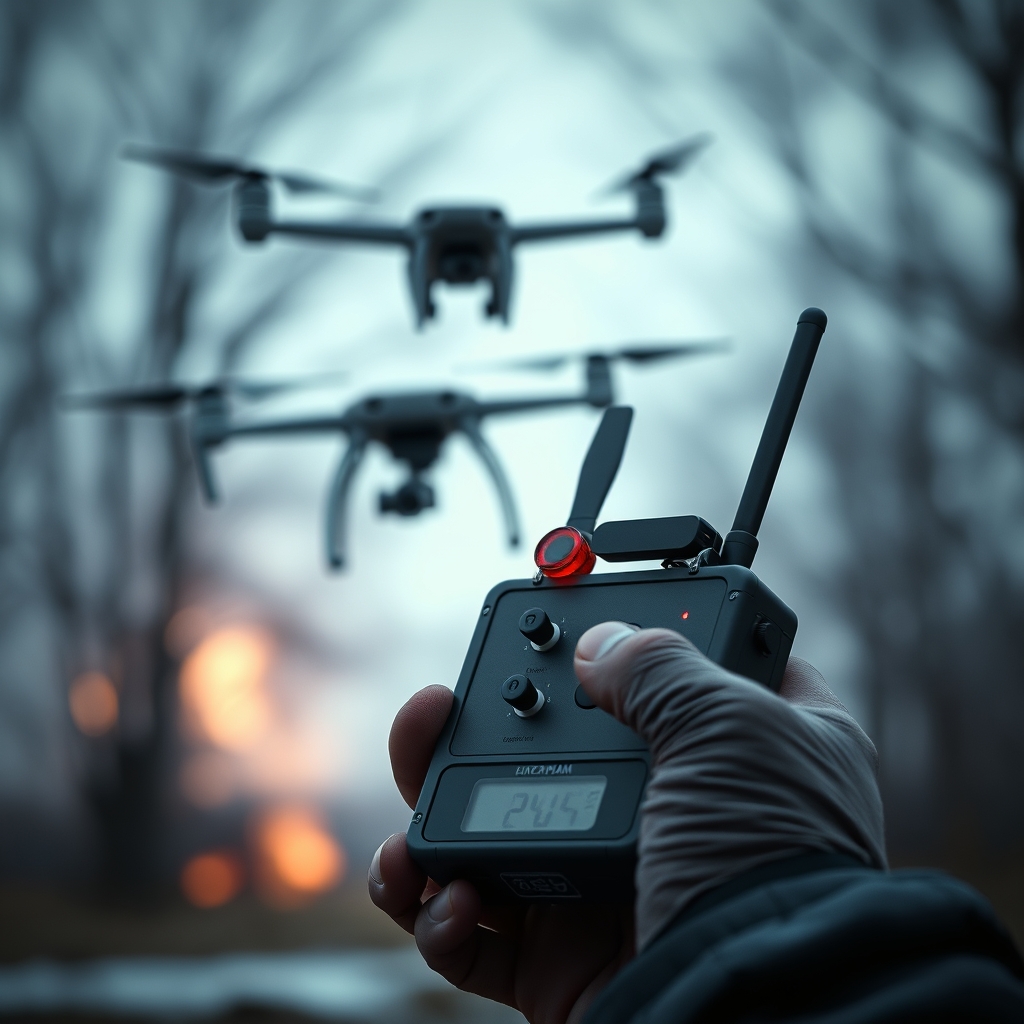
Ukraine’s battlefield has acquired a new edge: the pocket‑sized D·Vision SDR, a receiver built by Kyiv‑based startup CODE380 that can intercept live video streams emitted by a wide range of Russian unmanned aerial systems (UAS). By turning the drones’ own cameras into a source of intelligence, Ukrainian units can spot the aircraft’s flight path and the target it is tracking before the payload is released.
The device weighs roughly 10 ounces (about 283 grams), making it less than half the mass of competing Ukrainian receivers that tip the scales at a couple of pounds. It relies on الراديو المعرفة بالبرمجيات (Software Defined Radio - SDR) to scan the unencrypted analog video frequencies traditionally used by Russian drones. Because the video is transmitted without scrambling, any SDR tuned to the correct band can display the feed on a small screen, giving soldiers on the ground a real‑time visual of the threat.
Serhii “Flash” Beskrestnov, a radio‑frequency specialist advising the Ukrainian president, warned on a June Facebook post that most detectors struggle to pick up the newer Molniya (Молния) drone frequencies, or do so with poor fidelity. He emphasized that over‑reliance on a single detector could be fatal, noting that the D·Vision SDR is one of the few tools that can reliably lock onto those channels.
The operational impact is immediate: commanders can reroute troops, activate counter‑measures, or pre‑emptively strike the drone before it reaches its target. Analysts see the technology as a low‑cost force multiplier that could shift the aerial‑surveillance balance in Ukraine’s favor, especially as Russia fields larger swarms of inexpensive reconnaissance platforms.
Looking ahead, the advantage may erode. Beskrestnov cautioned that a shift from analog to digital video would render current SDRs blind, and recent reports indicate that some Molniya drones are now AI‑guided, equipped with Nvidia chips and capable of operating with minimal or no radio emissions. The race is therefore set to move from intercepting raw video to countering encrypted, AI‑driven payloads.