Indonesia's Wildfires Devastate Bornean Orangutan Habitats Amidst Record Haze
Wildfires in Indonesia have destroyed 60% of Bornean orangutan habitats, forcing researchers to fight fires and observe severe health impacts on the primates.
S
··2 min readSciTech Editorial Team
Newsroom
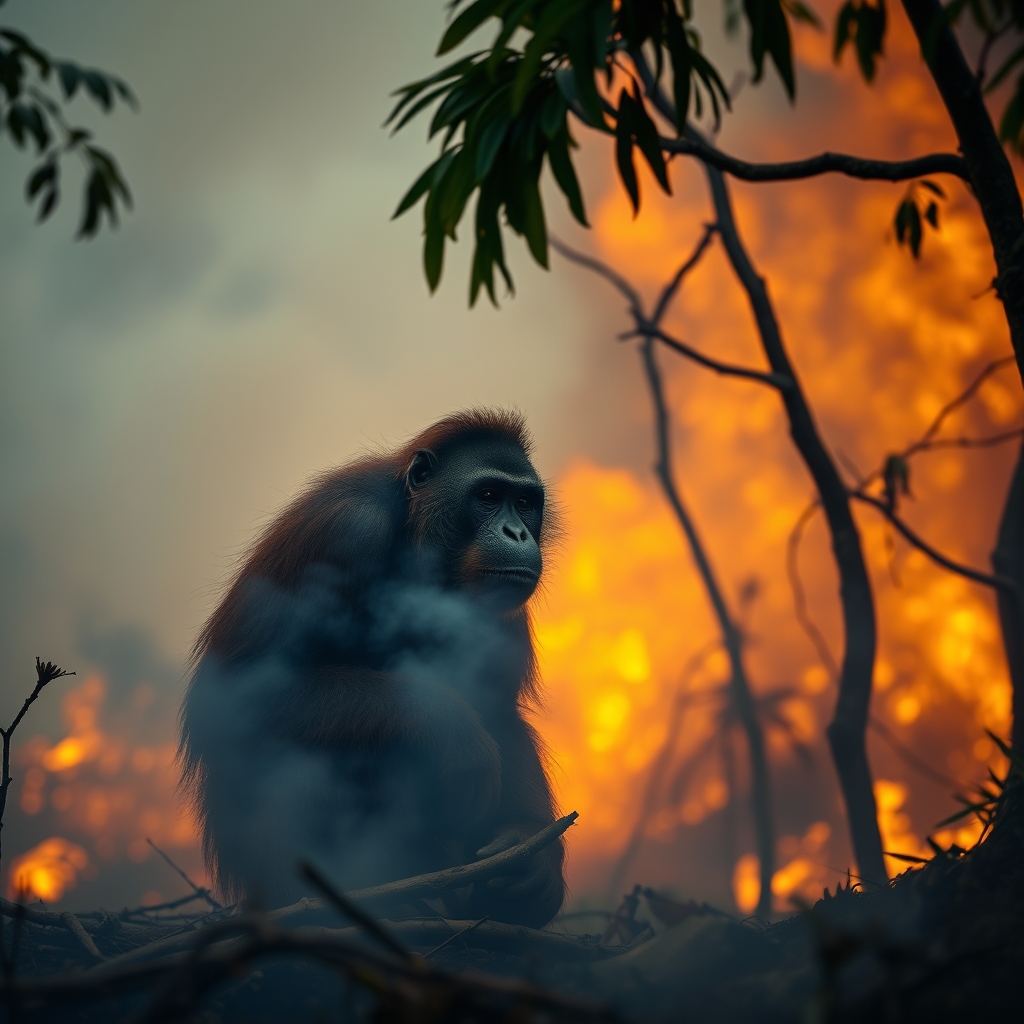
Indonesia is currently grappling with one of its most severe fire and haze seasons in the past three decades, posing an existential threat to the critically endangered Bornean orangutan. Between July and October, approximately 300,000 blazes erupted across the region, driven by a super El Niño event that dried out vegetation and fueled intense winds. The environmental toll has been catastrophic, with more than 2.8 million hectares of land burnt across the archipelago. The impact has been particularly devastating in Kalimantan, where fires consumed 60% of the Bornean orangutan's habitat, including pristine forests in Gunung Palung National Park and the Tuanan research station.
The air quality has deteriorated to dystopian levels, with toxic particulate matter reaching concentrations roughly 400 times higher than the safety limits established by the World Health Organization. Erin Vogel, a primatologist at Rutgers University who has studied orangutans in Central Kalimantan for over 20 years, described the scene as resembling the surface of Mars. The thick, orange-brown haze was so dense that it caused severe respiratory distress for anyone not wearing a respirator. Vogel noted that the forests, usually vibrant with the sounds of birds and insects, fell into an eerie silence, broken only by the crackle of burning trees and the sound of them falling.
The disaster forced research teams to pivot from scientific observation to emergency firefighting. For more than two months, staff members, including phenology and fire teams, worked day and night to combat the flames. Vogel expressed awe at the resilience of these volunteers, who maintained a positive and hopeful attitude despite the grueling conditions. The human effort to save the forest has been a race against time, as the peat swamp forests of Tuanan continued to smoulder even during the recent interviews with Nature.
The ecological consequences extend beyond immediate habitat loss. Researchers have observed orangutans exhibiting signs of lethargy and illness due to smoke inhalation. One male orangutan, studied for over 15 years, was found on the ground breathing heavily but showed signs of recovery days later. However, the displacement of these primates from their traditional territories is leading to increased competition for limited resources. This forced migration is expected to alter their behavioral patterns and social structures, presenting new challenges for conservationists as they navigate the aftermath of this climatic disaster.