The Rock Paradox: New Studies Warn Enhanced Weathering May Undermine Crop Yields
New studies reveal that excessive use of enhanced rock weathering for carbon removal can make soil too alkaline, potentially reducing crop yields and capping the method's climate impact.
S
··2 min readSciTech Editorial Team
Newsroom
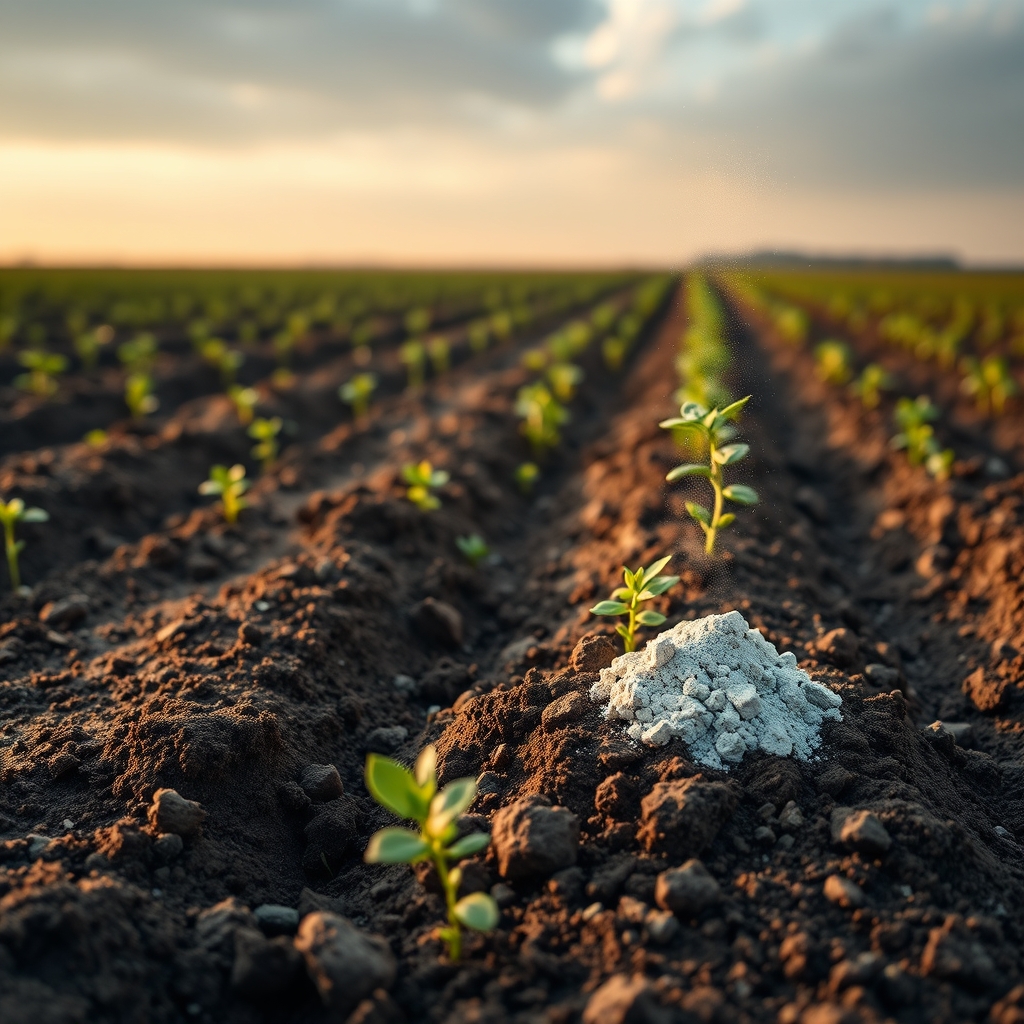
Tech giants like Google and Microsoft have poured hundreds of millions of dollars into a promising climate solution: spreading crushed basalt and olivine across farms to capture carbon from the air. This method, known as enhanced rock weathering (ERW), was hailed by influential models as a potential game-changer, capable of removing 3 to 8 billion metric tons of CO2 annually while simultaneously improving soil quality for farmers. However, a pair of new preprint studies released today by researchers at the San Francisco-based nonprofit CarbonPlan cast serious doubt on the scalability of this approach, revealing a critical tension between climate goals and agricultural viability.
The core issue lies in the chemical balance of the soil. While adding alkaline rocks initially reduces harmful acidity and boosts nutrient availability, excessive application can push the soil pH into alkaline territory. This shift can trigger micronutrient deficiencies and increased disease susceptibility in crops, potentially leading to significant yield reductions. For subsistence farmers who rely on these lands for their livelihood, such a drop in productivity is not just an economic setback but a threat to food security.
The implications for carbon removal capacity are profound. The new analyses suggest that to prevent these negative agricultural impacts, rock application rates must be strictly limited. Consequently, the method’s potential to remove CO2 is likely capped at less than one billion tons per year, a significant reduction from the previous optimistic estimates. This finding underscores a steep trade-off: the very mechanism that makes ERW attractive for climate mitigation may, if overused, undermine the agricultural systems it aims to support.
Despite these challenges, proponents argue that ERW remains a vital tool, particularly for smallholder farmers in developing regions who struggle with soil acidity. A recent study noted that moderate ERW application boosted median yields for smallholder farmers in India by more than 20%. However, the new data highlights the need for precise, site-specific management rather than blanket scaling. As Tyler Kukla of CarbonPlan notes, there is a "real tension" between the massive uncertainty in the science and the urgent pressure to scale up carbon removal technologies quickly.
The broader scientific community is now grappling with how to accurately estimate the net benefits of ERW. Previous models used in UN climate reports often failed to account for long-term pH changes, leading to overstated claims of carbon sequestration. The new findings call for a more nuanced approach that integrates agricultural science with climate modeling. Until these uncertainties are resolved, the promise of rocks as a primary carbon sink must be tempered with rigorous caution to avoid unintended consequences for global food systems.