Record-Breaking Milky Way Simulation Achieved with Trio of Supercomputers
For the first time, scientists have simulated the Milky Way down to individual stars using three top‑tier supercomputers and an AI‑boosted model, setting a new benchmark for galactic research.
S
··1 min readSciTech Editorial Team
Newsroom
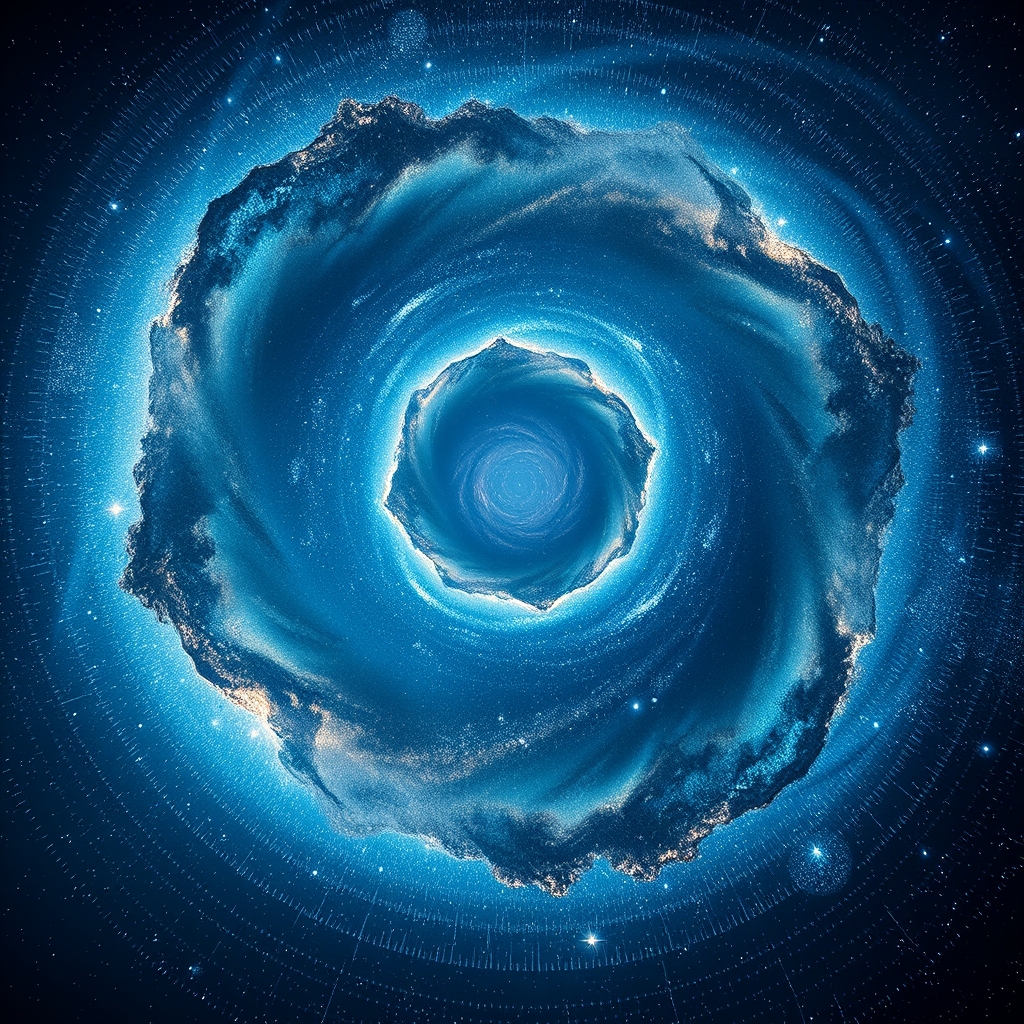
A multinational team led by researchers from the University of Tokyo has unveiled the most detailed computer model of the Milky Way ever created. By harnessing the combined power of three of the world’s most powerful supercomputers, the team simulated the entire galaxy down to the scale of individual stars for the first time.
The simulation ran on the Fugaku (Japan), Summit (USA) and LUMI (Europe) systems, each delivering petascale performance. An AI‑accelerated framework, built on a hybrid of CUDA‑enabled GPUs and ARM‑based CPUs, allowed the code to scale efficiently across the heterogeneous hardware, cutting the wall‑clock time by roughly 40 % compared with traditional N‑body solvers.
At the heart of the model lies a machine‑learning surrogate that predicts short‑range gravitational interactions, while a traditional particle‑mesh algorithm handles long‑range forces. This dual approach enabled a spatial resolution of 0.1 parsec—about the distance between neighboring stars in the solar neighbourhood—and tracked more than 100 billion stellar particles, a ten‑fold increase over previous galactic simulations.
According to Dr. Hiroshi Tanaka, principal investigator, “Capturing every star individually opens a new window on the Milky Way’s dynamical history, from spiral‑arm formation to the migration of the Sun’s birth cluster.” The unprecedented detail promises to refine models of dark‑matter distribution, star‑formation rates, and the impact of past galactic mergers.
The breakthrough also sets a benchmark for exascale astrophysics. Researchers plan to extend the methodology to nearby galaxies such as Andromeda and to couple the simulation output with upcoming observations from the Gaia and James Webb space telescopes. Yet the sheer volume of data—several petabytes—poses storage and analysis challenges that will drive the next generation of AI‑driven scientific workflows.