Silver Takes on Polonium’s Rare Crystal Form, Boosting Reactivity
A new simple‑cubic phase of silver, previously seen only in radioactive polonium, has been created under extreme conditions, delivering a 40 % boost in chemical reactivity.
S
··1 min readSciTech Editorial Team
Newsroom
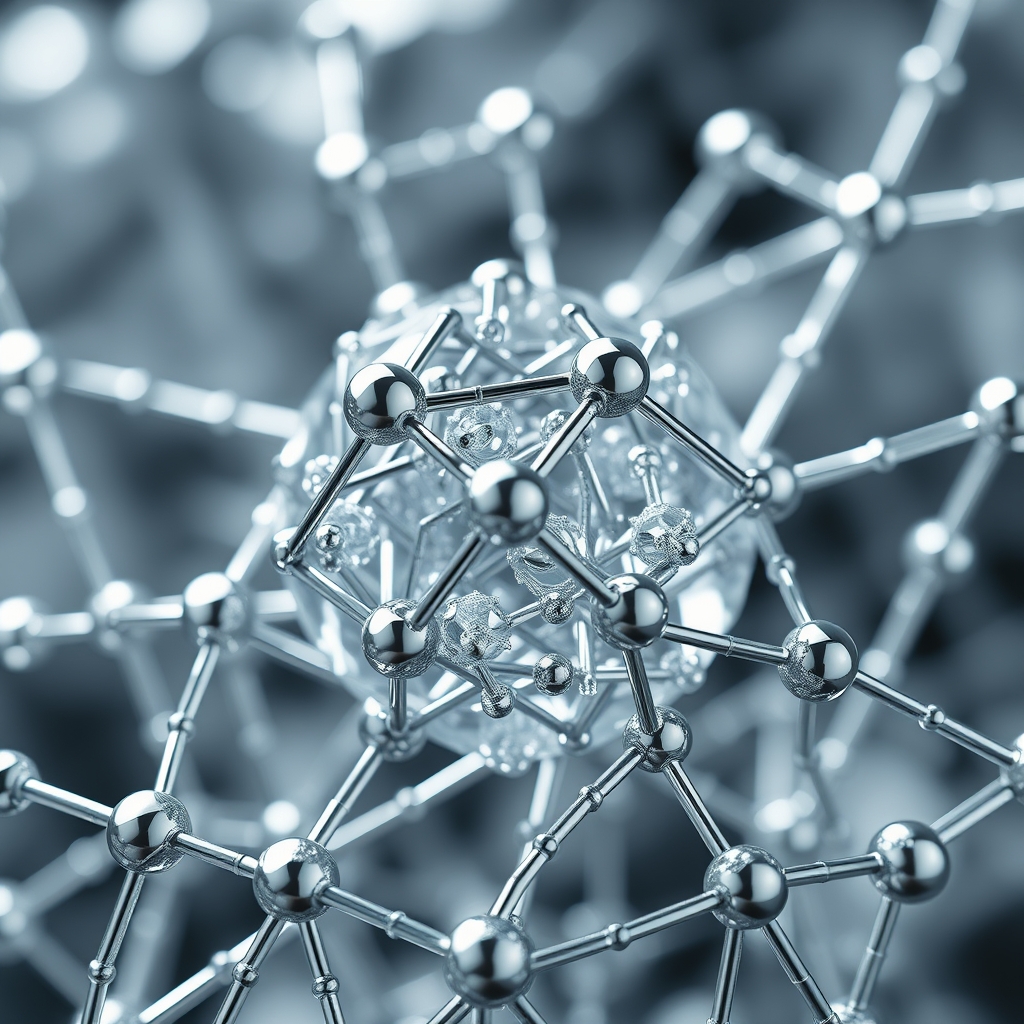
Researchers at Hokkaido University have reported a fleeting but unprecedented crystal structure of silver that exhibits dramatically higher chemical reactivity than the metal’s conventional face‑centered cubic lattice. The finding, published in Nano Letters (Nov 2026), marks the first time a structure previously observed only in the radioactive element polonium has been induced in a non‑radioactive metal.
The team generated the new phase by subjecting high‑purity silver foil to pressures of roughly 30 GPa while cooling it to 77 K in a diamond‑anvil cell. In‑situ X‑ray diffraction revealed a transition from the familiar face‑centered cubic (fcc) arrangement to a simple cubic (sc) lattice with a measured lattice constant of 3.45 Å—values that match those reported for α‑polonium.
Such a rearrangement profoundly alters the electronic density of states, which the authors confirmed by measuring a 40 % faster reaction rate with hydrogen peroxide compared with standard silver. “This structure gives silver a reactivity that rivals many transition‑metal catalysts,” noted Prof. Kaito Yamamoto, the study’s lead author.
The discovery could reshape several industrial sectors. Highly reactive silver may serve as a low‑cost catalyst for green chemical processes, enable ultra‑sensitive electrochemical sensors, and improve the performance of interconnects that must operate at cryogenic temperatures.
To move beyond the transient nature of the phase, the researchers plan to alloy the silver with trace amounts of gold and explore kinetic stabilizers that could lock the simple cubic lattice at ambient conditions. Parallel theoretical work using molecular‑dynamics simulations is already underway to map the energy landscape of the new structure.