The Data Center Backlash: A Crisis of Power, Not Just Politics
The backlash against data centers is driven primarily by electricity strain, not just cultural politics, as revealed by on-the-ground reporting in Virginia.
S
··2 min readSciTech Editorial Team
Newsroom
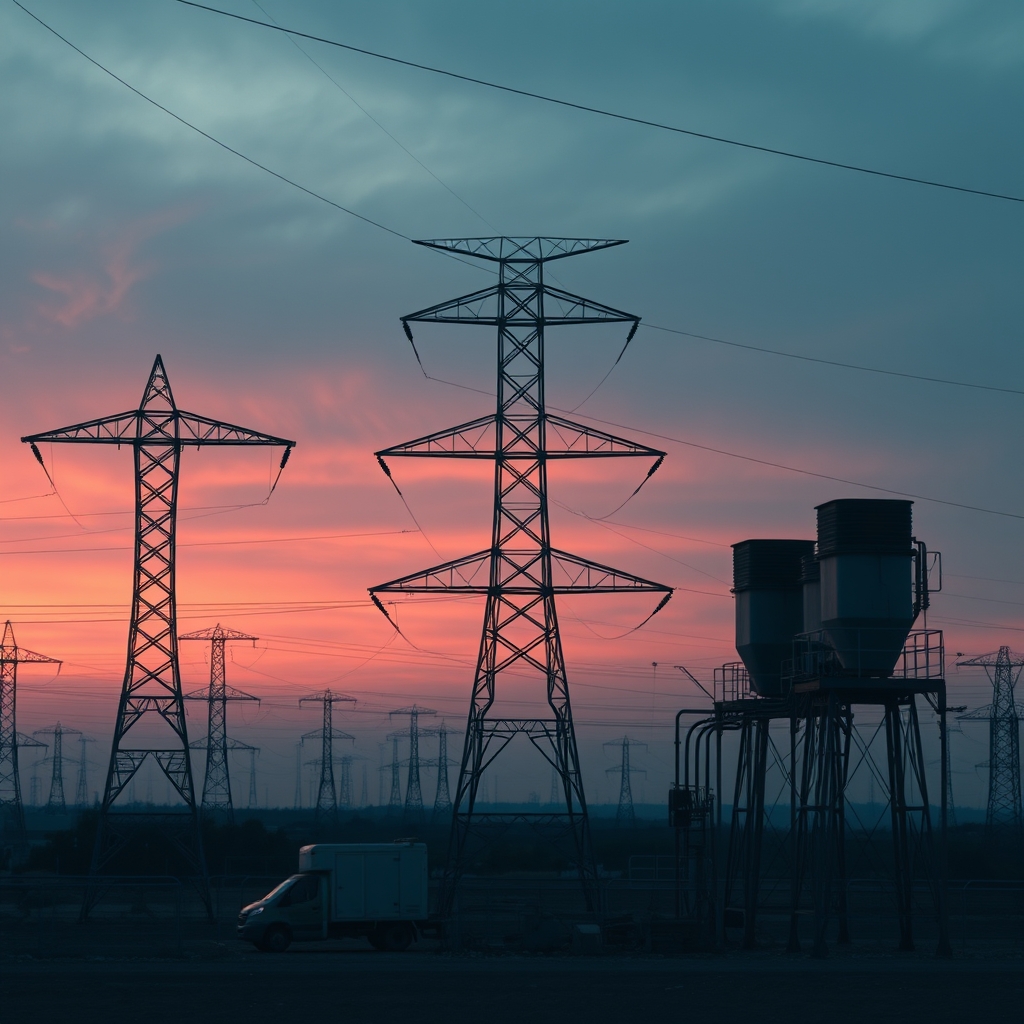
The growing public backlash against data centers in the United States is widely framed by Big Tech as a cultural war over corporate power and affordability. However, a deep dive into 'Data Center Alley' in Ashburn, Virginia, reveals that the core of the conflict is actually a physical crisis of electricity. While industry leaders like Chris Lehane of OpenAI argue that data centers are a proxy for broader societal unease, on-the-ground evidence suggests the issue is far more tangible: the insatiable appetite for power.
In Loudoun County, Virginia, most data centers are connected to the existing grid, relying on utilities like Dominion Energy, which heavily utilizes natural gas. The average data center in this region operates with a capacity of 54 megawatts, exceeding the power draw of the entire Denver International Airport. Activists like Elena Schlossberg argue that the industry’s attempt to politicize the issue obscures the simple reality that these facilities are straining local infrastructure. Recent state regulations now require data centers to bear the full cost of new transmission lines, a direct response to the burden placed on the grid.
The situation is even more complex in rural areas where new AI-focused facilities are being built. These sites often lack nearby grid infrastructure, forcing companies to generate 'behind the meter' power using natural gas turbines and diesel generators. The scale of these projects is staggering; while the smallest attractive AI training centers require 300 megawatts, ideal facilities aim for 6,000 megawatts—comparable to the power consumption of the entire city of Chicago. Anthropic, for instance, has reportedly agreed to pay $3.4 billion for gas turbines, marking the largest power generation purchase by an AI company to date.
This shift to on-site power generation has significant environmental and social consequences. Natural gas turbines and diesel generators emit air pollutants, leading to conflicts with local communities who feel excluded from decisions about infrastructure of this magnitude. The case of Elon Musk’s data center in Memphis, which reportedly violated air quality laws, highlights the tension between rapid expansion and environmental compliance. Big Tech’s narrative of a 'culture war' fails to address the fundamental challenge: there is a limit to how much industrial power a small community can absorb without severe consequences.
While concerns about job losses and corporate concentration are valid, the electricity crisis remains the most immediate and measurable driver of opposition. As data centers continue to expand, the industry must confront the physical realities of energy consumption. The solution is not merely in better public relations or tax deals, but in finding sustainable ways to power these massive computational hubs without compromising the well-being of the surrounding communities.