The Quest for Cognitive Immortality: MIT Tech Review Explores the Frontier of Brain-Computer Interfaces
MIT Technology Review explores the feasibility of cognitive immortality, discussing brain replacement and memory uploading in a new expert roundtable.
S
··2 min readSciTech Editorial Team
Newsroom
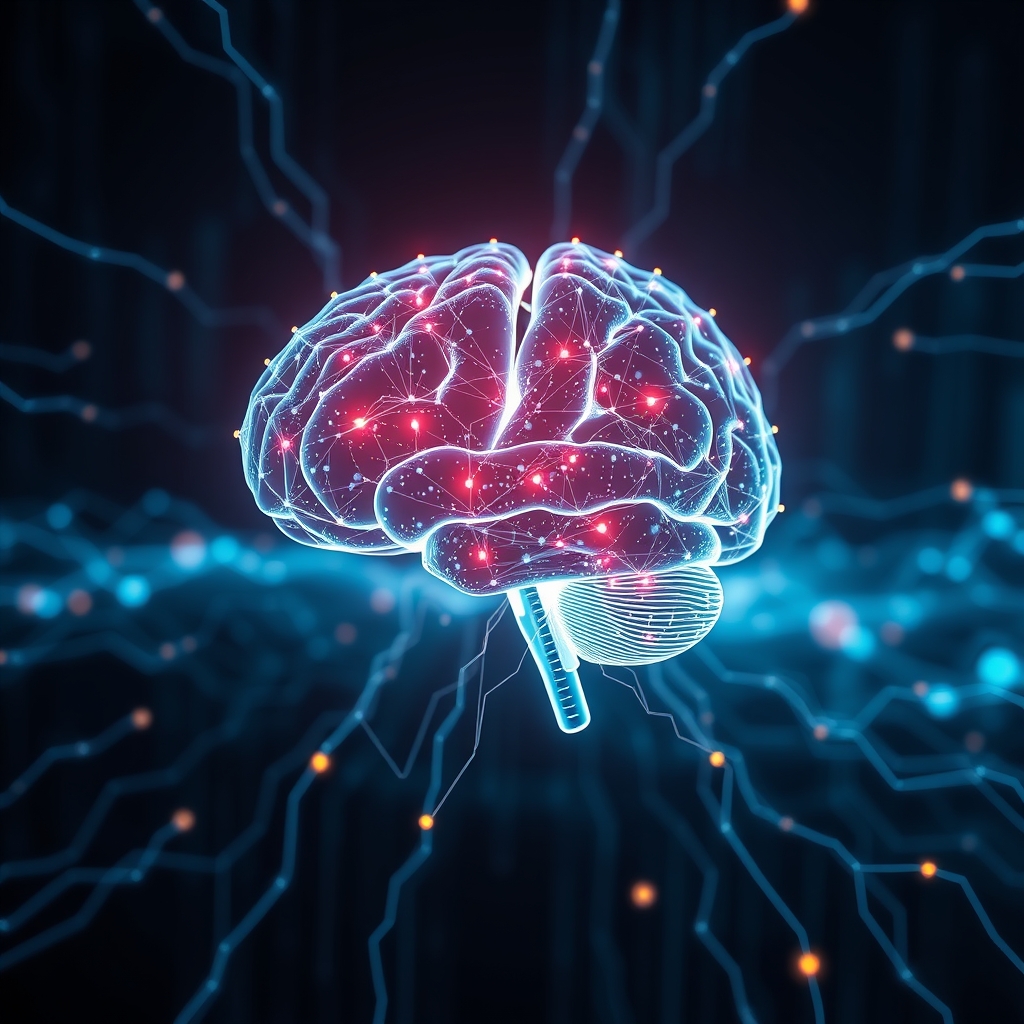
In a provocative exploration of the future of human consciousness, MIT Technology Review is delving into the concept of "cognitive immortality," a frontier where technology seeks to preserve the human mind beyond biological death. This ambitious topic takes center stage in the publication's latest Roundtables event, which invites experts to dissect the feasibility of extending mental life through advanced technological interventions. The core premise revolves around two radical approaches: the gradual replacement of biological brain tissue with synthetic components and the direct uploading of human memories to cloud-based digital storage.
The discussion, led by science editor Mary Beth Griggs and senior biomedicine editor Antonio Regalado, aims to move beyond science fiction tropes and ground the conversation in current scientific realities. The event, scheduled for Tuesday, November 17, at 5:00 p.m. GMT, serves as a critical examination of how close we are to making these ideas a tangible reality. By engaging with leading researchers and engineers, the publication seeks to provide a nuanced understanding of the technical hurdles involved in mapping and replicating the complexity of the human brain.
This inquiry is part of a broader series titled "Are we there yet?" featured in the "Impossible issue" of the magazine. In this series, the editors assess six potentially transformative technologies, scoring their progress on a meter from zero to ten. While the focus here is on cognitive preservation, the series also evaluates other groundbreaking fields such as nuclear-powered spaceships, interspecies communication, and solid-state batteries. This comprehensive approach allows readers to gauge the actual trajectory of technological advancement against years of public promises.
The implications of achieving cognitive immortality are profound, touching on ethical, philosophical, and societal dimensions. If memories and consciousness can be digitized, the very definition of life and death may be restructured. However, the path to this milestone is fraught with challenges, including the sheer complexity of neural networks and the lack of a complete understanding of how consciousness emerges from biological processes. As the tech industry races to push these boundaries, the MIT Technology Review’s analysis provides a sobering yet hopeful look at what is scientifically possible in the near term.