Trump Threatens 'Tremendous Tax' on AI Data Centers Built Abroad
Trump threatens a 'tremendous tax' on AI data centers built abroad, aiming to keep critical infrastructure within US borders despite local regulatory pushback.
S
··2 min readSciTech Editorial Team
Newsroom
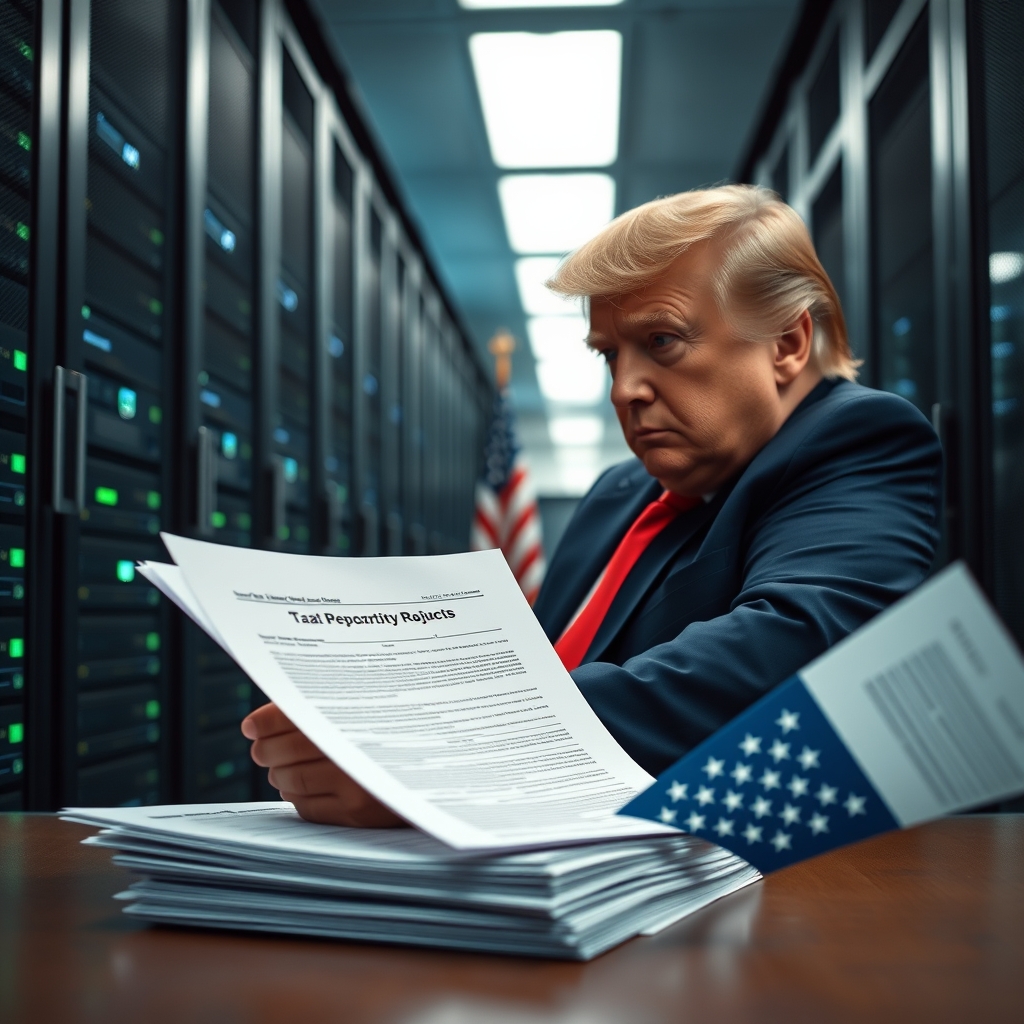
President Donald Trump has issued a stark warning to technology giants, threatening to impose a "tremendous tax" on any company that chooses to build artificial intelligence data centers outside of the United States. Speaking at a press conference following his diplomatic summits with Chinese President Xi Jinping and Russian President Vladimir Putin, Trump emphasized that the nation will not permit its corporate assets to be relocated abroad, citing the previous offshoring of semiconductor manufacturing as a destructive precedent that led to a decline in American industrial competitiveness.
The President stated, "We’re not going to allow our companies to build data centers outside of our country... If they do that, they can, but we’re going to put a tremendous tax on them." This proposal appears to be a public debut of a new policy stance, as Trump admitted he had not yet formally briefed his administration on the details, noting that he was effectively announcing the plan to his staff present at the event. The rhetoric suggests a strategic pivot towards keeping critical AI infrastructure within domestic borders to prevent geopolitical rivals, particularly China, from gaining access to or control over these vital computational resources.
However, the implementation of such a tax faces significant political headwinds. With a new Democratic majority Congress set to be sworn in within months, securing legislative approval for a new tax measure will be a formidable challenge. Furthermore, the data center buildout has become a contentious issue domestically, with states and cities across the country imposing moratoriums and new restrictions on applications due to concerns over energy consumption, water usage, and noise pollution.
In this context, Trump’s threat serves as a countermeasure to domestic regulatory friction. As local governments in the US restrict new developments, companies may be incentivized to look overseas for more permissive jurisdictions. By threatening severe financial penalties for offshoring, the administration aims to make foreign construction a less attractive alternative, thereby forcing the tech industry to navigate the complex landscape of American local regulations rather than abandoning the domestic market entirely.