Astronomers Capture First Direct Evidence of a Giant Star Swallowing Its Neighbor
Astronomers have observed a giant star engulfing its companion for the first time, offering critical insights into binary star evolution and stellar dynamics.
S
··1 min readSciTech Editorial Team
Newsroom

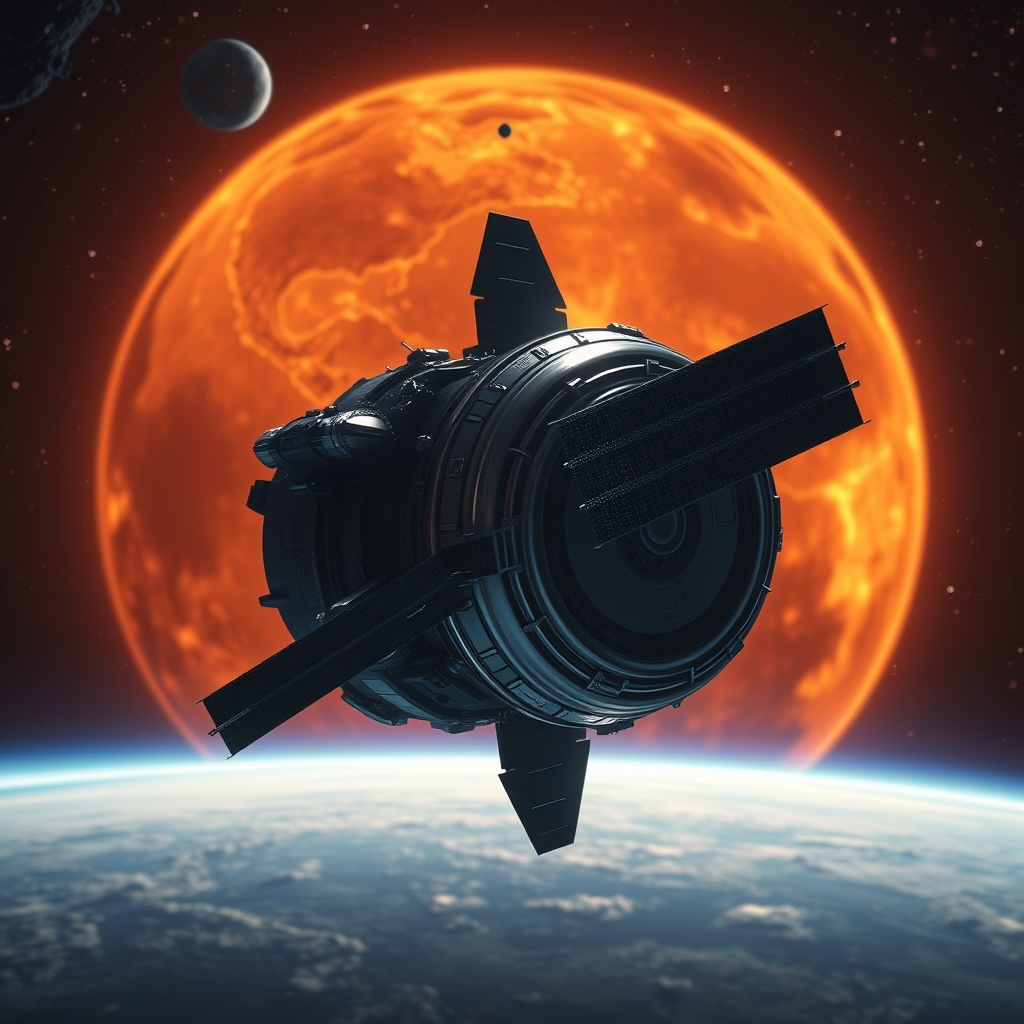
In a groundbreaking astronomical observation, researchers have captured the first direct evidence of a giant star swallowing its neighboring companion. This unprecedented event, documented in a recent publication in Nature, marks a significant milestone in our understanding of stellar evolution and the complex dynamics within binary star systems. The discovery provides a rare glimpse into the violent and transformative processes that occur when massive stars interact in their final stages of life.
The phenomenon, described as an 'inspiral' within a common envelope, involves the giant star expanding and enveloping its smaller neighbor. As the two stars spiral inward, gravitational forces and frictional heating create a turbulent environment that fundamentally alters their trajectories. This process is critical for understanding how binary systems evolve and how certain types of supernovae or neutron star mergers might originate. The detailed observations offer a unique dataset for testing theoretical models of stellar interaction.
Experts emphasize that witnessing such an event in real-time is exceptionally rare. The data collected allows scientists to refine their predictions regarding the fate of binary stars and the formation of exotic celestial objects. This observation not only confirms long-standing theoretical predictions but also opens new avenues for studying the end-of-life phases of stars. The findings underscore the importance of continuous monitoring of stellar populations to capture these fleeting cosmic moments.
The implications of this discovery extend beyond pure astrophysics, influencing our understanding of the chemical enrichment of the interstellar medium. As stars merge and explode, they disperse heavy elements essential for the formation of planets and life. By studying these mergers, astronomers can better map the cosmic cycle of matter. This research paves the way for future missions designed to observe similar events, potentially leading to further breakthroughs in our knowledge of the universe's structure and history.