China’s First Crew‑Flown Electric Airliner Takes to the Skies – COMAC CE‑25A Demonstrates 19‑Seat, 400 km Range
COMAC’s CE‑25A completed its first crewed flight, proving China’s readiness to launch electric regional airliners with a 400 km range.
S
··2 min readSciTech Editorial Team
Newsroom
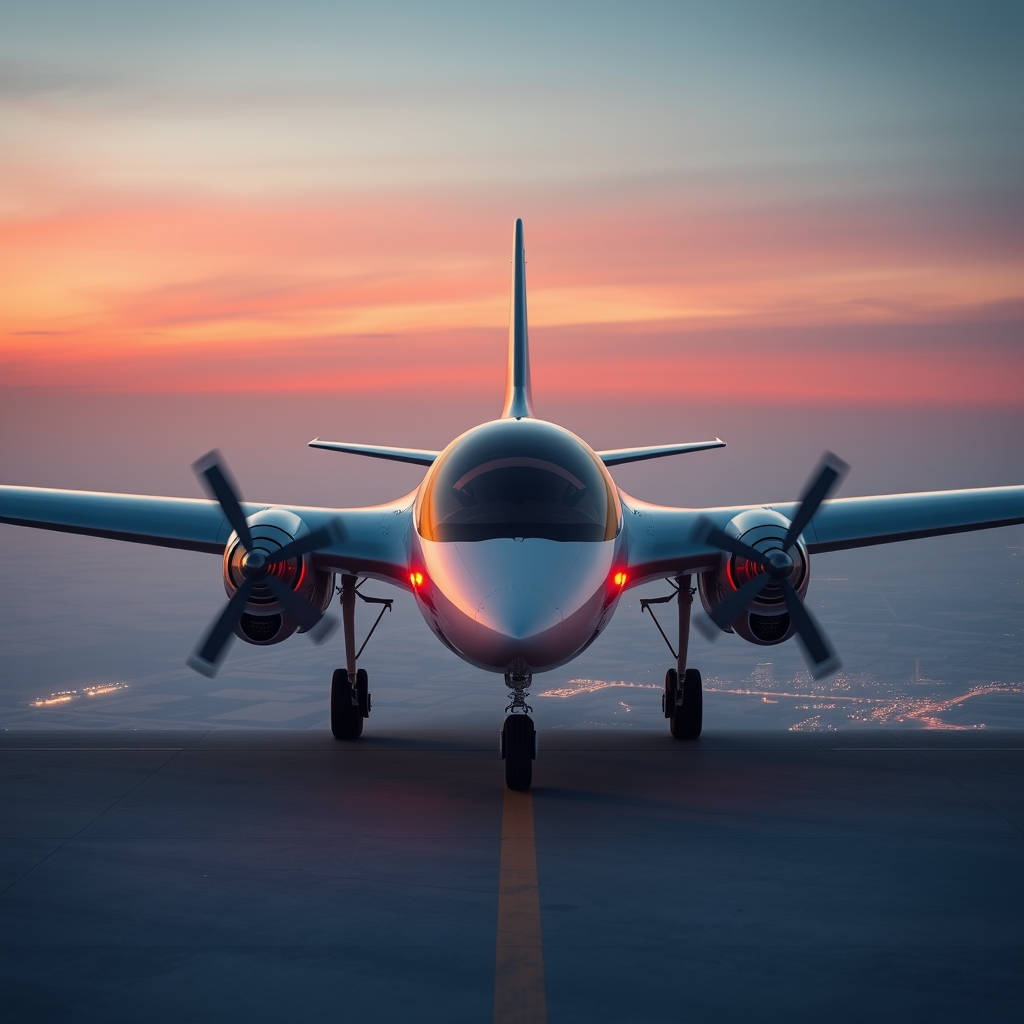
China’s electric aviation milestone unfolded on Saturday when COMAC’s CE‑25A, a 19‑seat battery‑electric commuter aircraft, completed its inaugural crewed flight in Binzhou, Shandong. Two pilots and a flight‑test engineer boarded the roughly 10‑tonne demonstrator, and COMAC reported that every system performed within normal parameters, marking a decisive step toward commercial electric air travel.
The flight was not the aircraft’s maiden venture; since February 2 the CE‑25A has already logged 19 autonomous test sorties, each lasting up to 30 minutes, without a human on board. Those unmanned missions validated the aircraft’s propulsion, battery‑management, and avionics suites, paving the way for today’s manned operation. China’s aviation regulator has now entered the CE‑25A into its type‑certificate review, a prerequisite for any future passenger service.
Technical details reveal a pioneering integration of a 1.2 MWh lithium‑ion battery pack, delivering a claimed range of 400 km (≈250 mi) at a cruising speed of 350 km/h. The electric motor, supplied by a domestic manufacturer, produces 1,200 kW of thrust, enabling a take‑off weight of 10 tonnes while maintaining a low acoustic footprint—approximately 30 dB lower than comparable turboprop aircraft. COMAC’s chief engineer, Liu Wei, emphasized that the CE‑25A’s modular battery architecture allows rapid swapping, reducing turnaround time to under 15 minutes.
Industry analysts view the CE‑25A as a harbinger of a broader shift toward zero‑emission regional transport in Asia. With China’s domestic air‑travel demand projected to exceed 1 billion passenger‑kilometers by 2030, electric commuter planes could slash CO₂ emissions by up to 70 % on short‑haul routes. Moreover, the aircraft’s modest capacity aligns with emerging “point‑to‑point” networks linking secondary cities, potentially reshaping route economics.
Nevertheless, challenges remain. Battery energy density still lags behind conventional jet fuel, limiting range and payload. COMAC has announced a follow‑on program, the CE‑30B, targeting a 30‑seat configuration and a 600 km range by 2029. If successful, China could claim a decisive lead in the global race to electrify aviation, prompting regulators worldwide to adapt certification frameworks for electric propulsion.
The successful crewed flight of the CE‑25A thus signals not only a technical triumph but also a strategic pivot for China’s aerospace sector, positioning it at the forefront of sustainable air mobility.