Euclid Satellite Unveils 15,000 Gravitational Lenses in Record-Breaking Dark Matter Discovery
UBC researchers and the Euclid satellite have identified 15,000 new gravitational lenses, providing a massive dataset to study dark matter and cosmic structure.
S
··2 min readSciTech Editorial Team
Newsroom
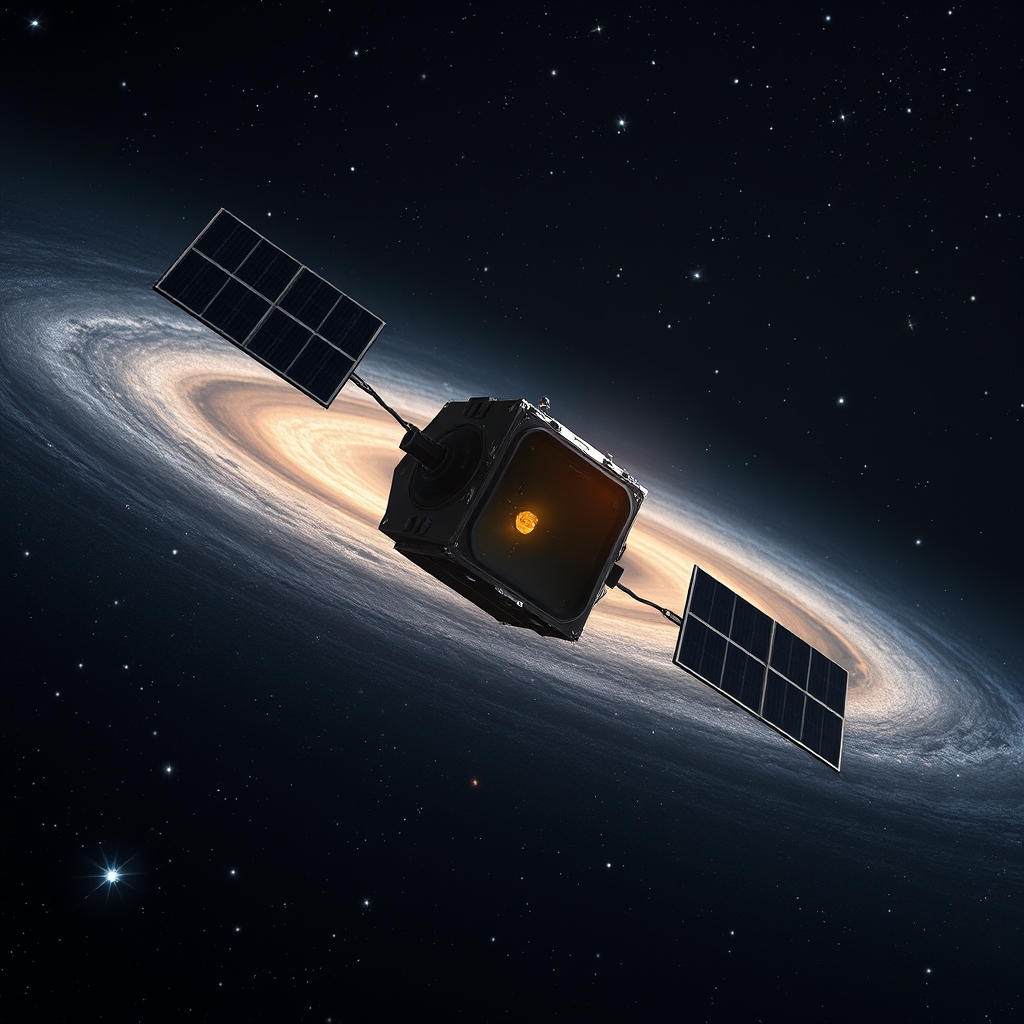
In a landmark achievement for astrophysics, researchers from the University of British Columbia (UBC) have played a pivotal role in uncovering 15,000 new potential strong gravitational lenses. This discovery represents the largest collection of these cosmic tools ever assembled, offering astronomers an unprecedented opportunity to investigate the elusive nature of dark matter. The data, derived from the Euclid space telescope, marks a significant milestone in our understanding of the universe's invisible architecture.
Strong gravitational lenses occur when the mass of a foreground object, such as a galaxy cluster, warps the fabric of spacetime, bending the light from distant background objects. This phenomenon acts as a natural magnifying glass, allowing scientists to observe galaxies that would otherwise be too faint or distant to detect. By mapping these distortions, researchers can infer the distribution of mass, including the non-luminous dark matter that constitutes the majority of the universe's matter.
The UBC team employed advanced algorithms and machine learning techniques to analyze the vast datasets transmitted by Euclid. These computational methods were essential for identifying subtle lensing signatures amidst the noise of billions of stars and galaxies. The precision of this analysis has enabled the identification of 15,000 candidates, a figure that dwarfs previous surveys and provides a robust statistical foundation for cosmological models.
This breakthrough is not merely a numerical record; it fundamentally enhances our ability to test theories of gravity and the expansion of the universe. By studying how light is bent by these massive structures, scientists can refine measurements of the Hubble constant and the density of dark energy. The implications for cosmology are profound, as this data will help resolve long-standing discrepancies in our understanding of the universe's evolution.
Looking ahead, this dataset will serve as a cornerstone for future research, enabling detailed studies of galaxy formation and the growth of cosmic structures over billions of years. The collaboration between ground-based institutions like UBC and space-based observatories like Euclid exemplifies the power of international scientific cooperation. As more data is processed, we anticipate further revelations that could reshape our fundamental understanding of the cosmos.