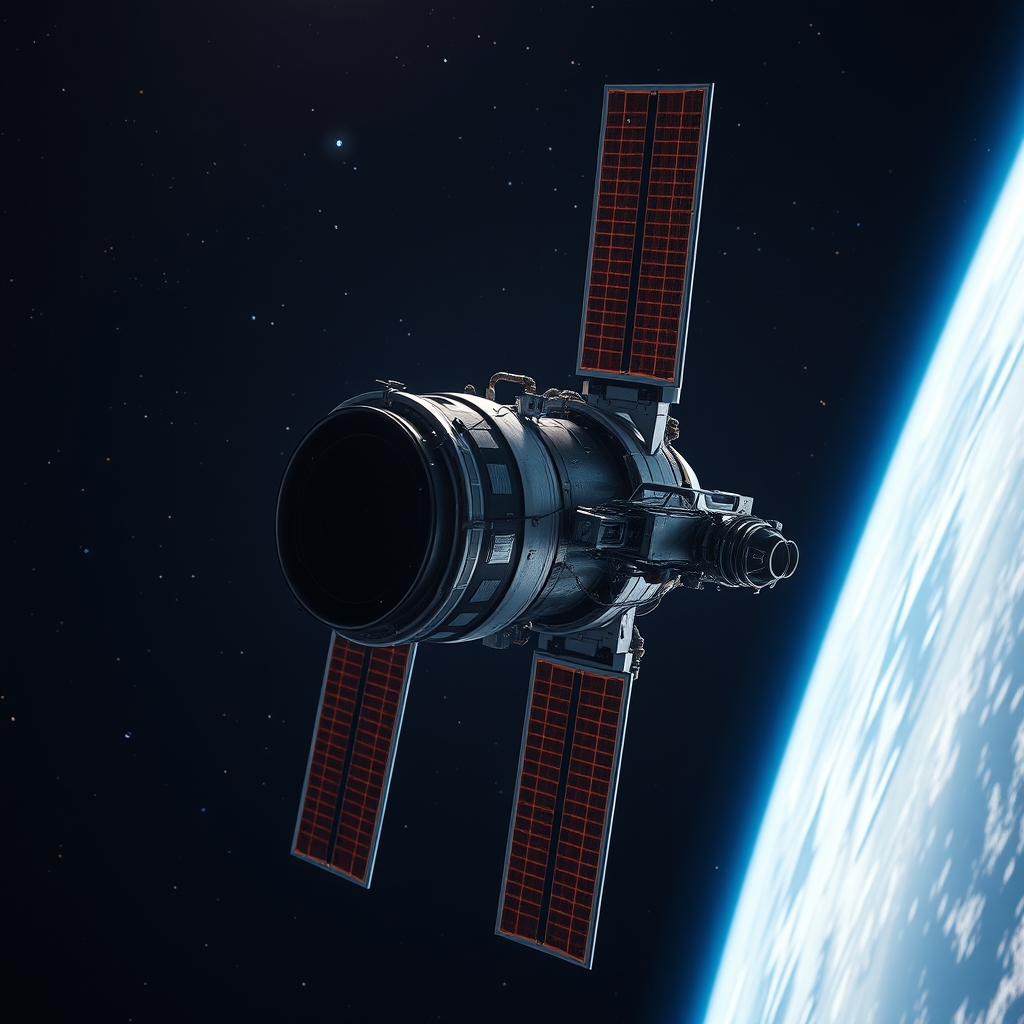
European Orbiter Finds New Signs of Volcanic Activity Beneath Mars' Alba Mons
ESA's ExoMars orbiter detected sulfur dioxide and methane plumes above fresh fissures in Alba Mons, hinting at lingering volcanic activity on Mars.
S
··1 min readSciTech Editorial Team
Newsroom

The European Space Agency’s ExoMars Trace Gas Orbiter (TGO) has identified fresh hints of volcanic activity on Mars, concentrating on a network of fissures that cut across the Alba Mons region. The discovery, announced this week, suggests that the Red Planet is not geologically dormant deep within its mantle, but rather in a prolonged state of dormancy that could reactivate under the right conditions.
Using its high‑resolution spectrometer suite, notably the Nadir and Occultation for MArs Discovery (NOMAD) instrument, the orbiter detected localized spikes of sulfur dioxide (SO₂) and trace amounts of methane (CH₄) rising from the surface above the volcanic rifts. These gases, which are typically associated with magmatic degassing on Earth, were mapped to narrow, newly‑resolved fissures that extend for several kilometres along the western flank of Alba Mons.
“Seeing these gas plumes directly above the rift system is a strong indicator that magma‑derived volatiles are still making their way toward the surface,” explained Dr. Elena Rossi, senior scientist at ESA’s Planetary Science Division. “While the emissions are modest, their spatial correlation with the fresh fissures points to an active conduit network beneath the crust.”
The finding reshapes expectations for future exploration. If subsurface magmatic pathways exist, they could create localized heat sources that maintain liquid water pockets, thereby expanding the potential habitability zones that rovers and landers might target. ESA’s upcoming Rosalind Franklin rover, slated for launch in 2028, will be equipped with ground‑penetrating radar capable of probing these structures.
Nevertheless, challenges remain. The detected gas concentrations are near the instrument’s sensitivity limits, and distinguishing volcanic outgassing from seasonal atmospheric processes requires longer‑term monitoring. NASA’s Mars Sample Return campaign, scheduled for the early 2030s, may provide complementary in‑situ measurements that could confirm whether the observed plumes are truly volcanic in origin.