NASA Seeks Commercial Partners to Extend Hubble’s Life Beyond the 2030s
NASA is soliciting commercial proposals to extend the Hubble Space Telescope's orbit, aiming to prevent its re-entry in the 2030s and preserve its scientific legacy.
S
··2 min readSciTech Editorial Team
Newsroom
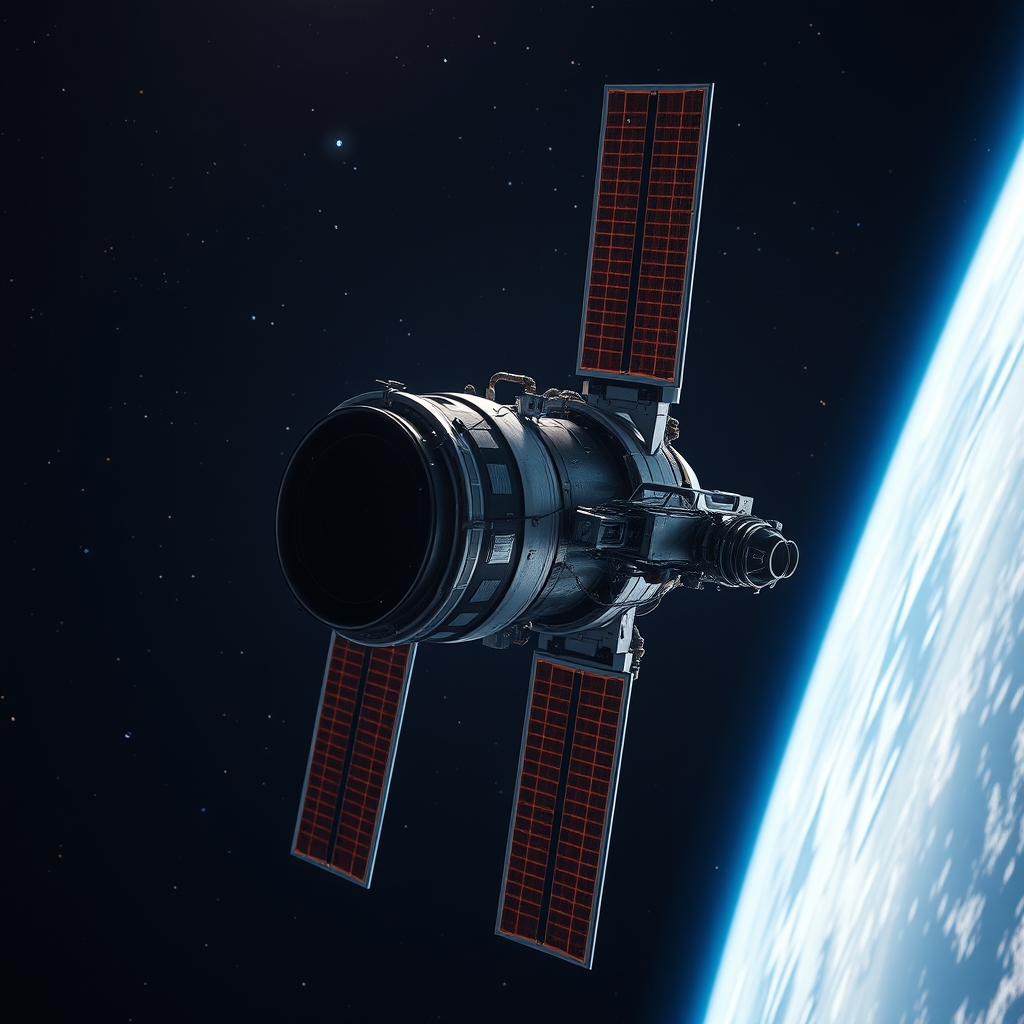
The iconic Hubble Space Telescope, a cornerstone of modern astronomy, faces a precarious future as it slowly descends toward Earth’s atmosphere. While not in immediate danger of burning up, Hubble’s orbit will degrade to the point of re-entry sometime in the early to mid-2030s unless its altitude is significantly boosted. Recognizing the immense scientific value of the instrument, NASA has taken a proactive step by soliciting proposals from the commercial space industry to explore innovative methods for extending the telescope’s operational lifespan.
In a recent statement, NASA Administrator Jared Isaacman emphasized the urgency and importance of this initiative. He noted that Hubble still has critical scientific missions ahead of it and that the agency is committed to exploring every reasonable opportunity to keep it delivering results. Isaacman stated, “If there are innovative and cost-effective ways to extend the life of an asset already on orbit, we owe it to the American taxpayer and the scientific community to explore them.” This approach reflects a strategic shift toward leveraging private sector ingenuity to maintain vital public assets in space.
The technical challenge lies in finding a method to boost Hubble’s orbit that is both feasible and economically viable. Traditional servicing missions, such as those conducted by the Space Shuttle, are no longer an option. Therefore, NASA is looking for novel solutions, potentially involving robotic servicing vehicles or new propulsion technologies, that can safely raise the telescope’s altitude without risking its delicate instruments. The agency’s Request for Information (RFI) remains open through November 30th at 3 PM ET, inviting bids from companies that can demonstrate such capabilities.
The broader implications of this move extend beyond Hubble. By engaging the commercial space sector, NASA is setting a precedent for collaborative space maintenance. If successful, this partnership could lead to a new paradigm where private companies play a crucial role in sustaining long-lived scientific assets in orbit. This not only maximizes the return on investment for existing hardware but also paves the way for more sustainable space exploration practices. The potential for more discoveries and a deeper understanding of the universe makes this effort a priority for the scientific community.
However, challenges remain. The complexity of servicing a telescope that has been in space for decades requires precise engineering and risk management. Companies must propose solutions that minimize the risk of damaging Hubble while effectively countering the pull of gravity. As the deadline approaches, the industry is expected to present a range of concepts, from autonomous robotic arms to new orbital mechanics strategies. The outcome of this RFI will determine whether Hubble continues to gaze into the cosmos for another decade or if its era comes to a close in the 2030s.