Google Unveils TPU 8tx and 8i Max to Fortify AI Hardware Independence
Google launches TPU 8tx and 8i Max to enhance secure AI inference and memory capacity, challenging Nvidia's dominance in the semiconductor market.
S
··2 min readSciTech Editorial Team
Newsroom
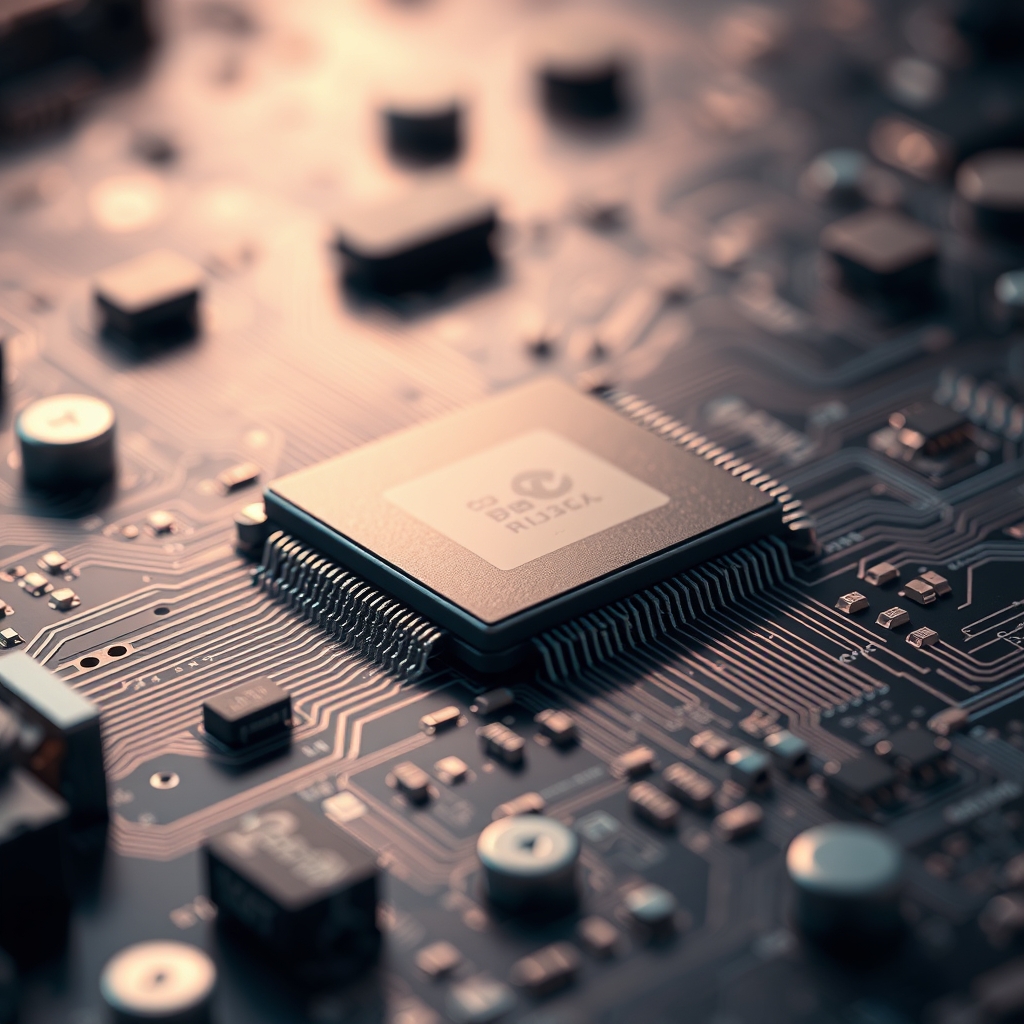
Google has significantly escalated its semiconductor strategy by unveiling two specialized variants of its Tensor Processing Units (TPUs), aiming to diminish its reliance on external chipmakers for its expansive cloud computing infrastructure. Announced on Monday, the TPU 8tx and TPU 8i Max represent a strategic expansion of the company’s eighth-generation hardware portfolio, which was initially introduced in April of this year. These new iterations are specifically engineered to address emerging industry demands for confidential inference and enhanced memory capacity for large-scale AI workloads.
The TPU 8tx, developed in collaboration with AMD, is built upon the architecture of the TPU 8t and is tailored for the secure training and execution of AI models. According to Google, this chip integrates security directly into the hardware layer, ensuring that sensitive data and model weights remain protected and isolated even during active processing. Furthermore, the unit features a custom inferencing network that enables simultaneous reasoning and training, allowing for the on-the-fly distillation and training of smaller models. This capability is particularly valuable for enterprises seeking to train models on proprietary data without the security risks associated with transferring data between devices.
In parallel, the TPU 8i Max effectively consolidates two inference-focused TPU 8i chips into a single package, thereby doubling memory capacity, processing power, and bandwidth. This architectural enhancement allows AI models to process a broader range of information during queries, significantly improving efficiency for complex tasks. The launch of these chips occurs at a critical juncture in the tech industry, as hyperscalers like Microsoft and Amazon, alongside AI labs such as OpenAI and Anthropic, are aggressively developing their own AI-specific semiconductors to reduce dependence on Nvidia’s market dominance.
This move by Google also coincides with a period of heightened vulnerability for Nvidia, whose CEO Jensen Huang recently faced significant public scrutiny following allegations regarding a personal scandal. As the competitive landscape for AI hardware intensifies, Google’s new TPUs position the company as a formidable alternative for organizations prioritizing data sovereignty and specialized computational performance.