Google's Suncatcher Satellite Goes Live: Orbital AI Writes Poetry and Tests TPU Limits
Google's Suncatcher satellite is operational in orbit, successfully running AI inference and testing TPU resilience against space radiation.
S
··2 min readSciTech Editorial Team
Newsroom

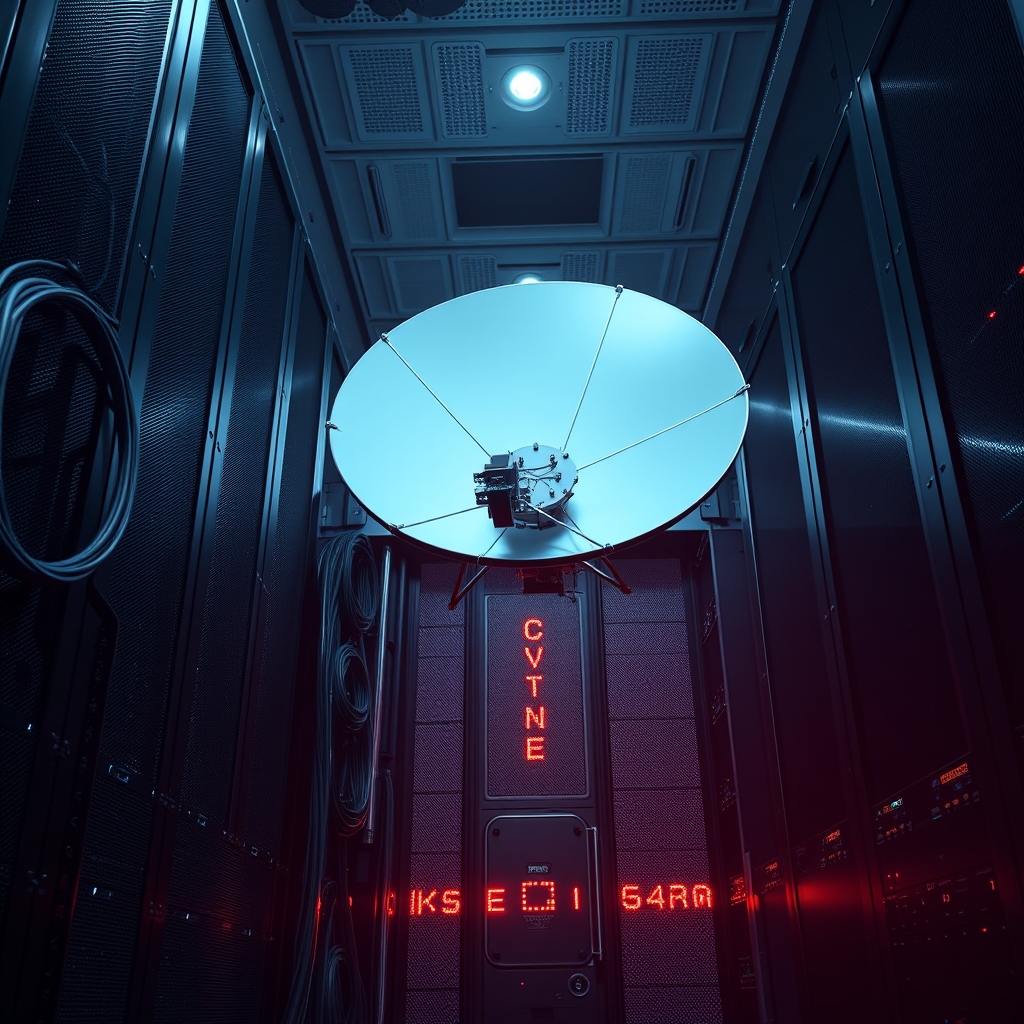
Google’s prototype space data center, designated as Suncatcher, has successfully come online and established communication with ground stations following its launch earlier this month. The satellite, which rode a SpaceX Falcon 9 rocket alongside more than 100 other spacecraft, marks a pivotal milestone in the company’s ambition to move heavy computational workloads into orbit. This initial deployment carries a single Google Tensor Processing Unit (TPU) and generates up to 1 kilowatt of electricity, setting the stage for future networks of close-flying satellites designed to handle large-scale inference tasks in space.
The operational capabilities of the satellite are currently constrained by its power generation limits, which restrict the TPU to active operation for approximately twenty minutes at a time. Despite these constraints, the commissioning process, which lasted about three weeks, concluded successfully. In a symbolic first test, engineers sent a prompt to the pre-loaded Google DeepMind Gemma 4 model, requesting a haiku about its orbital existence. The AI responded with a poetic reflection: "Blue marble below / Data streams in silent grace / Starlight feeds my core." Beyond creative outputs, the model was also tasked with reporting on local orbital conditions, demonstrating its functional utility in a space environment.
The primary scientific objective of this ongoing test campaign is to evaluate the performance of the TPU under the unique stresses of the space environment, particularly thermal fluctuations and cosmic radiation. While Google has previously tested its chips in particle accelerators on Earth, real-world space radiation poses specific risks, such as "bit flips" that can corrupt data in memory without triggering standard monitoring alerts. Ground-based simulations suggested that radiation impacts would be minimal for inference workloads but potentially problematic for model training. The Suncatcher mission will provide empirical data to validate these assumptions, moving the field from theoretical simulation to practical observation.
If the current prototype proves capable, Google plans to launch two additional satellites equipped with advanced chips in 2027. These next-generation spacecraft will support higher power generation and, crucially, demonstrate inter-satellite optical links. This approach distinguishes Google’s Starcloud project from competitors like SpaceX, whose orbital data centers are expected to orbit too far apart to share processing effectively. Google’s vision relies on high-speed links between satellites to support coherent, distributed workloads, a strategy that aligns with the broader goal of creating economical space-based infrastructure by the 2030s.
The realization of these ambitions is inextricably linked to the development of SpaceX’s Starship rocket. A peer-reviewed analysis published this month estimated that SpaceX would need to fly Starship 1,800 times to achieve the necessary cost reductions for large-scale orbital data centers. While this represents a classic Google "moonshot" focused on long-term infrastructure, the near-term financial pressures on Alphabet are significant. The company recently saw its stock decline after reporting that AI integration into search businesses was impacting ad revenue growth, highlighting the complex balance between long-term technological innovation and immediate commercial viability.