Humanoid Cleaning Robot Takes First Steps While Samsung Rolls Out Massive AI Chip Campus
Tau Robotics' remotely piloted humanoid cleaner and Samsung's new AI‑chip campus illustrate how domestic robotics and semiconductor production are racing toward mass adoption.
S
··2 min readSciTech Editorial Team
Newsroom
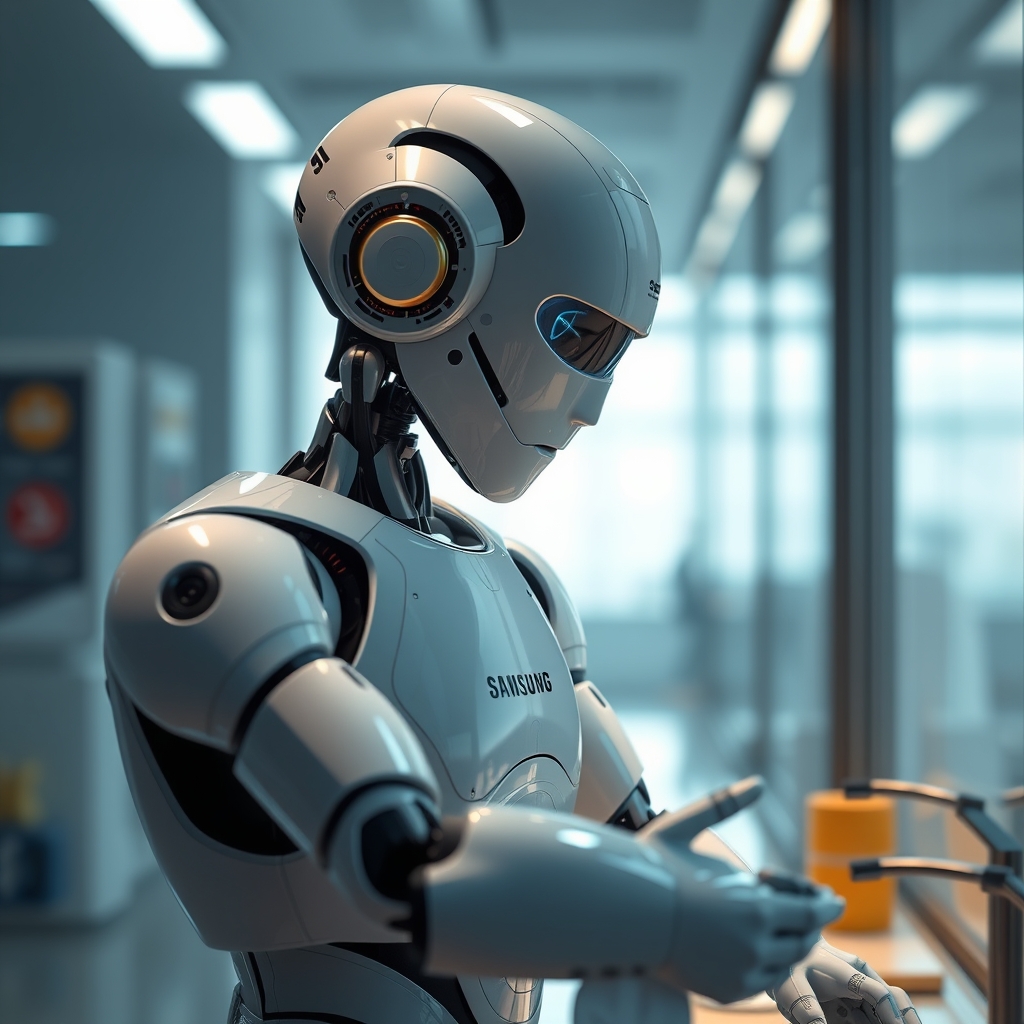
In a week that underscores the accelerating pace of the AI boom, two seemingly unrelated projects are drawing equal attention: Tau Robotics’ humanoid cleaning robot, now being piloted in a San Francisco apartment complex, and Samsung’s sprawling new semiconductor campus in Pyeongtaek, South Korea, built to mass‑produce the memory chips that power today’s generative‑AI models. Both initiatives signal a shift from experimental prototypes to large‑scale production that could reshape everyday life and the global chip supply chain.
Tau Robotics, a Bay‑Area startup, has deployed a bipedal robot roughly the size of a human teenager to clean hallways and studios. The device is not yet fully autonomous; operators on the ground control it remotely via high‑definition cameras mounted on its torso, guiding it around furniture and stairs. According to Grace Huckins, who signed up for the service after seeing an X post, the robot managed to vacuum 85 % of floor area in a 1,200‑square‑foot unit, but struggled with tight corners and reflective surfaces—issues the team attributes to current perception algorithms. “It feels like a glimpse of the future, even if the robot still needs a human eye,” Huckins wrote.
Across the Pacific, Samsung’s new AI‑chip campus is already humming with activity. Three fabs are operating 24 hours a day, a fourth has just come online, and a fifth is under rapid construction, employing thousands of engineers and technicians. The complex focuses on producing specialized memory chips—high‑bandwidth, low‑latency DRAM and HBM—that are essential for training and inference in large language models (LLMs). Michelle Kim, who toured the facility, noted that each fab can output enough wafers to equip more than a million AI servers annually, a capacity that Samsung hopes will cushion the industry’s recent supply‑chain bottlenecks.
The convergence of these two stories points to a broader transformation. In the domestic sphere, autonomous cleaning robots could soon move beyond remote‑piloted demos to truly self‑navigating agents, freeing residents from routine chores and creating new markets for service‑oriented AI. Meanwhile, the expansion of AI‑focused semiconductor manufacturing promises to lower the cost per operation for LLMs, accelerating research, democratizing access, and spurring competition among chipmakers.
Nevertheless, challenges remain. Tau must refine its sensor fusion and edge‑computing stack to achieve full autonomy without compromising safety, while Samsung faces geopolitical pressures, energy consumption concerns, and the need to keep yields high as node sizes shrink. The next milestones—an untethered, fully autonomous household robot and the commissioning of Samsung’s fifth fab—will test whether today’s hype can translate into sustainable, scalable technology.