Independent Analysis Confirms Iconic Black Hole Shadow, Resolving Scientific Debate
Independent reanalysis of EHT data confirms the original black hole shadow image, resolving debates over reconstruction artefacts.
S
··2 min readSciTech Editorial Team
Newsroom
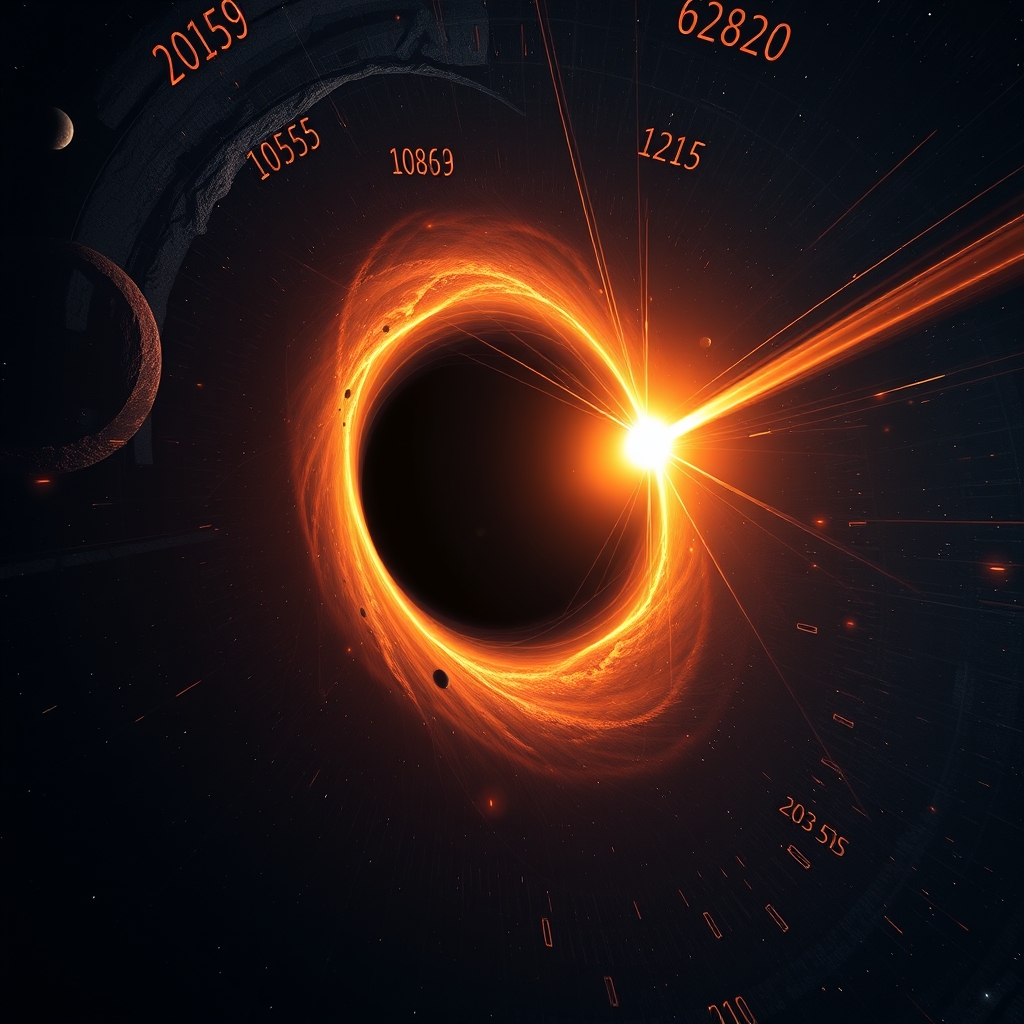
In a significant validation of one of modern astrophysics' most iconic achievements, an independent research group has reanalysed data from the Event Horizon Telescope (EHT) collaboration, largely corroborating the original 2019 findings regarding the first image of a black hole shadow. Published in Nature on November 11, the study addresses lingering scientific skepticism by employing a distinct algorithmic approach to telescope measurements, confirming that the circular shape observed is a genuine physical feature rather than an artefact of the initial image-reconstruction techniques.
The EHT collaboration originally achieved this breakthrough by stitching together simultaneous data from an array of ground-based radio telescopes spanning several continents. This technique effectively creates a virtual radio dish as wide as Earth, yielding an image with unprecedented resolution. Although the initial image of the supermassive black hole at the centre of the M87 galaxy appeared blurry, it displayed a bright ring of the correct radius and a darker central disk, consistent with astrophysical models derived from Albert Einstein’s general theory of relativity, which first predicted the existence of black holes.
However, doubts emerged starting in 2022 when Junichiro Makino, an astrophysicist at Kobe University in Japan, and his collaborators questioned the original conclusions. By applying one of the EHT’s data-analysis techniques but with slightly different assumptions, Makino’s team produced an image showing a glob of radio emissions instead of a distinct ring. This discrepancy raised concerns that the iconic 'shadow' might be a byproduct of specific processing choices rather than a direct observation of the event horizon.
The new independent analysis resolves this debate by demonstrating that when the data is processed with rigorous, alternative methods, the ring structure persists. This confirms that the observed morphology is robust and intrinsic to the black hole’s environment. The findings not only validate the EHT’s original landmark image but also strengthen confidence in the use of interferometric techniques for imaging extreme astrophysical phenomena.
This confirmation carries profound implications for the field, reinforcing the predictive power of general relativity in extreme gravitational environments. It also paves the way for more confident interpretations of future EHT observations, including those of the black hole at the centre of the Milky Way, Sagittarius A*. By settling this methodological dispute, the scientific community can focus on extracting deeper physical insights from the data, such as the dynamics of the accretion disk and the spin of the black hole itself.