Japan’s MMX Mission to Land on Phobos: Tackling Micro‑Gravity Challenges for a Historic Sample Return
Japan’s MMX will land on Phobos in 2027, using a novel quasi‑satellite orbit to overcome micro‑gravity, and aims to return 10 grams of material to Earth by late 2031.
S
··2 min readSciTech Editorial Team
Newsroom
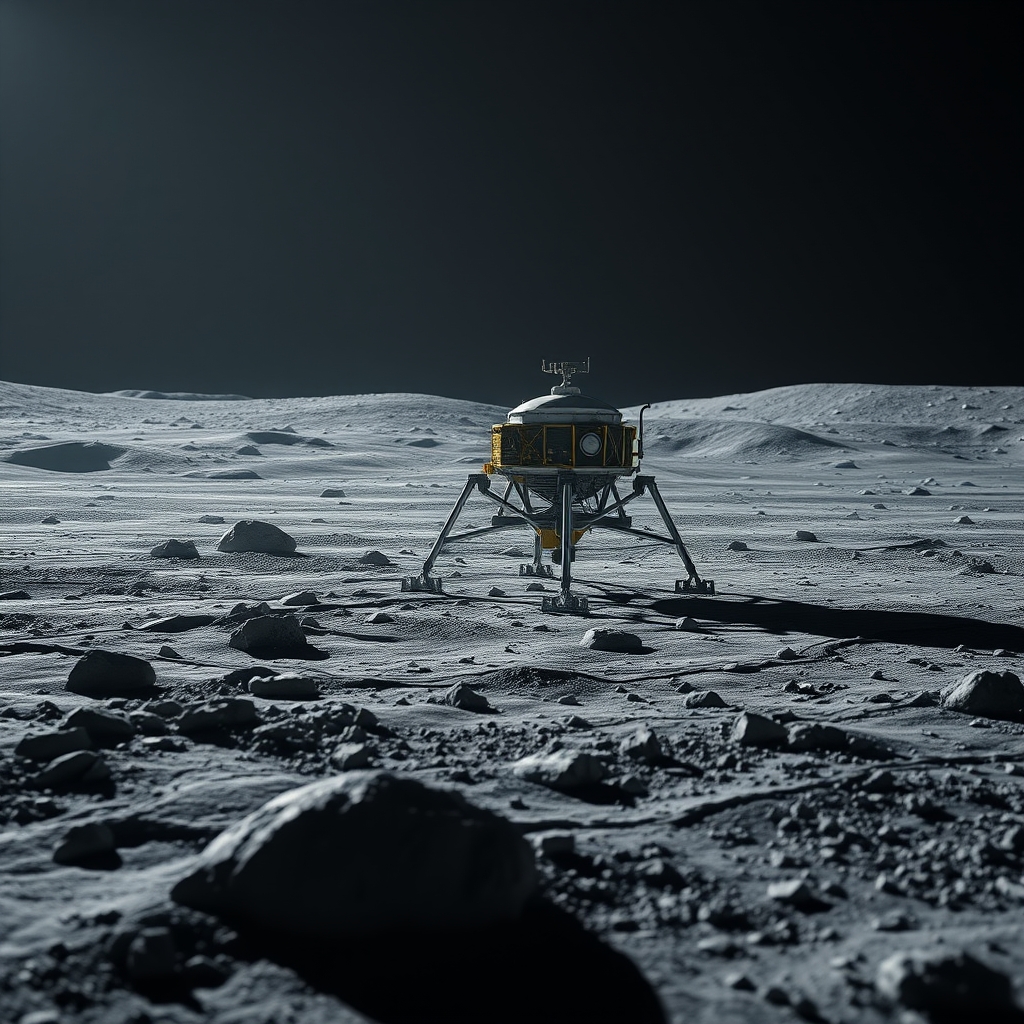
Japan’s Martian Moons eXploration (MMX) spacecraft, launched on 20 October 2026 aboard a H3 launch vehicle, is slated to arrive at Mars in 2027 and perform a series of unprecedented landings on the tiny moon Phobos. The mission’s headline objective is to collect up to 10 grams of surface material and deliver it back to Earth in the second half of 2031, a feat that could finally resolve the long‑standing mystery of the moon’s origin.
Phobos presents a unique engineering puzzle: its surface gravity is only about 1/1,800 of Earth’s, roughly the weight of a tennis ball for an adult human. Project manager Yasuhiro Kawakatsu likens the touchdown to “trying to land a balloon,” emphasizing the difficulty of keeping a spacecraft from tipping or bouncing on a loosely bound rubble‑pile. To meet this, MMX will adopt a specially crafted quasi‑satellite orbit – an egg‑shaped trajectory that alternately accelerates and decelerates relative to Phobos while remaining in Mars’ gravitational sphere. This orbit allows the probe to stay alongside the moon without the conventional circular orbit that a larger body would require.
The spacecraft is built around three modular sections. The propulsion module provides the deep‑space thrust needed for the year‑long cruise and the critical Mars‑orbit insertion burn. Once captured by Mars, this module is jettisoned, leaving the exploration module – which carries the French‑German rover Idefix and a suite of sampling tools – attached to the return capsule. After gathering material from Phobos, the exploration and return modules will lift off together, after which the exploration module is discarded and the return capsule heads home at high velocity.
Beyond the technical triumph, the scientific payoff could be transformative. Phobos is thought to be a rubble‑pile asteroid, either captured from the main belt or formed from debris after a massive impact on Mars. Analyzing pristine samples will shed light on the early solar system, the history of Martian impacts, and the processes that shape small bodies. As CNRS researcher Patrick Michel notes, “It’s the most complex mission I have ever seen,” underscoring the collaborative ambition of agencies from Japan, NASA, CNES, and DLR.
If any maneuver deviates from plan, MMX could miss Phobos entirely and be slingshotted into a heliocentric trajectory, a risk highlighted by astrodynamicist Nicola Baresi. Nevertheless, the mission’s innovative orbital design and landing strategy mark a watershed moment for low‑gravity exploration, paving the way for future endeavors on asteroids, comets, and even the moons of the outer planets.