Jensen Huang to Testify Before Congress Amid Export Control Disputes and Security Concerns
Former Nvidia CEO Jensen Huang agrees to testify before Congress by Thanksgiving, following threats of subpoenas from key House committees regarding export controls and national security concerns.
S
··2 min readSciTech Editorial Team
Newsroom
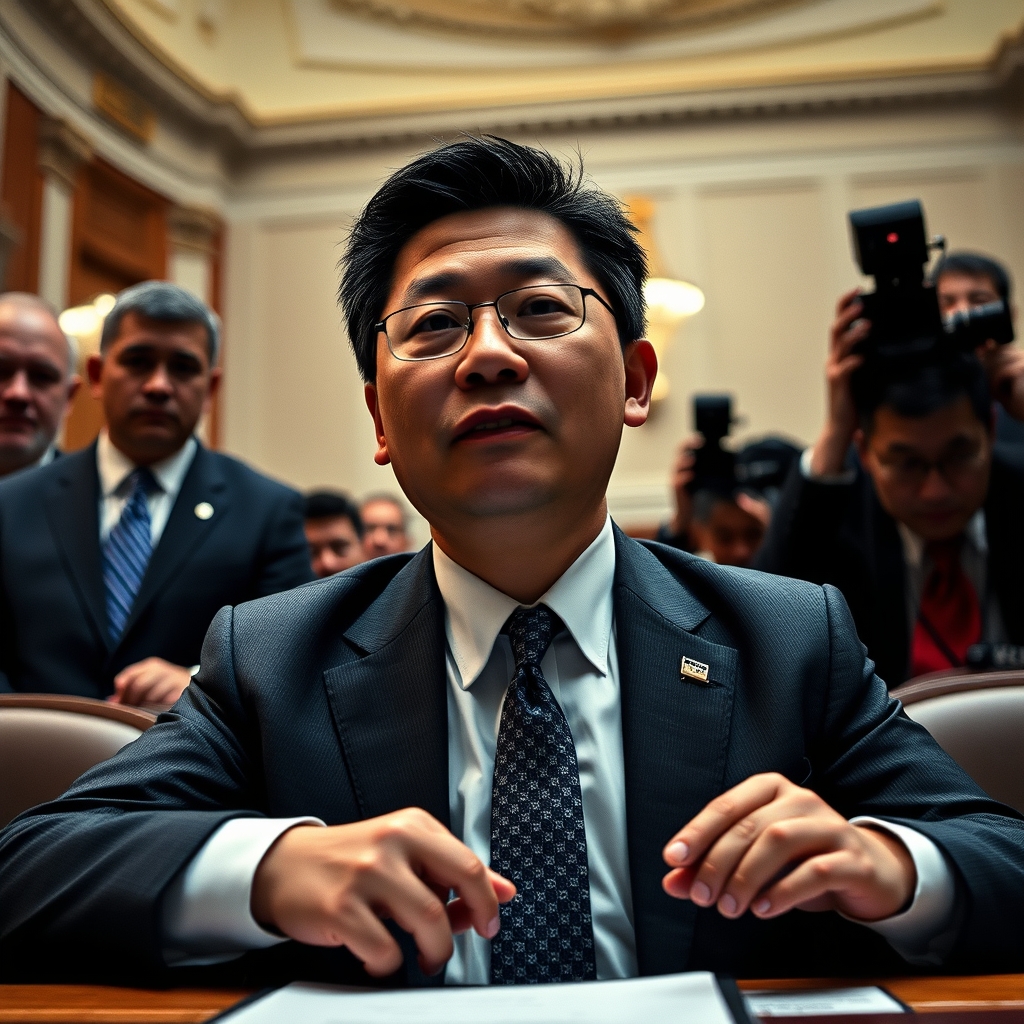
In a significant development that underscores the intensification of geopolitical tensions within the semiconductor industry, Jensen Huang, the former CEO of Nvidia, has agreed to testify before the United States House of Representatives. This move comes after a series of threats from senior lawmakers to issue a formal subpoena, highlighting the urgent scrutiny currently faced by the company’s former top brass. The testimony is expected to take place by Thanksgiving, later this month, marking a pivotal moment in the intersection of high-tech innovation and legislative oversight.
The agreement to testify was revealed by Brian Mast, the Chairman of the House Foreign Affairs Committee, following correspondence sent on Nov. 4 by Mast, John Moolenaar, and Rick Crawford. These three senior Republican lawmakers, who chair the Foreign Affairs, Select Committee on the Chinese Communist Party, and Intelligence Committees, collectively demanded Huang’s presence to address critical questions regarding the company’s operational integrity. The backdrop for this legal maneuvering includes reports that Huang stepped down from his CEO position following allegations of an affair with a woman suspected of espionage for China, adding a layer of national security complexity to the proceedings.
Mast emphasized the delicate balance between regulatory enforcement and economic stability, noting his longstanding disagreements with Huang on export controls. “Jensen and I have been very at odds as some of you already know on export controls, but Nvidia is a very important company to the United States of America,” Mast stated. He further clarified that while he does not wish to see the company’s market position compromised, Huang has serious questions to answer regarding compliance and security protocols. This statement reflects the broader congressional concern that technological leadership must not come at the cost of national security vulnerabilities.
The session is scheduled to be held behind closed doors, although Mast indicated an expectation that the briefing would be recorded on video and transcribed for the record. This procedural detail suggests that while immediate public disclosure may be limited, the information will eventually become part of the official congressional record. The focus of the inquiry is likely to center on the enforcement of export control laws, which are designed to prevent advanced computing technologies from falling into the hands of foreign adversaries, particularly in the context of the US-China tech rivalry.
This development signals a broader shift in how Congress is approaching oversight of major technology firms. The involvement of multiple committee chairs indicates a coordinated effort to ensure that the nation’s leading AI and graphics processing unit manufacturer adheres to strict legal and ethical standards. As the testimony approaches, the tech industry will be watching closely, as the outcome could set a precedent for how future conflicts between corporate autonomy and legislative mandates are resolved. The stakes are high, not only for Huang personally but for the future trajectory of Nvidia in a landscape increasingly defined by geopolitical risk.