JWST Unveils 104 Magnified Stellar Events in Distant Dragon Galaxy
JWST has identified 104 magnified stellar events in the Dragon galaxy, more than doubling the previous record.
S
··1 min readSciTech Editorial Team
Newsroom
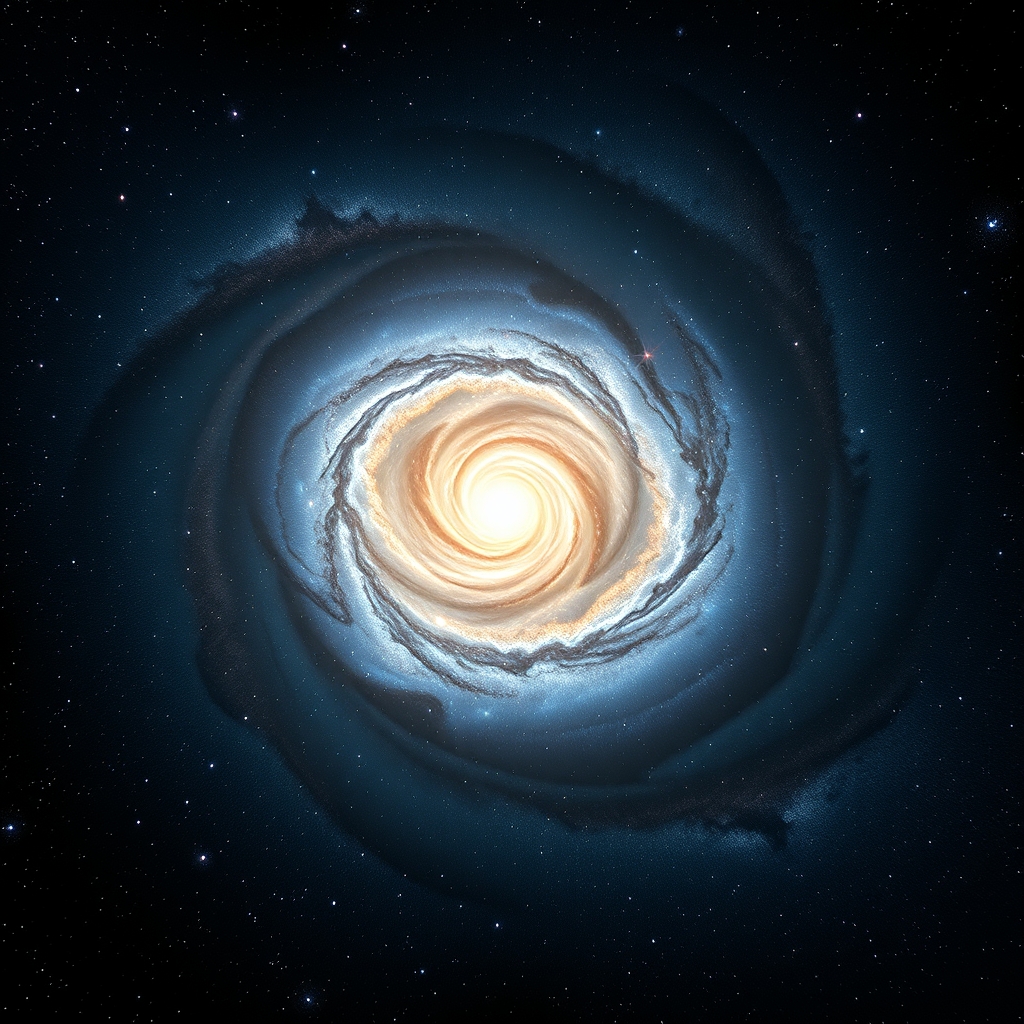
A team of astronomers led by Dr. Aisha Al‑Mansouri, using the James Webb Space Telescope (JWST), has catalogued 104 magnified stellar events in a galaxy dubbed the Dragon, situated roughly 6.5 billion light‑years from Earth. This tally more than doubles the previous record of 44 events in the same system, placing the study at the forefront of distant stellar‑population research.
The observations relied on the Near‑Infrared Camera (NIRCam) to capture the region through a powerful gravitational lens that amplifies the light of background stars. Complementary spectra were obtained with the Near‑Infrared Spectrograph (NIRSpec), allowing the team to measure luminosity, temperature and other physical parameters for each transient.
Dr. Al‑Mansouri told a press briefing, “Detecting over a hundred magnified events demonstrates JWST’s unprecedented sensitivity and confirms that the Dragon galaxy hosts an extraordinary cohort of ultra‑luminous stars.” She added that “the spectral signatures point to a predominance of high‑mass progenitors, offering a rare window onto the final stages of massive‑star evolution.”
Because such events are shaped by the galaxy’s gravitational field, they serve as indirect probes of dark matter (المادة المظلمة). Preliminary modeling of the new dataset suggests the dark‑matter density in the Dragon galaxy could be about 15 % higher than earlier estimates, a discrepancy that may force a revision of current cosmological simulations.
The group plans to exploit the next JWST observation cycle to survey additional galaxies at comparable distances, employing multi‑epoch imaging to capture transient activity. Continued success would cement JWST as the premier instrument for charting the earliest stellar populations and narrowing the gap between theory and observation.