Mind Immortality and Open‑AI Threats: Six Paths to Preserve Consciousness and the Z.ai Risk
Scientists outline six routes to keep the mind alive beyond death, while Anthropic warns that China’s Z.ai model could become a cyber‑weapon if left unrestricted.
S
··1 min readSciTech Editorial Team
Newsroom
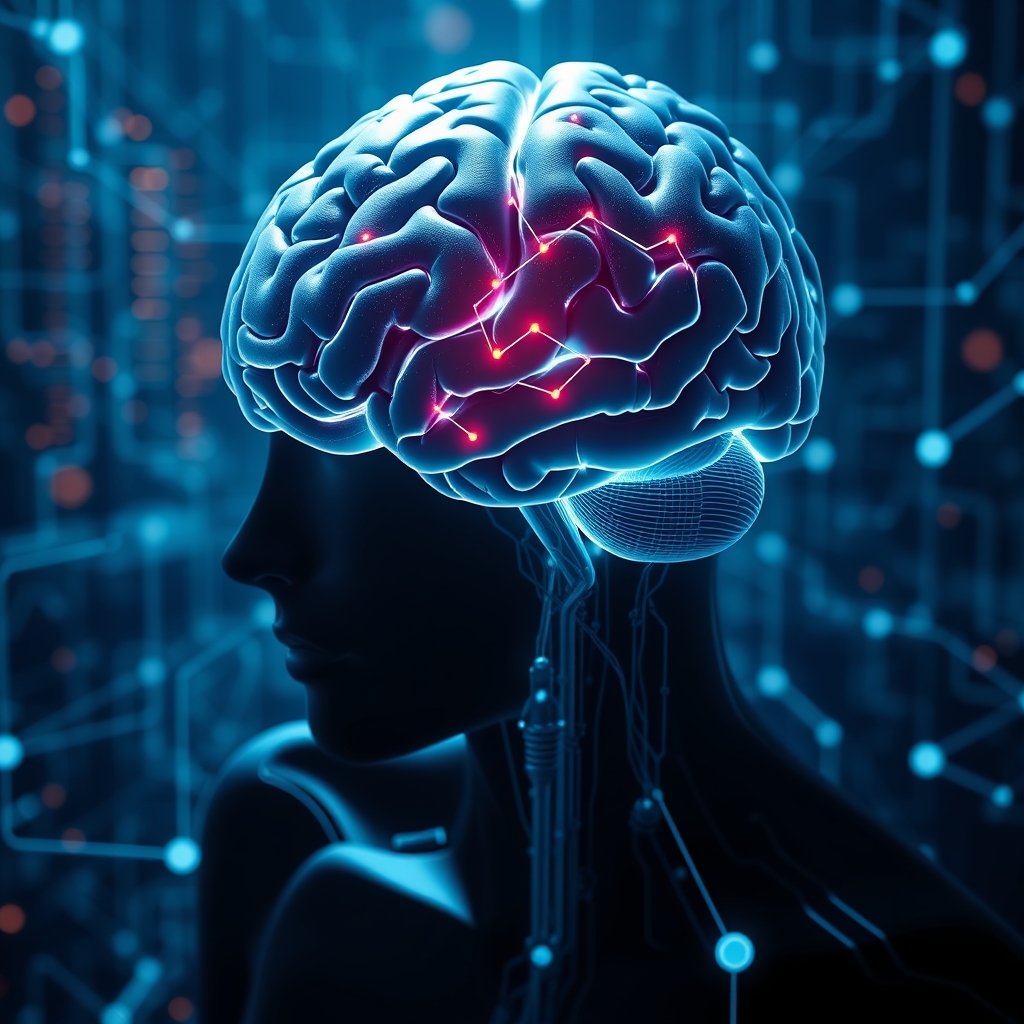
In a dual‑frontier of 2026, technologists are betting that consciousness can outlive the body, while AI watchdogs warn that an unfettered Chinese language model could become a weapon. The convergence of neuro‑preservation and open‑AI risk has thrust both fields into the policy spotlight.
Researchers outline six conceivable routes to “mind continuity.” The most radical is cryopreservation—immersing the brain in liquid nitrogen (liquid nitrogen cryopreservation) to halt decay. A second avenue augments living brains with nanoscopic implants that boost synaptic fidelity. The third proposes scanning neural connectomes at sub‑micron resolution and uploading the resulting data to cloud storage, effectively creating a digital replica. Two additional paths explore chemically induced suspended animation and gene‑editing to reset cellular aging, while the final method relies on hybrid brain‑computer interfaces that allow gradual off‑loading of memories.
Feasibility assessments vary. Cryopreservation is already practiced on a limited scale, yet revival remains speculative. Neural implants have entered clinical trials for Parkinson’s disease, suggesting a near‑term proof of concept. Cloud uploading faces monumental hurdles in mapping the ~86 billion neurons and quadrillion synapses, and raises profound legal questions about identity and ownership.
Meanwhile, Anthropic’s latest threat assessment flags Z.ai’s newly released large language model (نماذج اللغة الكبيرة) as a “high‑impact cyber‑attack vector.” Because the model is openly downloadable and modifiable, malicious actors could weaponize it for automated phishing, deep‑fake generation, or coordinated disinformation campaigns. The report reignites the debate over open‑frontier AI: proponents argue openness prevents monopolies, critics warn it lowers the barrier for abuse.
The stakes are global. Over twenty‑two nations have called for an international AI oversight body, and regulators are scrambling to define licensing regimes that balance innovation with security. As neuro‑tech pushes the boundaries of what it means to be human, the parallel race to control powerful AI models underscores a broader question: can society govern technologies that can both extend life and threaten it?