Pakistani Pilot Muhammad Zeeshan Ali to Become First Foreign Visitor to China’s Tiangong Space Station
Pakistani pilot Muhammad Zeeshan Ali becomes the first foreign visitor to China's Tiangong space station, marking a historic leap in international space cooperation.
S
··1 min readSciTech Editorial Team
Newsroom
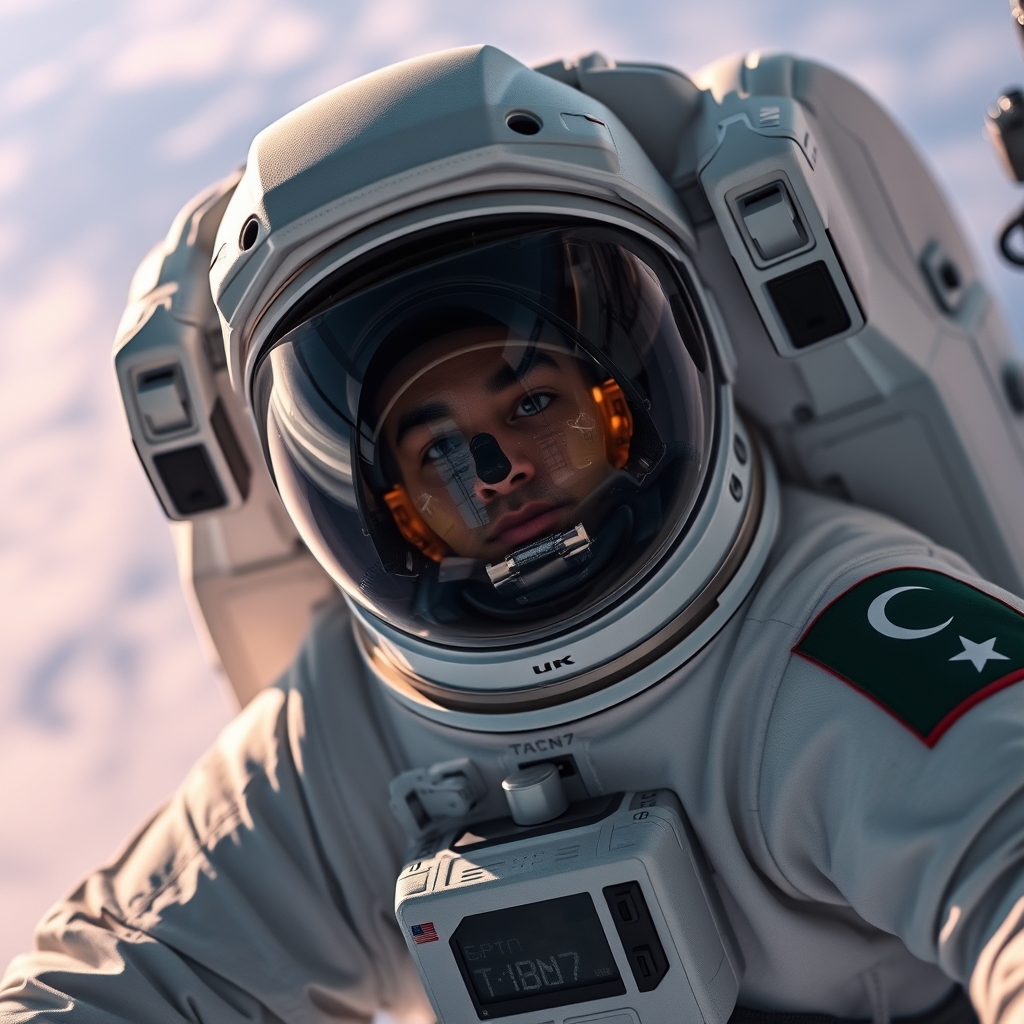
In a historic milestone for international space cooperation, Pakistan is set to send its first astronaut to China’s Tiangong space station. Muhammad Zeeshan Ali, a Pakistani military pilot, is scheduled to launch aboard the Shenzhou-24 spacecraft on November 25, joining two Chinese taikonauts. This mission marks the first time a foreign national will visit the Chinese orbital facility, signaling a significant expansion of China’s space diplomacy.
Ali, who has undergone seven months of intensive training in Beijing, including mastering Mandarin, expressed that his flight represents both his personal achievement and the aspirations of his nation. Speaking at the Jiuquan Satellite Launch Centre, he stated that he carries the dream of 250 million Pakistani people. The mission is viewed as a substantial step forward for Pakistan’s space program, according to Wajiha Iqbal, a lunar scientist at the University of Münster, who noted that the partnership enables Pakistan to conduct significant scientific research in space.
The launch is also a strategic milestone for China, demonstrating its growing capability to offer international partners unique opportunities in space exploration. Yuxuan Jia, a researcher at the Center for China and Globalization, described the event as a reflection of China’s ambition to become a leading global space power. The Shenzhou-24 spacecraft, propelled by a Long March-2F rocket, is expected to reach low-Earth orbit and automatically dock with Tiangong approximately 3.5 hours after launch.
Upon arrival, Ali is expected to remain on the station for about a week, conducting scientific experiments and collaborating with the current crew. He will subsequently return to Earth alongside two of the three taikonauts currently stationed on Tiangong. This mission underscores the evolving landscape of global space exploration, where bilateral partnerships are becoming increasingly central to advancing scientific knowledge and technological capabilities.