Record‑Breaking Distant Quasar Narrows Black‑Hole Birth Theories
Astronomers have identified the most distant quasar yet, tightening constraints on early black‑hole formation models.
S
··2 min readSciTech Editorial Team
Newsroom
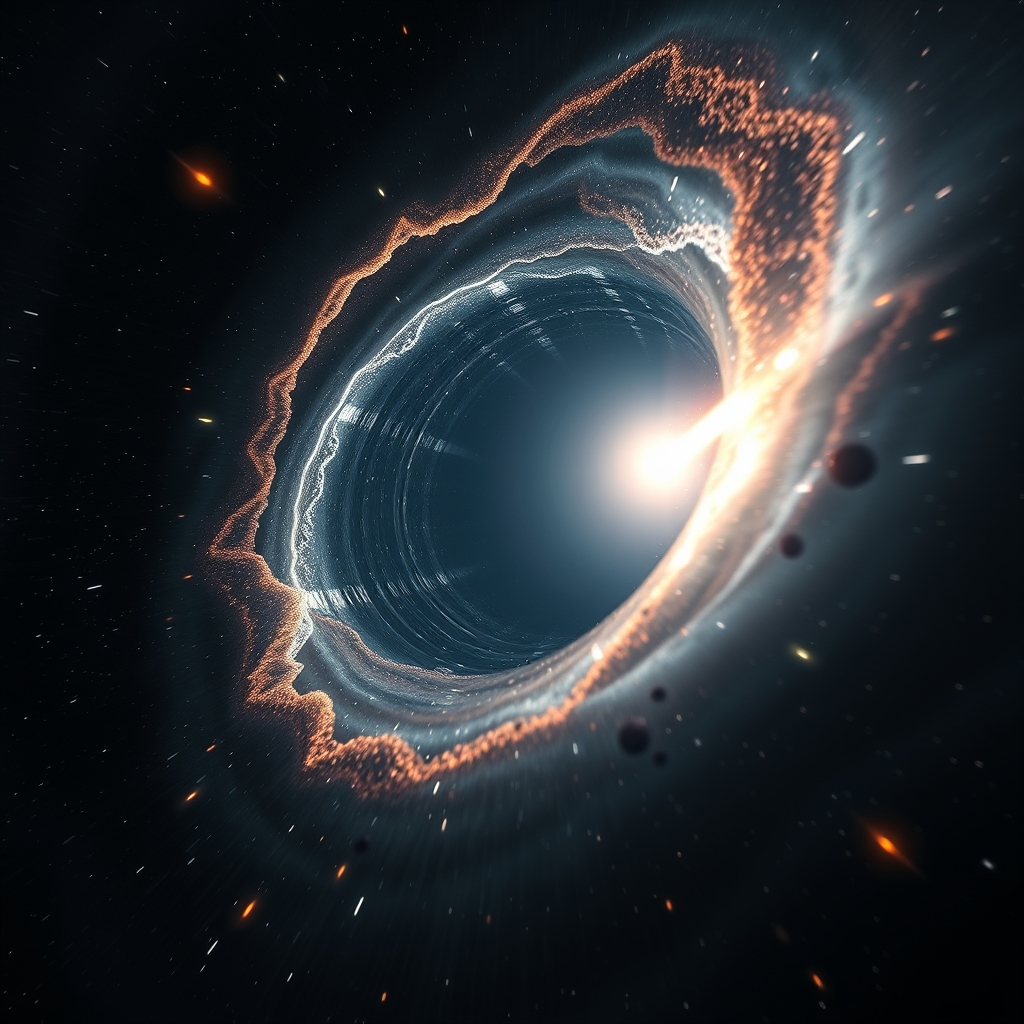
A team of astronomers headed by Julien Wolf, a postdoctoral researcher formerly at the Max Planck Institute for Astronomy (MPIA) and now at the European Southern Observatory (ESO), announced the discovery of the most distant quasar ever observed. Identified first in the Euclid Wide Survey (EWS) and later confirmed with a suite of ground‑ and space‑based observatories, the object lies at a redshift of z ≈ 7.6, corresponding to a time when the universe was less than 700 million years old. Its existence challenges current models of black‑hole formation because the inferred black‑hole mass exceeds one billion solar masses.
The quasar was initially flagged by Euclid’s near‑infrared imaging, which revealed an exceptionally bright point source with a dropout signature consistent with extreme cosmic distance. Follow‑up spectroscopy with the Very Large Telescope (VLT) and the Atacama Large Millimeter/submillimeter Array (ALMA) secured the redshift measurement, while the James Webb Space Telescope (JWST) provided high‑resolution spectra that confirmed the broad emission lines characteristic of active galactic nuclei. From the width of the Mg II line, the team derived a black‑hole mass of roughly 1.5 × 10⁹ M☉, placing it among the most massive early‑universe black holes.
These findings tighten the constraints on competing black‑hole seed scenarios. Light‑seed models, which posit remnants of the first generation of stars (≈100 M☉), would require implausibly rapid accretion to reach the observed mass within a few hundred million years. Conversely, heavy‑seed hypotheses—such as direct collapse of massive gas clouds yielding seeds of 10⁴–10⁵ M☉—are now favored, though they still demand sustained near‑Eddington growth. The new quasar thus serves as a critical benchmark for simulations of early galaxy evolution.
Looking ahead, the discovery paves the way for a systematic hunt for similarly distant quasars using upcoming facilities like the Extremely Large Telescope (ELT) and the Nancy Grace Roman Space Telescope. By expanding the sample size, astronomers hope to map the luminosity function at the epoch of reionization and to refine the timeline of black‑hole assembly. Yet, challenges remain: dust obscuration, line‑of‑sight absorption, and the need for precise host‑galaxy measurements will test the limits of current instrumentation.
In the broader context, the record‑breaking quasar underscores how coordinated surveys—Euclid’s wide‑field imaging paired with targeted spectroscopic follow‑up—can unlock the most remote corners of the cosmos. As the astronomical community prepares for the next generation of observatories, each new high‑redshift beacon will bring us closer to answering how the universe’s most massive black holes ignited and grew in its infancy.