SpaceX Starship Achieves Historic Orbit Despite Booster Explosion in Gulf of Mexico
SpaceX's Starship reached orbit in its boldest test yet, despite the Super Heavy booster exploding in the Gulf of Mexico during a failed double catch attempt.
S
··2 min readSciTech Editorial Team
Newsroom
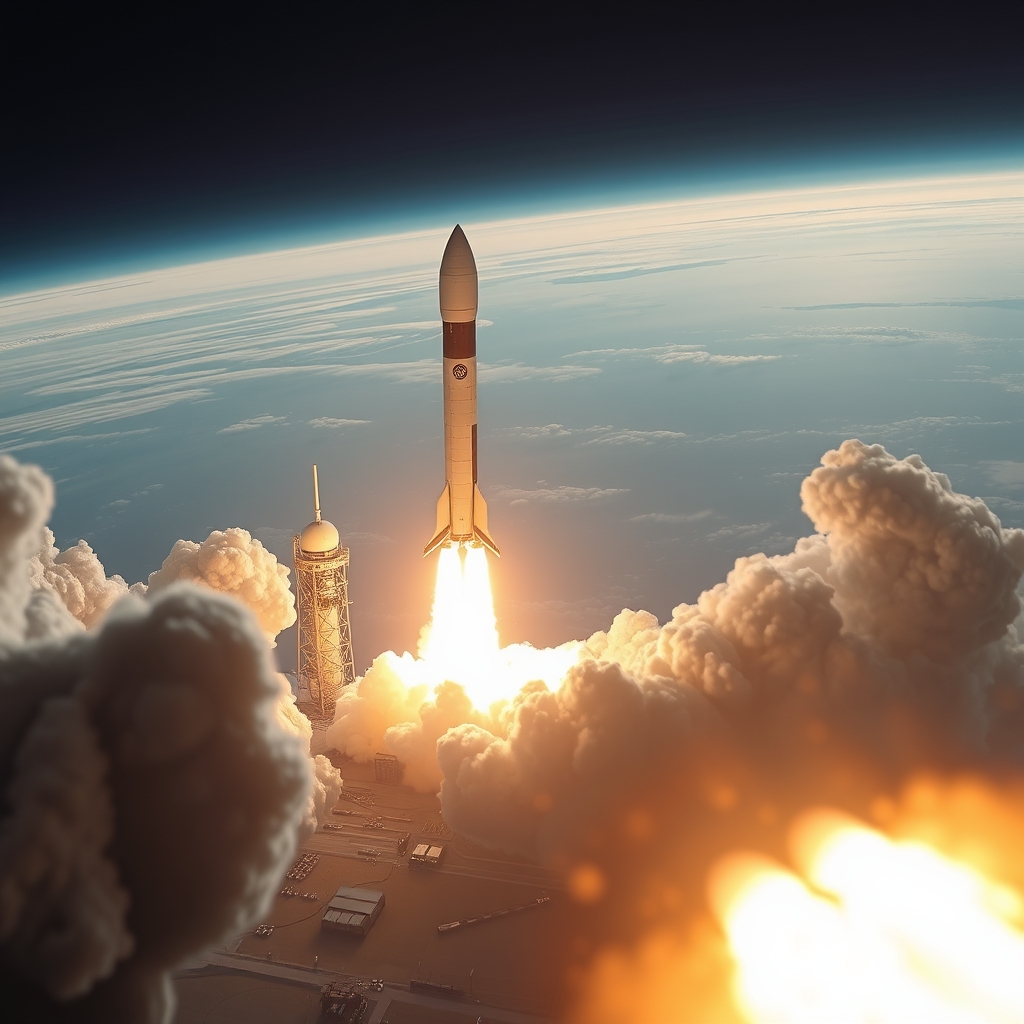
In a dramatic turn of events that underscored the high stakes of deep space exploration, SpaceX’s Starship successfully soared into orbit on Friday, marking its boldest test to date. However, the mission was marred by a significant setback when the Super Heavy booster, intended for a groundbreaking double catch at the launch pad, instead fell into the Gulf of Mexico and exploded. Despite this catastrophic failure of the recovery system, the upper stage spacecraft continued its trajectory, achieving the primary objective of reaching orbital velocity. This event highlights the complex engineering challenges inherent in developing reusable launch vehicles for Mars and beyond.
The attempt to recover the entire Starship stack, including both the booster and the spacecraft, represented an unprecedented milestone in aerospace history. The 'double catch' maneuver, where both stages are caught by the launch tower's arms, is a critical component of SpaceX’s long-term vision for cost-effective interplanetary travel. The explosion of the booster in the Gulf of Mexico indicates that the guidance and control systems failed to execute the precise landing sequence required for the catch. Nevertheless, the separation of the stages proceeded as planned, allowing the Starship spacecraft to perform its orbital insertion burn without interference.
Technical analysts note that while the booster failure is a significant blow to the immediate recovery timeline, the successful orbital flight of the Starship itself is a vital data point. The spacecraft’s ability to reach orbit despite the anomaly below demonstrates the robustness of the upper stage’s propulsion and navigation systems. Engineers at SpaceX will now conduct a thorough post-flight analysis to determine the root cause of the booster’s failure, focusing on telemetry data from the minutes leading up to the explosion. This data is crucial for refining the algorithms that govern the booster’s re-entry and landing phases.
The broader implications of this test extend beyond the immediate mission. SpaceX’s ambition to make space travel affordable and frequent relies heavily on full reusability. The loss of the booster means that the company must manufacture a new one, adding to the logistical and financial burden of the program. However, the successful orbital flight of the Starship validates the core design of the spacecraft, which is the primary vehicle for cargo and crew transport in future missions. This partial success provides a foundation for future iterations, where the focus will shift to perfecting the booster recovery process.
Looking ahead, SpaceX is expected to continue its aggressive testing schedule, aiming to refine the Starship system for commercial and scientific applications. The company’s leadership has historically viewed failures as essential learning opportunities, and this incident is likely to be treated as such. The next steps will involve detailed reviews of the booster’s structural integrity and software controls, with the goal of achieving a successful double catch in subsequent flights. As the space industry continues to evolve, SpaceX’s progress, despite setbacks, remains a pivotal force driving innovation in orbital access and deep space exploration.