Study Reveals Global Ice Has Exited Its 'Safe Operating Space' Due to Climate Change
New research indicates that global ice and snow have exited their safe operating space, increasing the risk of irreversible climate tipping points and demanding urgent emission cuts.
S
··2 min readSciTech Editorial Team
Newsroom
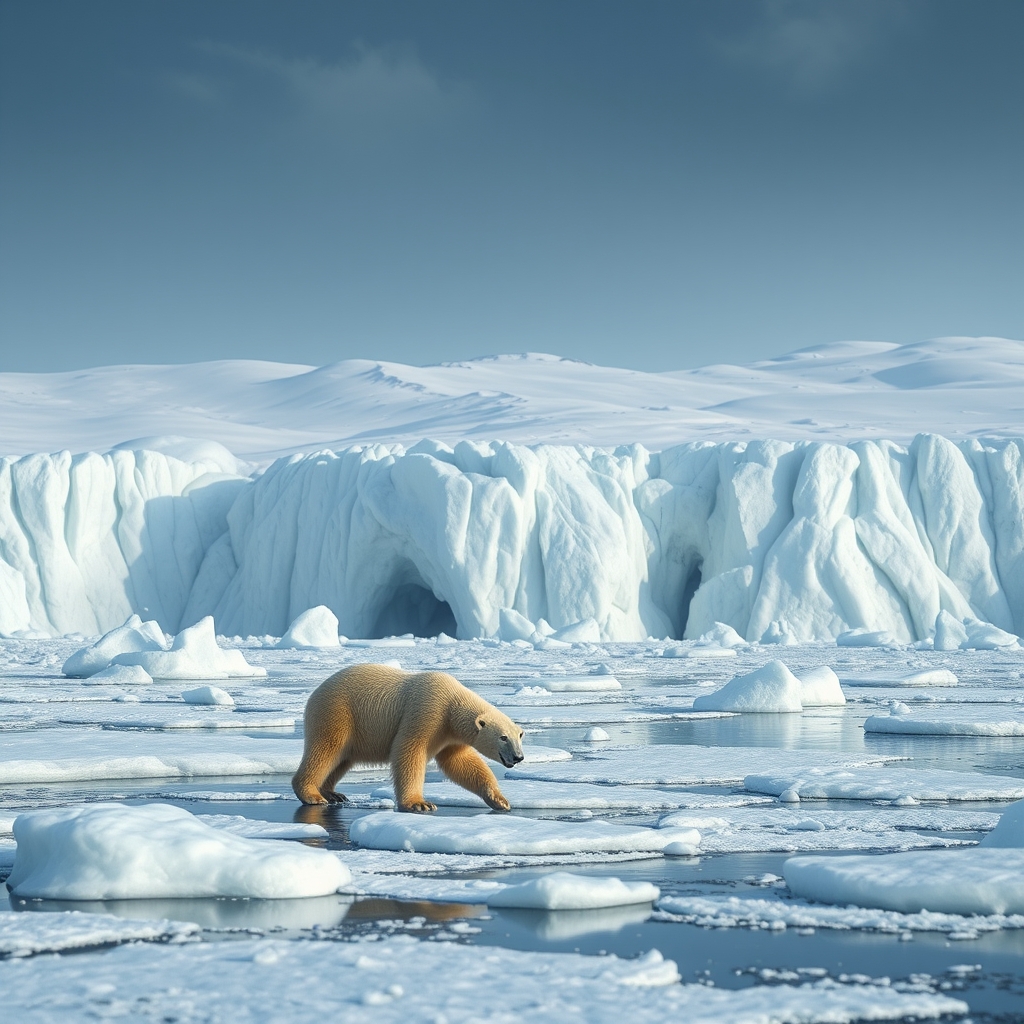
A groundbreaking study published in Science reveals that the world's ice, frozen soil, and snow have effectively exited their 'safe operating space' due to the relentless burning of fossil fuels. For the past 12,000 years, the climate has remained remarkably stable, providing the steady environmental conditions necessary for human civilization to flourish. However, rising temperatures are now pushing the climate outside this historical envelope, threatening the stability of the cryosphere—the icy, snowy landscape that has supported life on Earth for millennia.
The research team analyzed changes in polar sea and land ice, mountain glaciers, permafrost, and snow cover over the last 12 millennia to identify critical boundaries. The findings indicate an 'accelerating and partly irreversible loss of cryospheric integrity.' Specifically, Arctic and Antarctic sea ice, along with global snow cover and the area of permafrost, have already fallen outside the safe operating threshold. While land ice has not yet breached this limit, it is on the brink, and warming already locked into the climate system suggests it will likely cross the threshold in the coming centuries.
The implications of these shifts are profound and far-reaching. The West Antarctic Ice Sheet, which evidence suggests is nearing irreversible decline, holds enough ice to raise sea levels by 3 meters (11 feet). Furthermore, permafrost contains trillions of tons of carbon dioxide; its degradation could release potent greenhouse gases like methane, accelerating global warming. Other risks include the potential collapse of the ocean conveyor belt due to melting Greenland ice, which could disrupt Europe’s temperate climate.
Albert Noström, a climate researcher at the Stockholm Resilience Center and co-author of the paper, emphasizes that the consequences extend far beyond regions where ice is disappearing. 'As we scratch 1.5 degrees Celsius and go above it, we are just really gambling with potentially triggering some of these Earth system tipping points,' Noström warns. The 'safe operating space' framework serves as a precautionary tool to assess how far the cryosphere is moving away from the conditions that have supported a relatively stable Earth system.
While cutting emissions remains the most urgent and straightforward solution, scientists are also exploring radical geoengineering interventions to protect the world's ice. These proposals include draping glaciers in blankets to prevent summer melting, pumping cold seawater to the surface to thicken ice, and constructing manmade barriers to stabilize the West Antarctic Ice Sheet. Although these methods are costly and unproven, Noström argues that in principle, research into such far-flung interventions should not be abandoned, ensuring humanity stays as far downstream as possible from existential risks.