Tau Robotics’ Humanoid Cleaner Takes a Stumble on San Francisco Stairs, Offering a Glimpse of Fully Autonomous Home Service
Tau Robotics’ remotely piloted humanoid cleaner shows promise but still stumbles on stairs, highlighting the gap between today’s beta service and tomorrow’s fully autonomous home assistant.
S
··2 min readSciTech Editorial Team
Newsroom
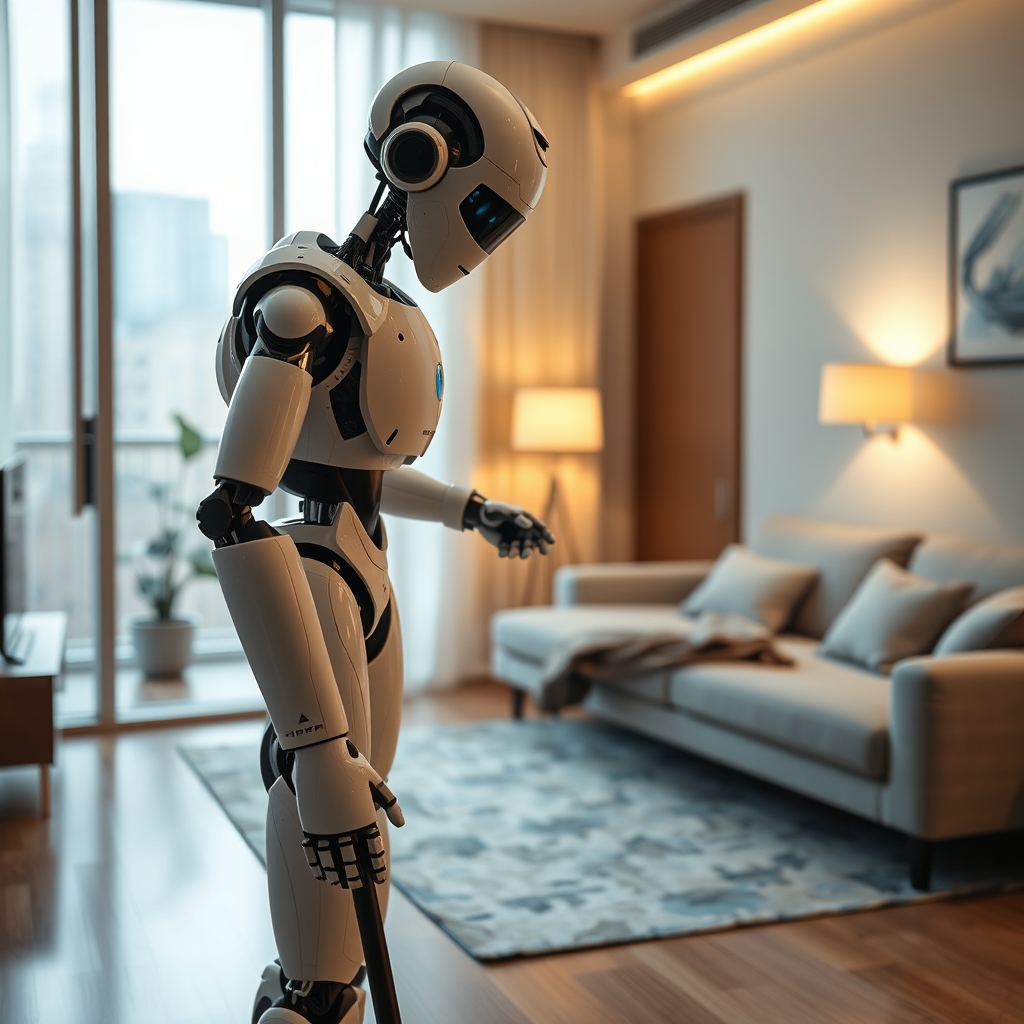
Tau Robotics, a San Francisco‑based startup, has begun field‑testing a four‑and‑a‑half‑foot humanoid cleaning robot that is piloted remotely but designed to become fully autonomous. The service, priced at $30 for a one‑hour trial, is marketed as a glimpse of the future where home chores are handled by intelligent machines. In its current beta stage, a human operator watches live video feeds from cameras mounted on the robot’s head and wrists, guiding it through tasks that require fine motor control, such as folding a T‑shirt or making a bed. Each successful action feeds a growing dataset that the company will use to train its next‑generation models.
The robot’s hardware is a blend of 3D‑printed components and off‑the‑shelf sensors. It sports a stylized “head” with antennae for wireless communication, and two claw‑like hands that, while less anthropomorphic than a human grip, prove surprisingly effective for wiping counters and picking up objects. Kinematic guidance—where the remote pilot’s motions are mirrored by the robot in real time—creates high‑quality training examples for tasks that are still beyond the robot’s autonomous capabilities, such as laundry folding. However, the reliance on a human pilot introduces latency; a brief transmission delay can cause the robot to stagger, a phenomenon the co‑founder Cornelia Weinzierl described as “walking like it’s drunk.”
During a trial in a downtown apartment, the robot struggled with the building’s eight‑step staircase. It managed to climb a few steps before wobbling backward, and on the carpeted landing it stalled completely, likely due to overheating of the operator’s remote‑viewing equipment in unusually warm weather. The incident forced the robot to be manually lifted the final few steps, highlighting the current limits of remote‑controlled mobility and the importance of robust connectivity.
Despite these hiccups, the robot completed a respectable cleaning of the kitchen, including a surprisingly adept toilet‑cleaning routine where it re‑attached its cleaning wand three times after it fell off. The experience underscores both the promise and the rough edges of beta‑stage service robots. If Tau can translate the amassed data into reliable perception and manipulation algorithms, fully autonomous home assistants could soon become a tourist attraction in tech‑savvy cities, much like Waymo’s driverless cars.
The broader implication for the home‑service market is clear: early adopters are paying a premium for a novel experience while providing the raw data needed to accelerate development. Challenges such as stair negotiation, heat management, and low‑latency communication must be solved before the price point can compete with traditional cleaning services. Nonetheless, the trial marks a tangible step toward a future where a robot can enter a home, navigate its layout, and clean without human intervention.