Tesla Partners with Turo to Accelerate FSD Adoption Through Peer-to-Peer Rentals
Tesla and Turo launch a partnership to highlight FSD-equipped vehicles in rentals, aiming to boost software adoption as 1.7 million customers now pay for the service.
S
··3 min readSciTech Editorial Team
Newsroom
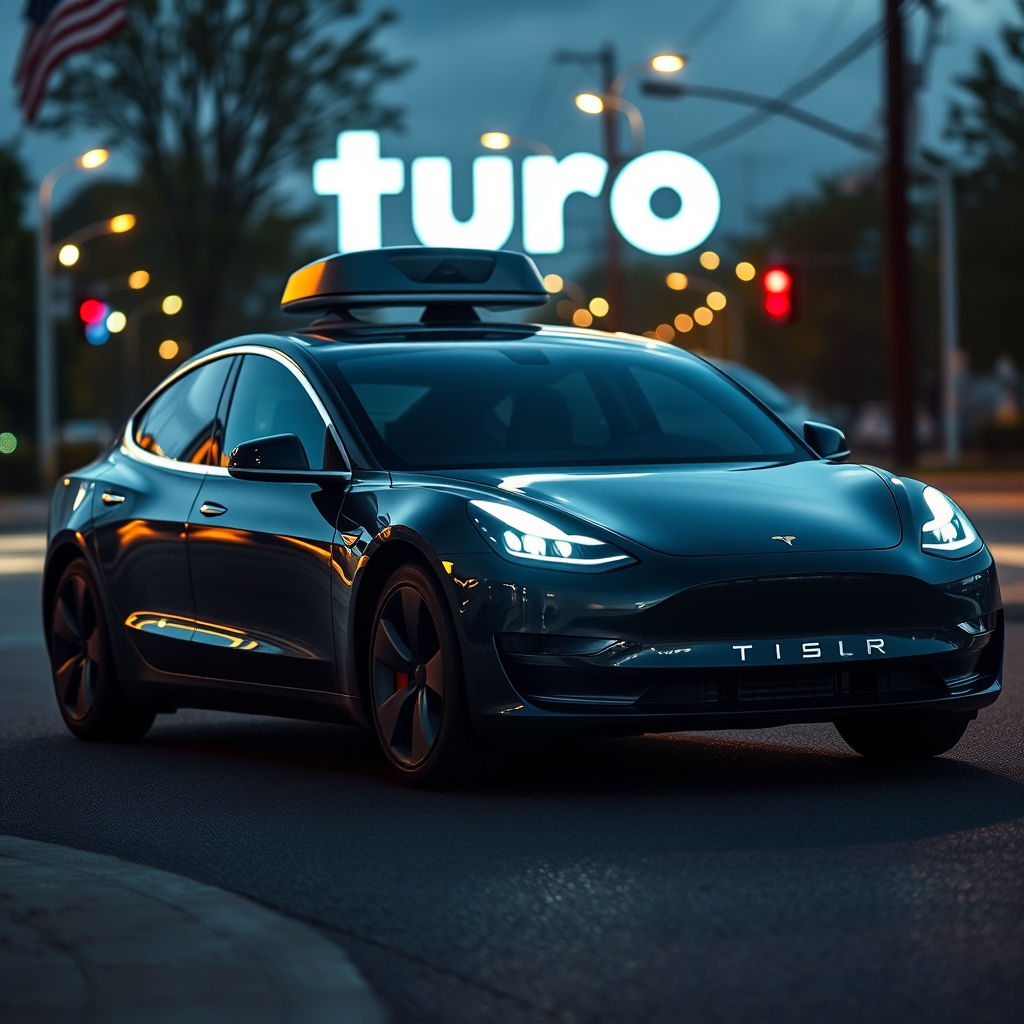
In a strategic move to accelerate the mainstream adoption of its advanced driver assistance software, Tesla has announced a significant partnership with peer-to-peer car rental platform Turo. Under this collaboration, Turo will explicitly advertise which vehicles on its marketplace are equipped with Tesla’s Full Self-Driving (Supervised) system, commonly known as FSD. This initiative aims to bridge the gap between consumer curiosity and hands-on experience, allowing renters to test-drive the technology directly. Eligible Turo hosts who list their vehicles will also receive a complimentary one-month trial of FSD, incentivizing participation in this industry-first integration.
The technical implementation of this partnership relies on a direct API connection between Turo and Tesla, enabling the platform to verify in real-time which specific cars have FSD enabled. This ensures that users are not misled about the capabilities of the vehicle they are renting. The announcement follows closely on the heels of Tesla’s recent financial disclosures, which highlighted a notable surge in FSD subscriptions. Tesla revealed that approximately 1.7 million customers globally have paid for the software, a significant milestone given the company has sold over 10 million vehicles to date. Notably, more than 75% of customers who took delivery of a car in North America during the third quarter opted for an FSD subscription, marking a roughly 20% increase from the previous quarter despite a broader decline in U.S. sales.
Tesla has spent the last year reconfiguring its showroom experiences to position FSD as a primary selling point rather than an optional add-on. Elon Musk, the company’s CEO, stated that the strategy is yielding results, noting that "People are buying FSD with a car attached, not the other way around." Vaibhav Taneja, Tesla’s Chief Financial Officer, reinforced this sentiment during the latest earnings call, reporting that customers are increasingly asking to test FSD capabilities rather than inquiring about specific models like the Model 3, Model Y, or Cybertruck. This shift in consumer behavior underscores Tesla’s effort to decouple brand loyalty from hardware and anchor it in software utility.
For Turo, the integration represents a substantial opportunity to enhance the appeal of its most popular inventory. Tesla’s Model 3 and Model Y are currently the third and fourth most-rented vehicles on the Turo platform, respectively. By highlighting FSD capabilities, Turo aims to boost host earnings as demand for autonomous driving technology grows. Andre Haddad, Turo’s CEO, emphasized that the platform is uniquely positioned to redefine car rental access, citing internal research that shows 55% of Americans are interested in driverless technology, a figure that rises to 71% among Generation Z. The company views this integration as a critical step in closing the gap between theoretical interest and practical usage.
Despite the enthusiasm, safety protocols remain a central focus of the rental experience. Customers renting FSD-enabled Teslas will be presented with mandatory cautionary language requiring them to actively monitor the software and be prepared to take over control at any moment. Additionally, drivers will have the option to view a tutorial created by Tesla to familiarize themselves with the system’s limitations and operational requirements. The Turo app interface explicitly states that while the vehicle can drive "almost anywhere" with minimal intervention, it requires active supervision. This approach balances the allure of autonomous technology with the necessary regulatory and safety guardrails, ensuring that the expansion of FSD adoption remains responsible and compliant with current driving standards.