Tesla Semi Ignites on I-880 Without Collision, Closing Freeway for 10 Hours
A Tesla Semi caught fire on I-880 in Hayward without a crash, closing the freeway for 10 hours and raising safety questions.
S
··1 min readSciTech Editorial Team
Newsroom
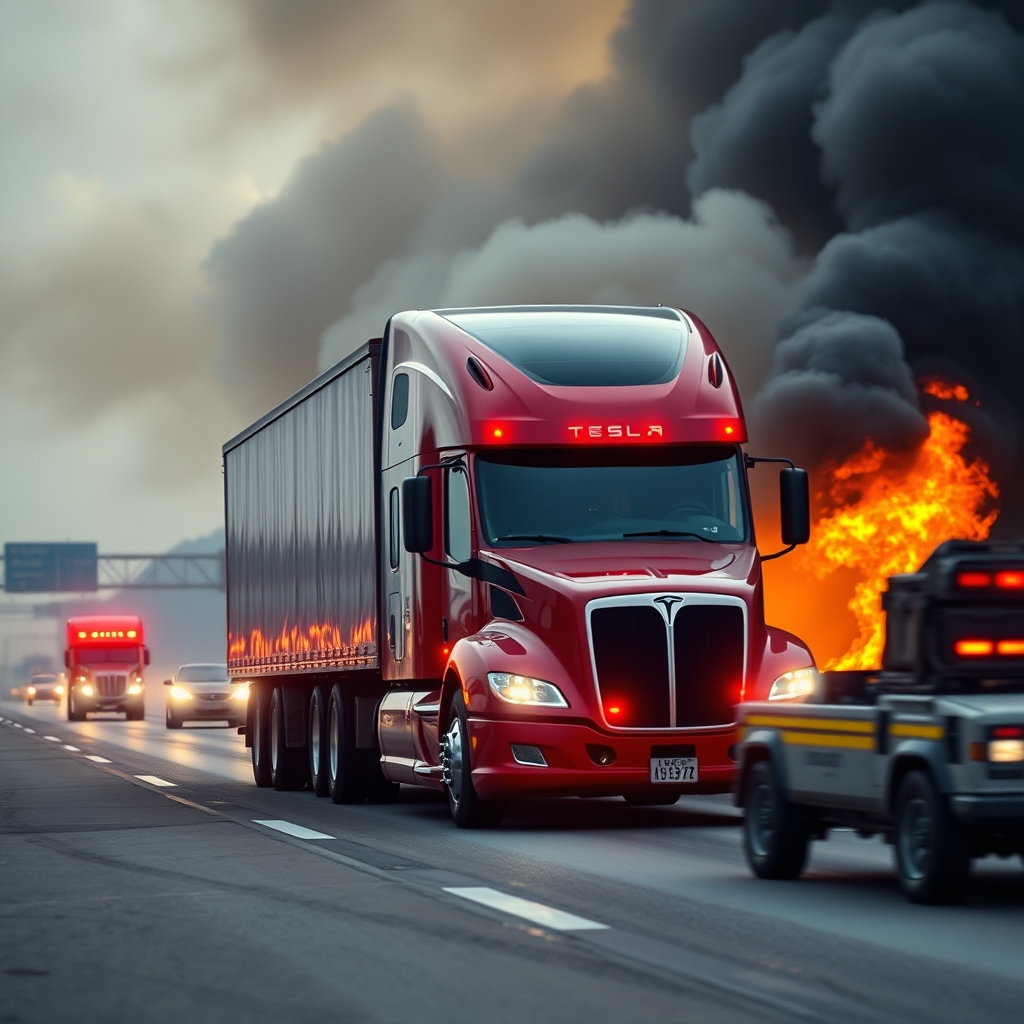
A Tesla Semi electric truck caught fire on Interstate 880 in Hayward, California, on Tuesday evening, marking a significant safety incident that occurred without any prior collision. The fire, which originated from the vehicle's lithium-ion battery system, persisted for an extended period, forcing authorities to close the southbound lanes of the freeway for approximately 10 hours. This event has raised immediate concerns among industry observers and consumers regarding the thermal stability of heavy-duty electric vehicles in operational conditions.
According to initial reports, the driver managed to exit the vehicle unhurt, highlighting the effectiveness of the emergency egress systems. However, the fact that a Class 8 electric truck ignited spontaneously while in traffic presents a complex technical challenge for Tesla. The company must now provide a transparent explanation to its growing base of Semi customers, who rely on these vehicles for critical logistics operations. The incident underscores the ongoing debates surrounding the safety protocols of large-scale lithium-ion battery packs in commercial applications.
The 10-hour closure of the freeway reflects the severity of the fire and the difficulty in extinguishing battery-related incidents. Firefighters likely required specialized equipment and cooling techniques to ensure the battery pack did not re-ignite. This prolonged disruption has significant economic implications for local traffic and logistics, further amplifying the scrutiny on Tesla's engineering standards. As the electric truck market expands, such incidents serve as critical case studies for regulators and manufacturers alike.
In the broader context of the transition to electric heavy-duty transport, this event may influence future safety regulations and insurance policies. Tesla faces the dual challenge of maintaining its brand reputation while addressing the technical root causes of the fire. Industry experts suggest that detailed post-incident analysis will be crucial in determining whether the failure was due to a manufacturing defect, software error, or external factor. The coming days will be pivotal in shaping the narrative around the safety of next-generation electric commercial vehicles.