Trump Defends Commerce Chief Amid Nvidia China Chip Controversy
Trump backs Commerce Secretary Lutnick, arguing that limited AI chip sales keep China dependent on U.S. tech while boosting American tech stocks.
S
··2 min readSciTech Editorial Team
Newsroom
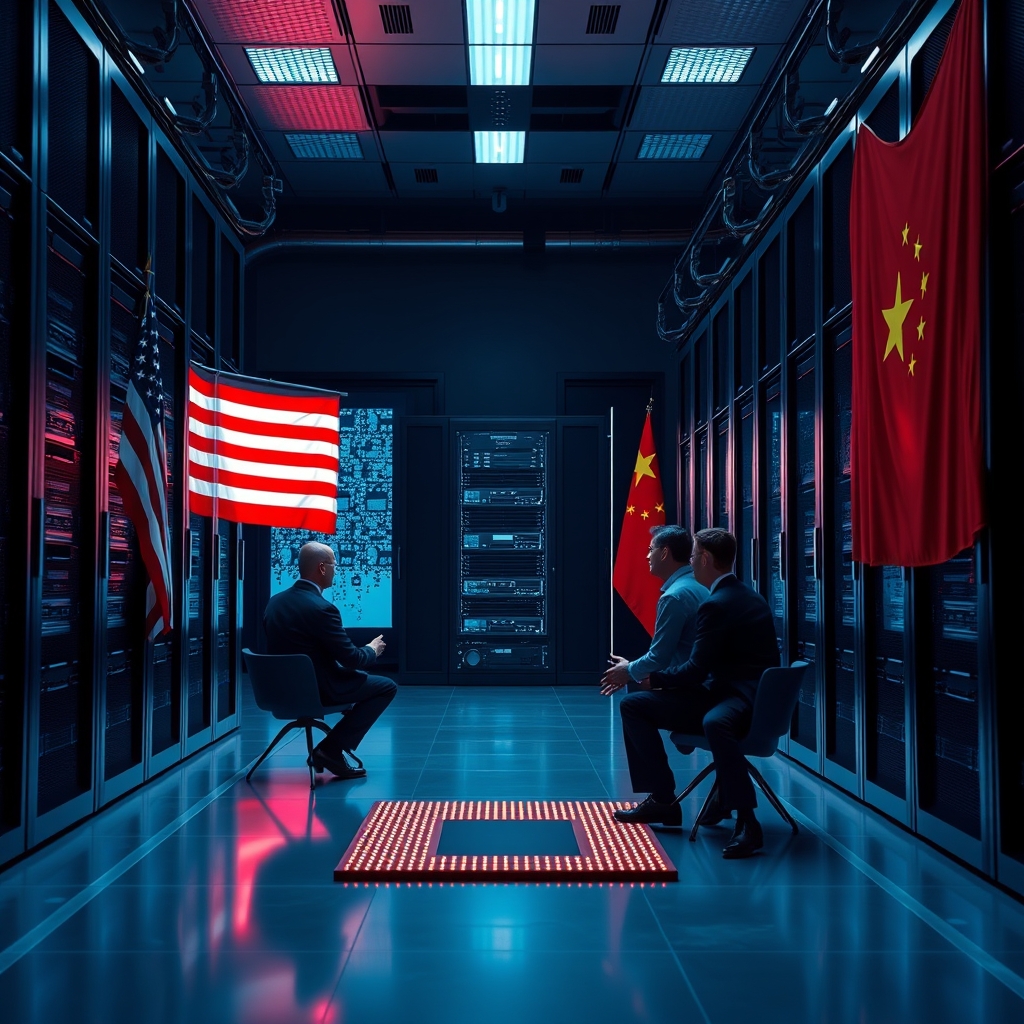
President Donald Trump stepped in to shield Commerce Secretary Howard Lutnick from criticism over the ongoing controversy surrounding Nvidia’s advanced AI chips flowing to China. The president argues that allowing a limited supply of cutting‑edge chips keeps China dependent on U.S. technology while simultaneously buoying American tech stocks, a stance he reiterated ahead of his upcoming Asian tour and a scheduled meeting with Chinese President Xi Jinping.
The dispute erupted after former Nvidia CEO Jensen Huang’s alleged affair with Alice Huang, a former Megaspeed executive suspected of serving Chinese intelligence. Megaspeed, linked through a subsidiary of the blacklisted Chinese server conglomerate Inspur, received Nvidia’s high‑performance AI chips via a complex chain of intermediaries. Treasury Secretary Scott Bessent publicly rebuked Lutnick for not moving faster to place Megaspeed on the entity list, a move already supported by Secretary of State Marco Rubio and U.S. Trade Representative Jamieson Greer.
In response, Trump opted for a third‑track solution: directing Lutnick to draft an interim export rule that would block Chinese AI labs from remotely accessing advanced U.S. chips by leasing compute power from data centers in Southeast Asia. The White House described the measure as a crackdown on the “smuggling of advanced U.S. superintelligence (SI) chips,” ensuring that the most sophisticated hardware reaches U.S. innovators first, not Chinese shell companies.
While the administration seeks to bar Chinese firms from acquiring Nvidia’s newest Blackwell and Rubin chips, older H200 models built on the previous‑generation Hopper architecture remain accessible. This nuance reflects Lutnick’s cautious approach, shaped by backlash he faced in 2025 after expanding export restrictions on Chinese‑linked firms. The episode also highlights the broader challenges of the “affiliates rule,” which automatically extends sanctions to companies 50 percent owned by listed entities—a policy briefly suspended after China retaliated by halting rare‑earth exports to the United States.
The intricate supply chain involving Inspur’s California‑based subsidiary Aivres, which legally purchased restricted Nvidia chips and shipped them to data centers in Malaysia and Indonesia, underscores the difficulty of policing remote compute services. By renting out this capacity to major Chinese corporations, Megaspeed effectively bypassed direct export bans, prompting the White House to pursue tighter controls while balancing geopolitical and market considerations.