Northwestern Physicists Trap Single Antimatter Particle for Months, Unlocking Quantum Precision
Northwestern physicists trapped a single positron for months at near-absolute-zero, enabling 30x more precise quantum measurements to probe antimatter mysteries.
S
··2 min readSciTech Editorial Team
Newsroom
In a groundbreaking achievement for particle physics, a team of physicists at Northwestern University has successfully trapped a single antimatter particle for several months. By cooling the particle to temperatures near absolute zero, the researchers were able to control its quantum states with unprecedented precision without physical contact. This experiment, published in Physical Review Letters, marks a significant leap in our understanding of one of physics' most enduring mysteries: the nature of antimatter.
Theoretically, antimatter should be as abundant as ordinary matter, as every particle has a corresponding antiparticle. However, the observable universe is composed almost entirely of ordinary matter, a discrepancy that remains unexplained. While laboratories can produce antimatter, studying it is notoriously difficult because antiparticles annihilate upon contact with matter, releasing vast amounts of energy. Previous methods relied on vacuum chambers and electromagnetic fields, but these only partially solved the isolation problem, making quantum-scale experimentation challenging.
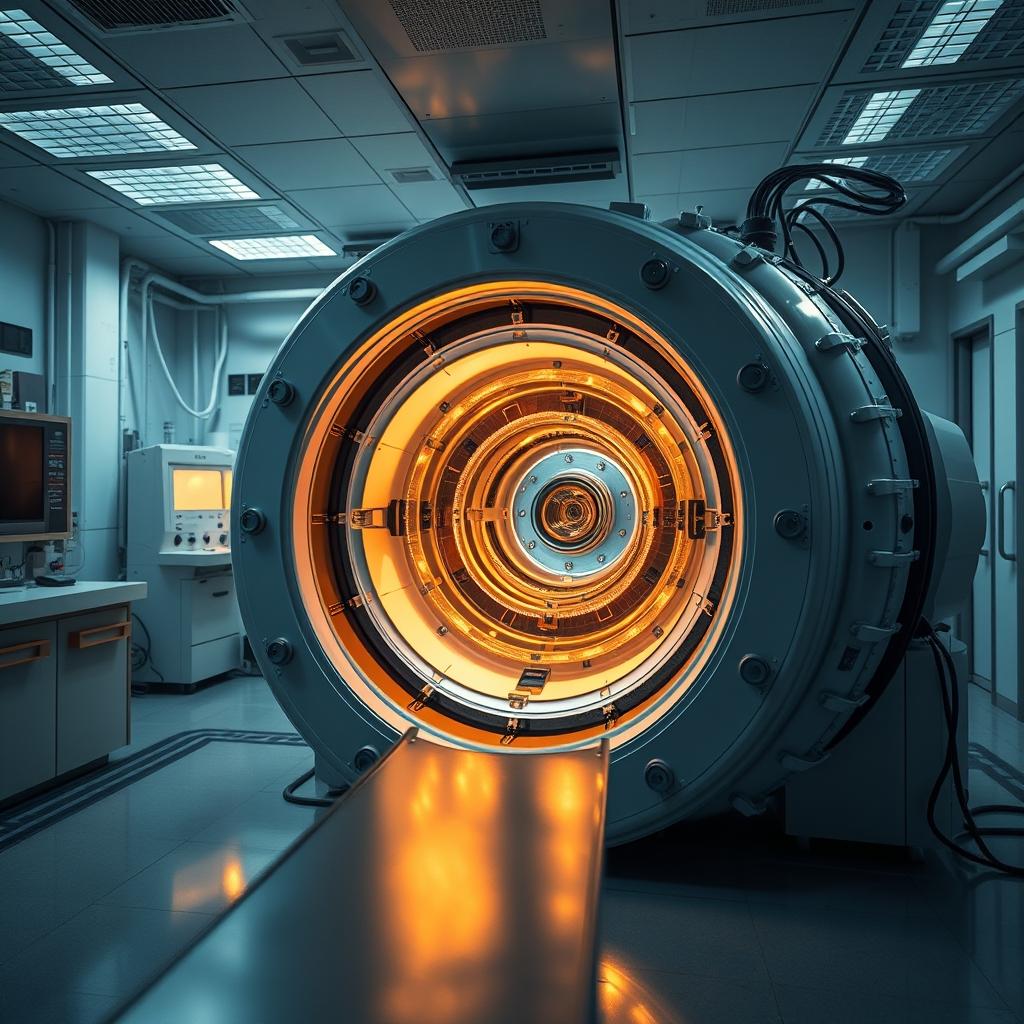
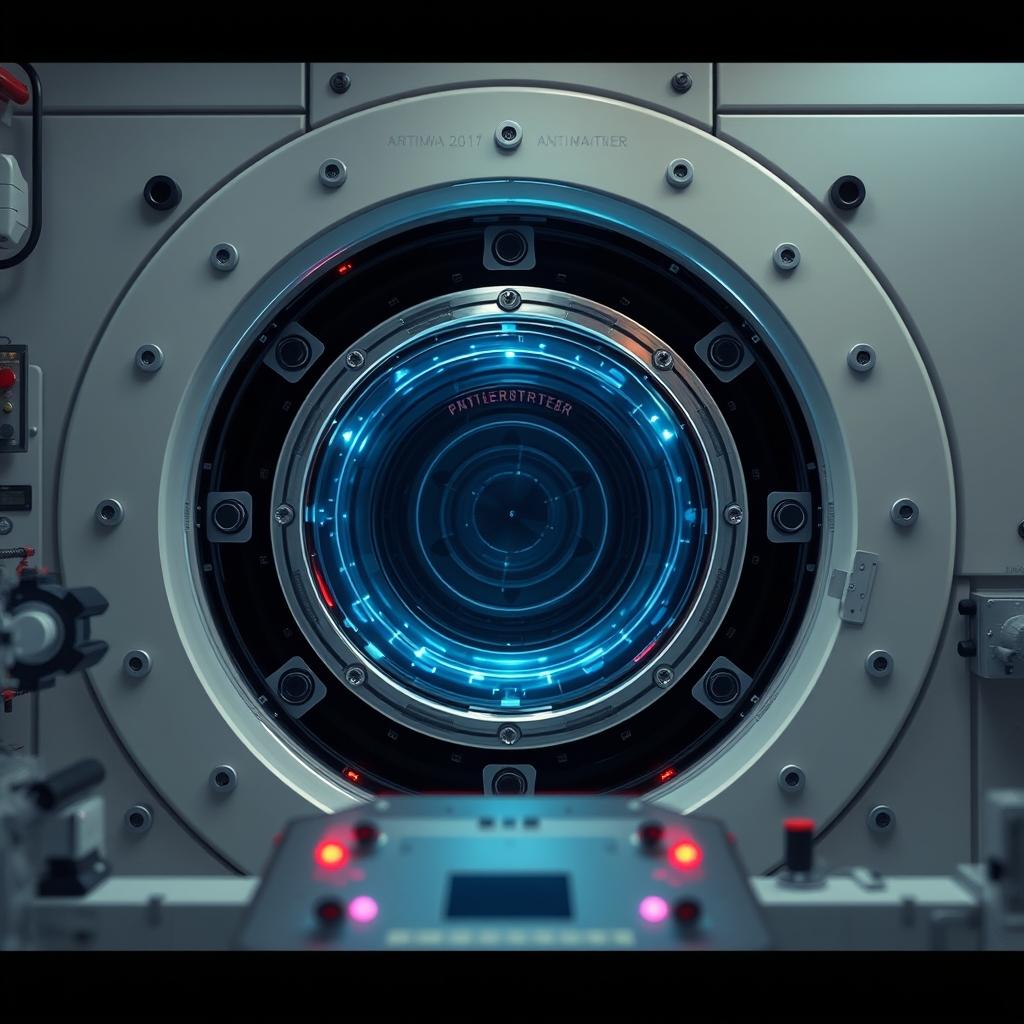
Led by Gerald Gabrielse, the Northwestern team developed a novel device called a single-positron quantum cyclotron. This apparatus uses precise electric and magnetic fields to suspend a positron—the antimatter counterpart of the electron—in a vacuum at near-absolute-zero temperatures. This environment places the particle in its lowest energy state, allowing researchers to induce controlled changes in its quantum behavior. Crucially, this non-destructive approach allowed the team to keep the single antiparticle trapped for months, enabling repeated and highly accurate measurements.
The primary goal of this research is to compare the magnetic properties of electrons and positrons with extreme precision. While the two particles have identical masses and opposite charges, subtle differences may exist that have gone undetected. According to the American Physical Society, the new device could enable measurements of antimatter particles that are approximately 30 times more precise than previous capabilities. Although no unexpected differences have been found yet, this enhanced sensitivity is crucial for testing the fundamental laws of physics.
If future measurements reveal that positrons respond to magnetic fields differently than electrons, scientists would be forced to revise core principles of the Standard Model. This breakthrough not only improves our ability to detect minute discrepancies but also opens new avenues for exploring why the universe is dominated by matter rather than antimatter, potentially reshaping our understanding of cosmic evolution.