Australia Approves Seabed Site for Japanese Firm to Store Massive Carbon Emissions
Australia green‑lights Japan’s offshore carbon‑storage project, allowing up to five million tonnes of CO₂ to be mineralised in deep‑sea basalt.
S
··1 min readSciTech Editorial Team
Newsroom
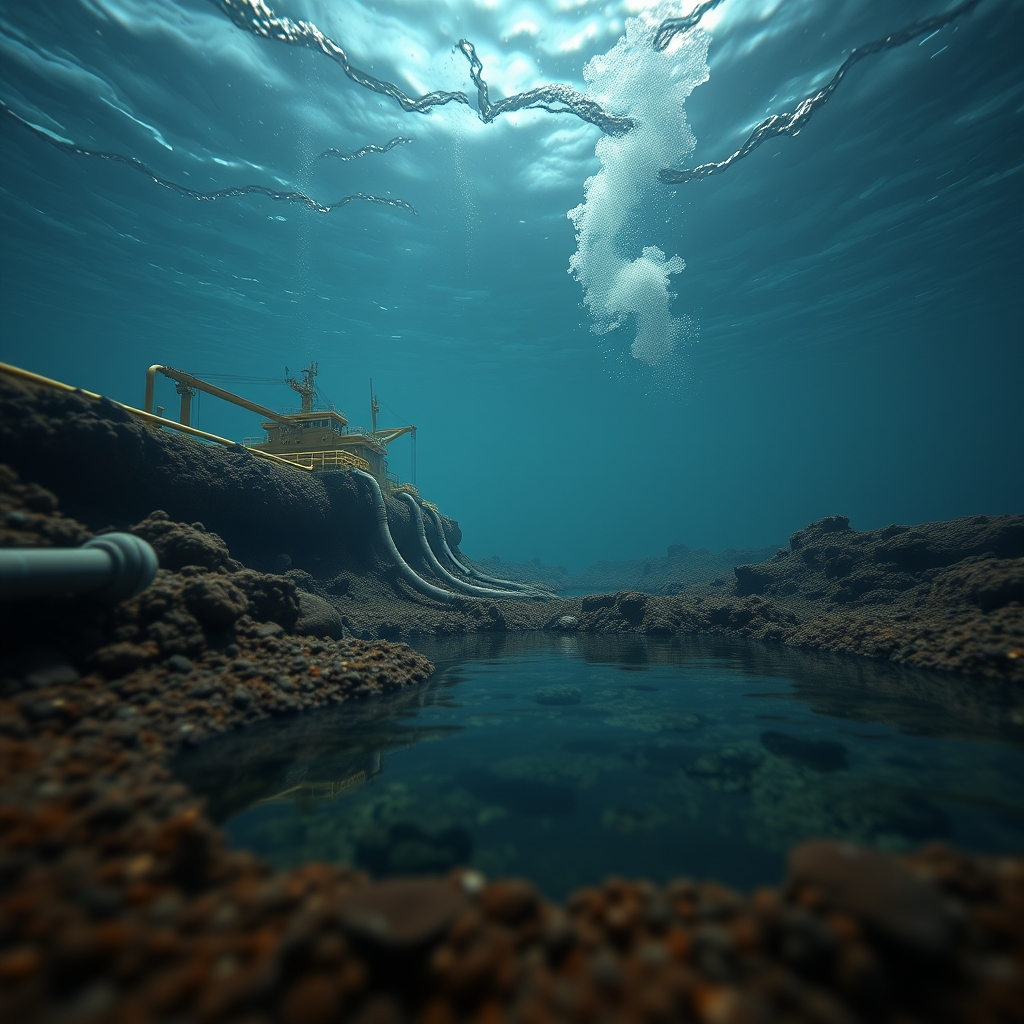
Australia’s federal government has officially designated a subsea carbon‑storage site off its northern coastline, clearing the way for Japan’s GreenWave Energy Ltd. to inject up to five million tonnes of CO₂ per year into the ocean floor. The approval marks the first time a sovereign nation has sanctioned a large‑scale offshore carbon capture and storage (CCS) project.
The chosen reservoir lies within a 30‑kilometre‑wide basaltic formation at a depth of 2,500 metres. Basalt reacts with CO₂ to form stable carbonate minerals, a process known as mineral carbonation. Engineers will drill a network of 12 injection wells, each capable of delivering 400,000 tonnes annually, and will use real‑time pressure monitoring to ensure containment.
“This project demonstrates Australia’s commitment to pioneering climate‑tech solutions,” said Energy Minister Maya Collins. GreenWave CEO Hiroshi Tanaka added, “Our technology can permanently lock away emissions that would otherwise linger in the atmosphere.” Yet Dr. Lina Patel, a climate scientist at the University of Sydney, warned, “The long‑term stability of subsea mineralisation remains uncertain, and rigorous verification is essential.”
If successful, the venture could provide a template for other coastal nations seeking to meet net‑zero pledges, while also creating a new export market for carbon‑removal services. Critics, however, caution that any leakage could undermine public trust and damage marine ecosystems.
A joint monitoring program, overseen by the Australian Department of Industry and the International Seabed Authority, will begin in early 2027, with the first injection slated for late 2027.