AI Data Centers Bypass Grid Delays by Repurposing Retired Jet Engines
AI data centers are repurposing retired jet engines to bypass multi-year grid connection delays, prioritizing rapid deployment over long-term efficiency.
S
··2 min readSciTech Editorial Team
Newsroom
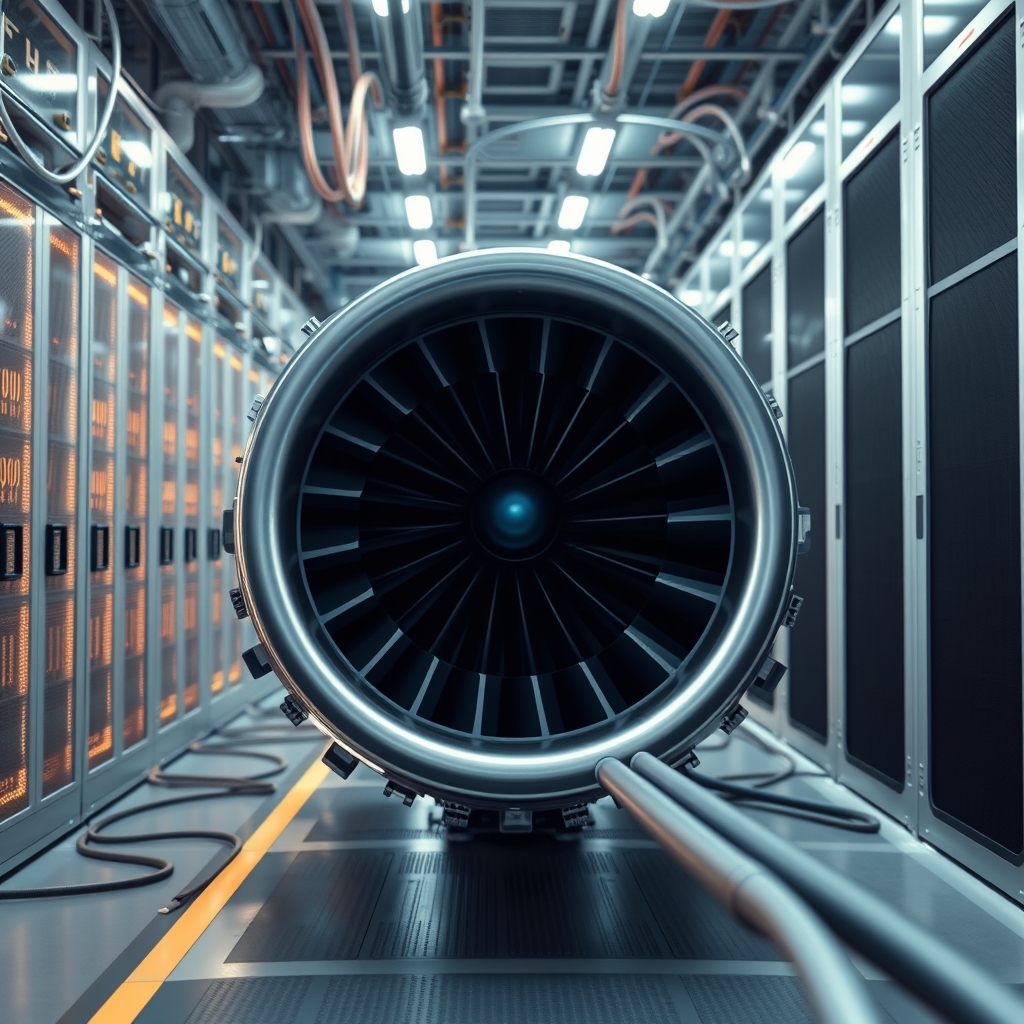
In a dramatic shift driven by the insatiable energy demands of artificial intelligence, major data center operators are increasingly turning to repurposed jet engines to generate their own electricity. According to a report by The New York Times, this unconventional solution is emerging as a critical workaround for companies facing years-long delays in connecting to the electrical grid. As the race to deploy AI infrastructure accelerates, the traditional timeline for securing power has become a significant bottleneck, prompting a pivot toward rapid, on-site generation solutions.
The technical approach involves sourcing engines from retired aircraft and rebuilding them to burn natural gas. While these units are not intended as permanent power plants, they offer a decisive advantage in speed. Audun Martinsen, an analyst at Rystad Energy, highlighted that the primary draw is the rapid deployment capability, noting that data centers equipped with these jet-powered units can be operational within 24 months. This stands in stark contrast to the conventional grid connection process, which, according to the International Energy Agency, can take approximately seven years to secure 100 megawatts of capacity in regions like Northern Virginia.
Prominent tech giants are already adopting this strategy to stay ahead of the curve. Elon Musk’s xAI has installed eight converted jet-engine turbines in Mississippi to support its Colossus 2 data center in Memphis, a move confirmed by state permits and satellite imagery. The units are supplied by ProEnergy, a company that specializes in rebuilding GE engines commonly found on Boeing jets. Similarly, OpenAI followed suit in 2025 by utilizing gas turbines at its first Stargate site in Abilene, Texas, where the Denver-based startup Crusoe is constructing the campus and has ordered 13 additional converted units.
The urgency of this transition is underscored by recent business setbacks caused by power delays. Last month, Microsoft withdrew as the anchor customer for Nscale’s data center in Loughton, England, after the local utility indicated it could not deliver sufficient power until the early to mid-2030s. Meanwhile, political pressure is mounting, with the current administration encouraging data centers to generate their own electricity to alleviate strain on the national grid.
However, this stopgap measure comes with significant trade-offs. Converted jet engines are less efficient and produce higher pollution levels compared to turbines designed specifically for conventional gas plants, requiring a larger number of units to generate the same amount of power. Experts suggest that while these engines provide a vital short-term solution, efficiency and environmental concerns may grow in importance within the next one to two years, potentially reshaping the long-term energy strategy of the AI industry.