Drogue Raises $20M to Power Floating Data Centers Using Ocean Thermal Energy
Drogue secures $20M to deploy floating data centers powered by ocean thermal energy, bypassing traditional grid constraints to meet surging AI demand.
S
··2 min readSciTech Editorial Team
Newsroom
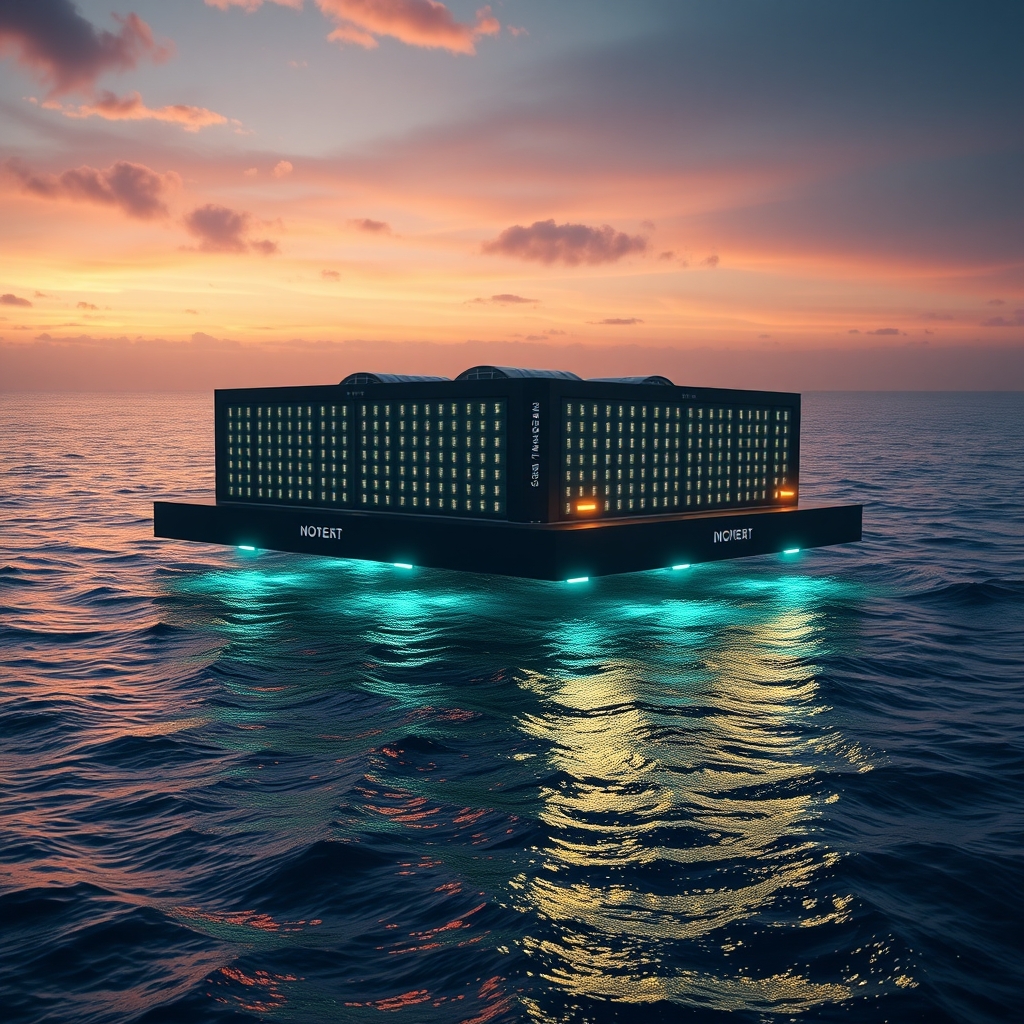
In a bold move to address the surging energy demands of the AI era, Drogue, a startup founded just six months ago in Washington, D.C., has secured $20 million in funding to develop floating data centers powered by the ocean’s thermal energy. The company, which has previously maintained a low profile, aims to deploy its first multi-megawatt prototype on a traditional oceangoing vessel by early 2028. This initiative is backed by a diverse group of investors, including XYZ Venture Capital, Toyota Ventures, Tamarack Global, and Slow Ventures, signaling strong market confidence in this novel approach to data center infrastructure.
The core innovation lies in leveraging Ocean Thermal Energy Conversion (OTEC), a technology first conceptualized in the 1950s but now revitalized by modern manufacturing techniques. Drogue’s system operates as a reverse heat pump, utilizing the temperature differential between warm surface waters and cold deep-sea water, which averages around 4°C (39°F) at depths of 1,000 meters. By drawing in warm surface water to cool servers and then using it to boil ammonia—a chemical that vaporizes at -28°F—the system drives a turbine to generate electricity. The ammonia is subsequently condensed using cold water from the deep ocean, completing a closed-loop cycle that is both efficient and sustainable.
Founder and CEO Sam Sipe, a former U.S. Navy pilot, emphasizes that the data center industry is currently constrained by 8-to-10-year timelines for grid interoperability, which is incompatible with the 10x increase in AI demand over the last three years. By moving data centers to the ocean, Drogue bypasses the need for expensive shore-based cables and lengthy utility negotiations. Sipe notes that while the ocean presents challenges like corrosion and biofouling, it offers a vast, untapped energy resource. The ocean absorbs an additional 5.8 million terawatt-hours of energy annually due to global warming, a figure that dwarfs the total human civilization’s energy usage of 180,000 terawatt-hours per year.
The startup has already obtained 'approval in principle' from the American Bureau of Shipping, a critical milestone for maritime safety standards. Unlike Elon Musk’s concept of orbital data centers, which requires expensive rocket launches, Drogue’s solution utilizes existing maritime technology, allowing vessels to operate at sea for approximately a decade. This approach not only provides a cheap and abundant power source but also positions the company to offer scalable, AI-friendly infrastructure that can be deployed rapidly, marking a significant shift in how data centers are conceived and powered in the coming decade.