Global Grid Mystery Solved: Synchronized Battery Checks Cause Coordinated Frequency Drops
Researchers have identified synchronized battery state-of-charge checks as the cause of global grid frequency drops, recommending randomized schedules to prevent potential blackouts.
S
··2 min readSciTech Editorial Team
Newsroom
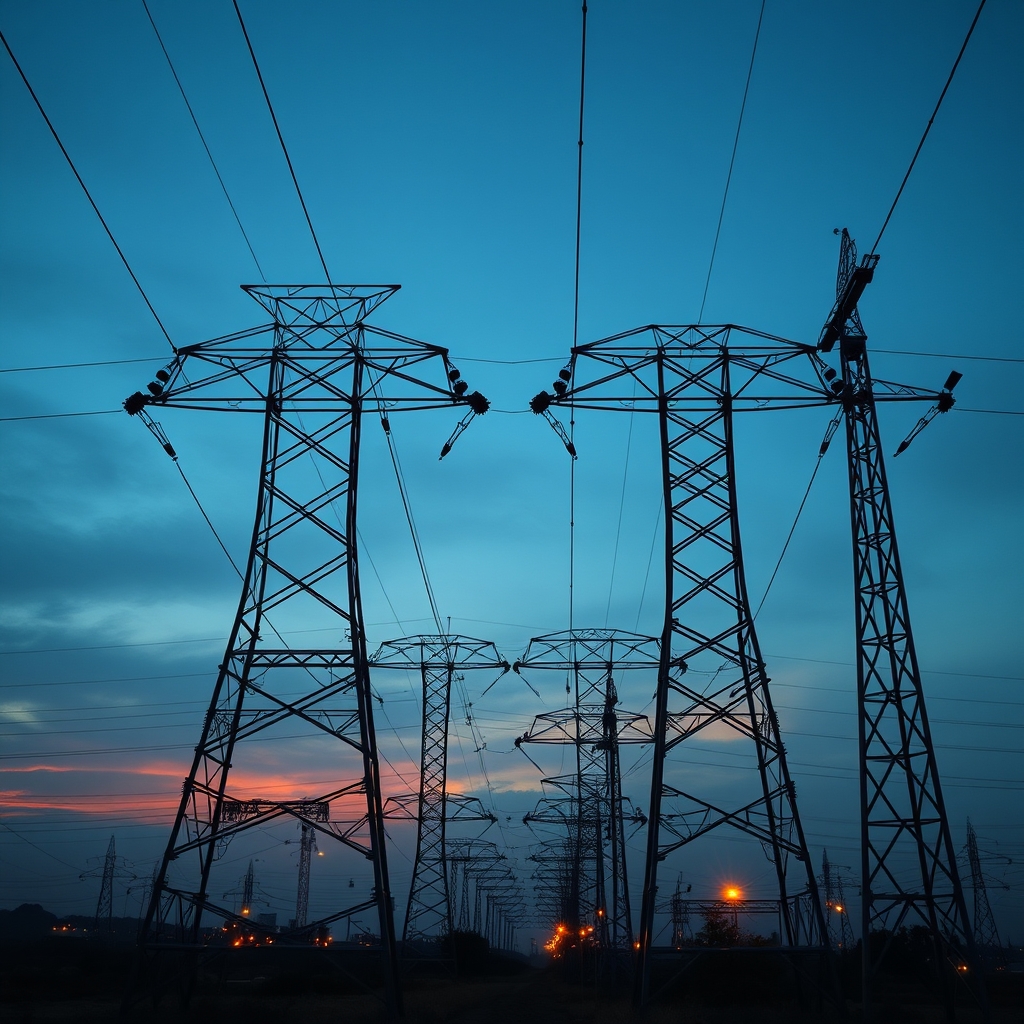
For years, grid operators worldwide have been baffled by a peculiar phenomenon: a tiny, synchronized drop in electrical frequency occurring precisely every 60 seconds across continents. This mystery, which threatened the stability of power systems from Europe to Asia, has finally been unraveled by researchers at Forschungszentrum Jülich in Germany. The breakthrough reveals that the culprit is not a mechanical failure, but the synchronized digital heartbeat of modern battery systems.
Dirk Witthaut, a researcher at Jülich, led the investigation after being approached by Tennet Germany, the country’s largest transmission system operator. The team initially suspected hydropower turbines, known for causing ultra-low frequency oscillations (UFLOs) due to mechanical resonance. However, while computer models confirmed that turbines could generate minute-long resonances, they failed to explain the uncanny persistence of the signal. The regularity of the drops, occurring without fail every minute, suggested a clockwork mechanism rather than a physical vibration.
The solution emerged from local data. By installing over 80 smart power quality meters around the Jülich campus, the team discovered that transformers connected to battery energy storage systems (BESS) exhibited the same periodic peaks. The root cause lies in the firmware of stationary batteries, from data center uninterruptible power supplies (UPS) to grid-scale storage. These devices are internet-connected and synchronize their clocks, leading them to check their state-of-charge simultaneously every minute. Individually, this check is imperceptible, but collectively, the millions of devices create a measurable disturbance on the global grid.
The impact is most visible in Ireland, where data centers consume 18% of the national load. Between 2016 and 2021, the minute-by-minute frequency drop on the Irish grid quadrupled from 3 milli-Hertz (mHz) to 12 mHz, with recent spikes exceeding 20 mHz. Although Ireland’s 50 Hz grid is designed to withstand swings of up to 200 mHz, the cumulative effect of these synchronized checks, combined with other load variations, poses a risk of pushing the system toward blackout conditions.
The fix is straightforward but requires global coordination. Witthaut and his team recommend that manufacturers add randomization to the state-of-charge check schedules to desynchronize the devices. While the issue is currently driven by UPS systems, the risk extends to the Internet of Things (IoT). Tests on smart ovens and Raspberry Pi clusters showed similar periodic fluctuations. With less than 3% of IoT devices running the latest firmware, regulators may need to mandate software patches. The mystery is solved, but ensuring grid stability now depends on a coordinated, global software update strategy.